

Fixed-base and plunge routers get compared feature by feature in most buying guides, when the real decision comes down to one mechanical question: can the bit start mid-board, or does every cut have to begin from an edge? A fixed-base router sets its cutting depth before you start and rides along the surface, entering only from an edge. A plunge router can drop the spinning bit straight down into the middle of a workpiece. That single distinction covers roughly 80-90% of what actually decides which type you need, before horsepower or brand ever enter the conversation.
| Product | Best For | Base Type | Motor | Buy |
|---|---|---|---|---|
| DeWalt DW618PK Top Pick | Best Overall | Fixed + Plunge Combo | 12A, 2-1/4 HP | Check Price |
| Bosch 1617EVSPK | Best for Router Tables | Fixed + Plunge Combo | 12A, 2.25 HP | Check Price |
| SKIL RT1322-00 | Best Budget Combo | Fixed + Plunge Combo | 14A, 2.5 HP | Check Price |
| Porter-Cable 7518 | Best for Panel Raising / Production | Fixed Only | 15A, 3-1/4 HP | Check Price |
| DeWalt DWP611 | Best for Trim/Detail Work | Fixed Only (Compact) | 7.7A, 1.25 HP | Check Price |
| Makita RT0701C | Best for Smooth Control | Fixed Only (Compact) | 1-1/4 HP | Check Price |
| DeWalt DCW600B | Best Cordless | Fixed Only (Cordless) | 20V Brushless | Check Price |
Fixed vs. Plunge – The One Question That Actually Decides It
Forget the feature checklist for a moment. The real question is whether your cut can start from an edge or has to begin somewhere in the middle of the board. Edge profiling, roundovers, chamfers, template routing, and router table work, the large majority of what a router actually does, all start from an edge, which is exactly what a fixed-base router is built for. Mortises, stopped grooves, sign-making, and inlay work need the bit to drop into the middle of the workpiece, which only a plunge base can do. If you’re not sure which camp your typical projects fall into, a combo kit sidesteps the question entirely.
Base Type and Collet Size Are Two Separate Decisions
This is the point most buyers conflate without realizing it: the base (fixed or plunge) determines how the bit approaches the wood. The collet (1/4″ or 1/2″) determines which bits physically fit at all. A 1/2″ collet on a plunge router and a 1/2″ collet on a fixed-base router accept identical bits, the base type has no bearing on shank compatibility. 1/2″ shank bits are more rigid and vibrate less than 1/4″ bits, producing cleaner cuts, especially with larger-diameter profiles, so a 1/2″ collet (or a router offering both sizes) is worth prioritizing if you’ll ever run larger bits.
Horsepower – What Each Tier Actually Handles
1 to 1.5 HP covers trim routing and light edge work on softwoods, the compact/palm router category. 1.75 to 2.25 HP handles most general woodworking tasks and is where the combo kits in this guide sit. 2.25+ HP is the tier to reach for if you’re running large panel-raising bits or mounting the router permanently in a table for production work, since bigger bits need more sustained torque to cut cleanly without bogging down.
Variable Speed and Soft Start – Why They Matter, Not Just That They Exist
Larger-diameter bits need to spin slower, not faster, for both safety and cut quality, since the actual cutting speed at the bit’s edge scales with diameter times RPM. A router with a fixed single speed forces a compromise between small and large bits; variable speed lets you match RPM to whatever bit is actually in the collet. Soft start is a related but distinct feature: it ramps the motor up gradually instead of delivering full torque instantly, which eliminates the sudden jerk that can twist a router out of your hands on startup, reduces long-term stress on the motor windings, and helps avoid tripping a circuit breaker.
1. DeWalt DW618PK – Best Overall

The default recommendation across independent woodworking sources for a reason: a 12-amp, 2-1/4 HP motor with variable speed and soft start, tool-free depth adjustment, and a motor pack that swaps between the included fixed and plunge bases in under a minute with no separate tools needed. Integrated dust collection on the plunge base keeps the cut line visible, and both 1/4″ and 1/2″ collets are included, so bit compatibility is never a limiting factor.

Not the right fit if: you specifically need maximum raw power for panel-raising bits in a permanent table setup. At 2-1/4 HP this handles the large majority of general woodworking, but the Porter-Cable 7518 below is the better choice for sustained heavy-duty table use.
| Pros | Cons |
|---|---|
| Combo kit covers both base types from day one Tool-free base swap in under a minute Both 1/4″ and 1/2″ collets included Wide accessory and parts support given how common this router is |
Not the top HP tier for dedicated table production work Plastic sub-base on the fixed base wears faster than metal over years of heavy use |
| Feature | Detail |
|---|---|
| Motor | 12A, 2-1/4 HP, variable speed |
| Collets | 1/4″ and 1/2″, both included |
| Base Swap | Tool-free, under 1 minute |
| Depth Adjustment | Tool-free, micro-fine on fixed base |
| Dust Collection | Integrated on plunge base |
| Warranty | 3-year limited |
Check current price on Amazon →
2. Bosch 1617EVSPK – Best for Router Tables
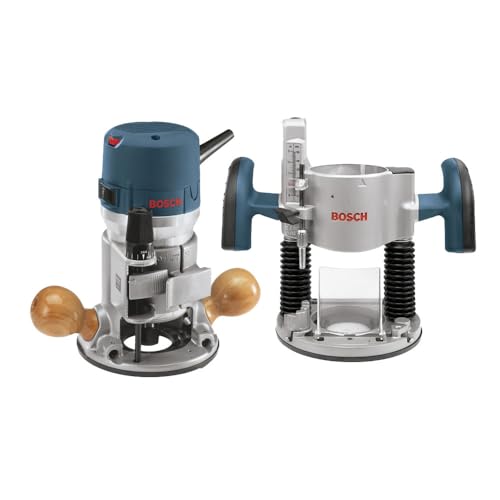
Bosch’s fixed base is specifically regarded as one of the stronger table-mounting options in this price range, flatter and more stable for flush installation than several competitors. The 12-amp motor covers a genuinely wide 8,000-25,000 RPM range with Constant Response circuitry that holds speed under load, and the one-piece armature shaft construction reduces vibration for a smoother finish, especially noticeable on longer table-routed passes.

Not the right fit if: you’re mainly doing handheld edge work and never plan to mount the router in a table. The table-optimized fixed base is this router’s real strength; the DW618PK above is an equally capable all-around alternative if table mounting isn’t a priority.
| Pros | Cons |
|---|---|
| Fixed base specifically well-suited to table mounting Wide 8,000-25,000 RPM range One-piece armature shaft reduces vibration Dust-sealed power switch protects internals |
Priced at a premium versus the SKIL budget combo Slightly heavier than the DeWalt combo in fixed-base configuration |
| Feature | Detail |
|---|---|
| Motor | 12A, 2.25 HP, 8,000-25,000 RPM |
| Collets | 1/4″ and 1/2″, self-releasing |
| Best Suited To | Router table mounting, flush installation |
| Vibration Control | One-piece armature shaft |
| Depth Adjustment | Micro-fine on fixed base |
| Warranty | 1-year standard (extend via registration) |
Check current price on Amazon →
3. SKIL RT1322-00 – Best Budget Combo
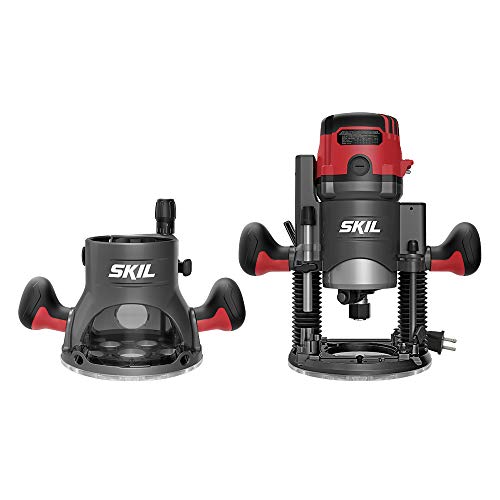
Independent reviewers have specifically called this router “a serious value” for bringing feature-set elements that used to be premium-only down under $150. A 14-amp, 2.5 HP motor (higher rated amperage than either the DeWalt or Bosch combo above) pairs with an LCD display that suggests an appropriate RPM based on the bit type and material you select, removing the guesswork variable speed alone leaves you with.

Not the right fit if: you need the long-term brand parts and accessory ecosystem that DeWalt or Bosch carry. SKIL is a legitimate, well-reviewed brand, but it doesn’t have the decades-deep third-party accessory support the two combo kits above benefit from.
| Pros | Cons |
|---|---|
| Highest motor amperage of the three combo kits at this price LCD display suggests RPM by bit and material Genuinely lowest price for a full combo kit in this guide Live tool indicator light for safety |
Smaller third-party accessory ecosystem than DeWalt or Bosch Newer to the router category than the two established brands above |
| Feature | Detail |
|---|---|
| Motor | 14A, 2.5 HP |
| Collets | 1/4″ and 1/2″ |
| Speed Guidance | LCD display, suggests RPM by bit/material |
| Safety Feature | Live tool indicator light |
| Depth Adjustment | 3 coarse settings + micro-fine |
| Approximate Price | ~$139-149 |
Check current price on Amazon →
4. Porter-Cable 7518 – Best for Panel Raising / Production
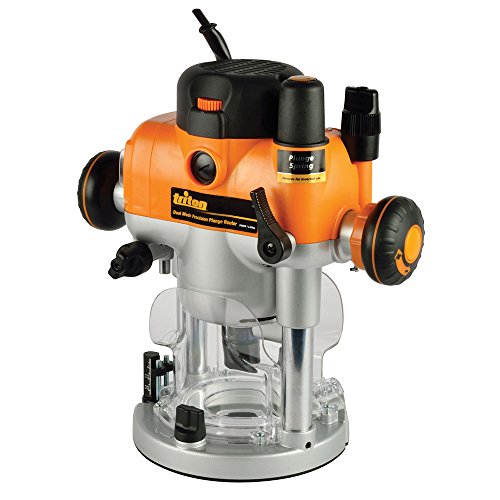
The heavy-duty tier in this guide, and one real buyer review calls it plainly: built to run for hours straight in a table without complaint. A 15-amp, 3-1/4 HP motor is enough to cut across a raised panel bit in one pass rather than multiple lighter passes, with 5 fixed speed settings (10,000 to 21,000 RPM), a 1/2″ collet built for large-diameter bits, and a machined aluminum motor housing over sealed ball bearings for long-term durability under sustained shop use.
Not the right fit if: you want a plunge base or a compact, handheld-friendly router. This is a fixed-base-only, table-oriented tool built specifically for sustained heavy cutting, not general handheld versatility.
| Pros | Cons |
|---|---|
| Highest HP and amperage in this guide Cuts raised panel bits in one pass Machined aluminum housing built for sustained duty cycles Long, well-established reputation among serious woodworkers |
Fixed base only, no plunge option Heavier and bulkier than any handheld-focused router here Overkill for occasional light trim or edge work |
| Feature | Detail |
|---|---|
| Motor | 15A, 3-1/4 HP |
| Speed Settings | 5-speed, 10,000-21,000 RPM |
| Collet | 1/2″, built for large bits |
| Construction | Machined aluminum housing, sealed ball bearings |
| Base Type | Fixed only |
| Best For | Router table production, panel raising |
Check current price on Amazon →
5. DeWalt DWP611 – Best for Trim/Detail Work

A 1.25 HP, 7.7-amp compact router built for exactly the work a full-size 12-amp combo kit is overkill for: sign-making, small detail trim, template work, and one-handed operation. Variable speed with soft start and full-time electronic feedback keeps the motor speed constant through the cut despite the smaller motor, and an LED sub-base lights the cut line for better visibility on detail work where precision matters most.

Not the right fit if: you need to mount a router in a table or handle anything beyond small-to-medium bits. This is purpose-built as a compact handheld tool, not a table-router substitute.
| Pros | Cons |
|---|---|
| Genuinely compact and light for one-handed detail work LED sub-base improves cut line visibility Full-time electronic feedback maintains speed under light load Accepts standard template guide bushings |
1/4″ collet only limits bit selection versus 1/2″-capable routers Not suited to sustained heavy-duty or table use |
| Feature | Detail |
|---|---|
| Motor | 7.7A, 1.25 HP, variable speed |
| Collet | 1/4″ |
| Visibility | LED sub-base illumination |
| Operation | One-handed, compact grip |
| Base Type | Fixed only (compact) |
| Best For | Trim work, sign making, template routing |
Check current price on Amazon →
6. Makita RT0701C – Best for Smooth Control

Makita’s reputation for smooth, controlled power delivery, well established across their broader tool lineup, carries through clearly in this compact 1-1/4 HP fixed-base router. It occupies the same compact-router category as the DeWalt DWP611 above, giving buyers a genuine second option in this class from a brand specifically known for finish quality and control over raw aggression.

Not the right fit if: you specifically want the DeWalt DWP611’s LED sub-base lighting. The Makita is comparably capable for compact detail work but doesn’t include that specific visibility feature.
| Pros | Cons |
|---|---|
| Smooth, controlled power delivery consistent with Makita’s broader reputation Compact size suited to one-handed and template work Well-established, long-running model with a strong track record Compatible with standard template guide bushing sets |
No LED sub-base lighting 1/4″ collet only, same limitation as the DWP611 |
| Feature | Detail |
|---|---|
| Motor | 1-1/4 HP |
| Collet | 1/4″ |
| Base Type | Fixed only (compact) |
| Brand Reputation | Smooth control, established track record |
| Best For | Detail work, template routing, one-handed use |
Check current price on Amazon →
7. DeWalt DCW600B – Best Cordless

Reported as Amazon’s best-selling router, and for a genuine reason beyond marketing: it delivers corded-compact-router power without a cord to manage or snag mid-cut. Dual LED lights illuminate the work surface, an anti-rotation system senses excessive rotational motion and shuts the tool down automatically for safety, and it runs on the same 20V MAX battery platform as DeWalt’s broader tool lineup, a real advantage if you already own compatible batteries.

Not the right fit if: you don’t already own DeWalt 20V MAX batteries. Sold as a bare tool, the battery and charger are a real additional cost if you’re not already on the platform.
| Pros | Cons |
|---|---|
| No cord to manage or snag during precise cuts Anti-rotation safety system shuts down on excessive motion Runs on the widely-used DeWalt 20V MAX platform Dual LED lights for work surface visibility |
Sold as a bare tool, battery and charger cost extra Battery life under sustained heavy use is the real trade-off versus corded power |
| Feature | Detail |
|---|---|
| Motor | 20V MAX brushless |
| Collet | 1/4″ |
| Safety | Anti-rotation shutdown system |
| Visibility | Dual LED lights |
| Base Type | Fixed only (cordless) |
| Sold As | Bare tool, battery/charger separate |
Check current price on Amazon →
Router Bits Matter as Much as the Router
It’s worth saying plainly: a router is just a motor spinning a bit. Beginners regularly spend real money on a quality router, then cut with a dull or cheap bit and wonder why the results look burned or rough. A worn or low-quality bit produces bad cuts regardless of which router in this guide is driving it, invest in a decent bit set from the start rather than assuming the router alone determines cut quality.
Frequently Asked Questions
Do I need both bases or just one?
If your budget allows, a combo kit removes the guesswork, roughly $50-75 more than a fixed-base-only kit gets you both, and the motor swaps between bases in under a minute. If you know your work is exclusively edge profiling and table-style routing, a dedicated fixed-base router is a reasonable way to save money.
What horsepower do I need for a router table?
2.25 HP handles most router table work, including moderate panel-raising bits. If you’re running large-diameter panel-raising bits regularly or doing production-volume table work, step up to the 3+ HP tier like the Porter-Cable 7518 in this guide.
1/4″ vs. 1/2″ collet, which do I need?
1/2″ shank bits are more rigid and vibrate less than 1/4″ bits, producing cleaner cuts, especially noticeable with larger-diameter profiles. If you’ll ever run large bits, prioritize a router with a 1/2″ collet (or one offering both sizes) over a 1/4″-only compact router.
Is a cordless router powerful enough for real work?
Modern brushless cordless routers like the DCW600B in this guide are genuinely built to match corded compact-router output for edge work, trim, and template routing. Battery life under sustained heavy use, not raw cutting power, is the actual trade-off to plan around.
Our Top Pick for 2026
DeWalt DW618PK
Both bases from day one, a tool-free swap under a minute, and both collet sizes included, this is the router that removes the fixed-vs-plunge decision entirely while still being powerful enough for the large majority of general woodworking tasks.
Bottom Line
Decide fixed vs. plunge based on whether your cuts start from an edge or need to begin mid-board, and lean toward a combo kit if you’re not sure, since most serious woodworkers end up owning both bases eventually anyway.
- Best overall: DeWalt DW618PK – both bases, tool-free swap, both collet sizes.
- Best for router tables: Bosch 1617EVSPK – a fixed base built specifically for stable table mounting.
- Best budget combo: SKIL RT1322-00 – premium-tier features under $150.
- Best for panel raising: Porter-Cable 7518 – built to run large bits in a table all day.
- Best for trim/detail work: DeWalt DWP611 – compact, LED-lit, one-handed control.
- Best for smooth control: Makita RT0701C – Makita’s established finish-quality reputation in a compact package.
- Best cordless: DeWalt DCW600B – corded-compact power without the cord.
Whichever router you choose, don’t shortchange the bits, a cheap or dull bit produces bad results regardless of how good the router driving it is. If you’re building out a full woodworking shop, our guides to table saws, miter saws, bandsaws, and dust collection cover the rest of the setup.


