

A walk-behind concrete saw does the cuts a handheld cut-off saw can’t do well: long, straight, consistent-depth cuts across a slab, a driveway or a section of road. You push it along a chalk line, it holds the blade at a set depth, and water keeps the dust down. The right saw depends on how deep you need to cut, whether the concrete is fresh or cured, and whether you’ll use it enough to own one instead of renting. This guide compares 10 walk-behind concrete saws on Amazon, from 7-inch electric saws for control joints to 20-inch Honda-powered floor saws and early-entry saws for fresh concrete.
Quick Picks
- Best overall gas floor saw: Husqvarna 14-Inch Walk-Behind Concrete Saw
- Best 20-inch saw: Tomahawk 20-Inch Walk-Behind Saw with Honda GX390
- Best 20-inch with blade included: CORMAC CQ480H Floor Saw
- Best budget gas saw: MechMaxx FS350Z 14-Inch Floor Saw
- Best electric walk-behind: SKIL SPT79A-10 7-Inch Walk-Behind Worm Drive
- Best early-entry saw: Tomahawk 6-Inch Early Entry Saw
Quick Comparison
| Product | Power | Max Blade | Max Cut Depth | Listed Weight | Best For |
|---|---|---|---|---|---|
| Husqvarna 14″ | 8.5 HP Robin gas | 14″ | 4-5/8″ | 112 lb (tool) | Best Overall Gas |
| Tomahawk 20″ | 13 HP Honda GX390 | 20″ | 7.1″ | Not listed | Best 20-Inch |
| CORMAC CQ480H | Honda GX390 gas | 20″ (blade included) | Check listing | 287 lb | 20-Inch with Blade |
| CORMAC CQ480 | 13 HP gas | 20″ (blade included) | Check listing | 287 lb | Value 20-Inch |
| MechMaxx FS350Z | 5.8 HP Zongshen gas | 14″ | 4″ | 226 lb | Budget Gas |
| Stark USA 6.5 HP | 6.5 HP gas | 14″ (blade may be sold separately) | Adjustable | Check listing | Lowest-Cost Gas |
| SKIL SPT79A-10 | Electric worm drive | 7″ | Check listing | 31.7 lb | Best Electric |
| SKILSAW Medusaw SPT79-00 | 15A electric worm drive | 7″ | Check listing | 16.9 lb | Rolling Budget Electric |
| Tomahawk 6″ Early Entry | 3.5 HP Honda GX120 | 6″ | 1-3/16″ | Not listed | Best Early Entry |
| Husqvarna Soff-Cut 150 | Gas | Check listing | Check listing | 155 lb | Low-Noise Early Entry |
Walk-Behind vs. Handheld Cut-Off Saw
A handheld cut-off saw (a “chop saw” or power cutter) is the right tool for cutting a pipe opening, trimming a curb or making a few short cuts. It’s light enough to carry and can cut vertical surfaces. The problem shows up on long cuts. Holding a 20-pound saw at a steady depth for 30 feet of slab is hard on your back, and the cut wanders.
A walk-behind saw rides on wheels. You set the depth with a crank or lever, line up the pointer with your chalk line and push. Depth stays the same from one end to the other, the cut stays straight, and the saw’s weight does the work instead of your arms. That’s why every slab, driveway and road-cutting crew uses one for straight runs.
If you only need a few short cuts, a handheld saw (or renting one) is cheaper. If you’re cutting control joints across a garage floor, cutting out a trench for plumbing or removing a section of driveway, a walk-behind saw is the tool.
Blade Size and Cut Depth
Blade diameter sets the maximum depth. Roughly speaking, a saw can cut a little less than half the blade diameter, because the arbor, flange and guard take up the rest. From the listings here:
7-inch electric saws are for control joints and shallow cuts in slabs. 14-inch gas saws like the Husqvarna (4-5/8 inches) and MechMaxx (4 inches) cut through a typical 4-inch residential slab. 20-inch gas saws like the Tomahawk (7.1 inches) handle thicker slabs, driveways and pavement.
For control joints in a new slab, a common rule of thumb is to cut to one quarter of the slab’s thickness, so about 1 inch deep in a 4-inch slab. Joint spacing is commonly kept to 2 to 3 times the slab thickness in feet (8 to 12 feet for a 4-inch slab). Follow your engineer’s or contractor’s plan if you have one.
Early-Entry Saws: Cutting Fresh Concrete
Control joints work best when they’re cut early, before the concrete shrinks and cracks on its own. Conventional wet saws usually wait until the slab can take the weight and the blade without raveling the edges, often the next day. An early-entry saw is a light saw with a skid plate that rides on the fresh surface and supports the edges of the cut. That lets you cut within hours of finishing.
Two saws in this guide are early-entry saws: the Tomahawk 6-inch and the Husqvarna Soff-Cut 150. They cut shallow joints only, about 1-3/16 inches deep for the Tomahawk, and they aren’t meant for cutting through cured concrete. Most other saws in this guide are for cured concrete and asphalt.
Water, Dust and OSHA Silica Rules
Cutting concrete dry releases respirable crystalline silica. For walk-behind saws, OSHA’s Table 1 option calls for water continuously fed to the blade through the saw’s integrated water system. Outdoors with wet cutting, Table 1 doesn’t require a respirator. Indoors or in an enclosed area, it requires a respirator with an assigned protection factor of at least 10, and wet methods alone may not be enough without extra ventilation (OSHA Fact Sheet FS-3633, retrieved 2026-10-15).
Every gas saw in this guide has a water tank, or a hookup for one. The SKIL electric saws work wet or dry, with a water feed attachment and a vacuum adapter in the box. Gas engines also make carbon monoxide, so don’t run a gas saw inside a garage or basement. Use an electric saw indoors.
Gas Walk-Behind Floor Saws
1. Husqvarna 14-Inch Walk-Behind Concrete Saw – Best Overall Gas Floor Saw
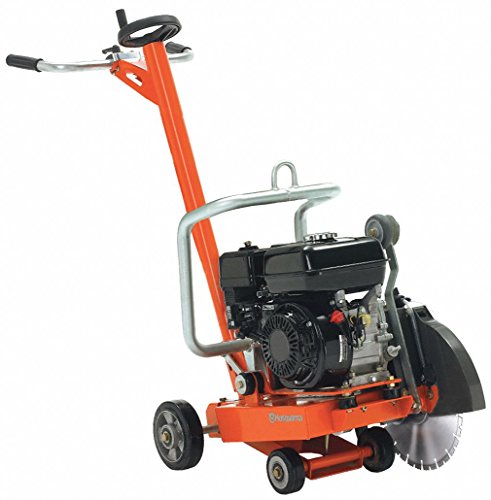
This is Husqvarna’s compact 14-inch walk-behind floor saw. It runs an 8.5 HP Robin 4-stroke gas engine, takes a 14-inch blade on a 1-inch arbor and cuts up to 4-5/8 inches deep, enough to go through a standard 4-inch slab. A spring-assisted raise and lower system takes the effort out of plunging the blade.
The listing gives a tool weight of 112 pounds, much lighter than the 20-inch saws here, so one person can load it into a pickup with a ramp. The handles adjust, and the blade sits 2 inches from the wall. It cuts on the left side only, which matters when you’re working along walls. Fuel capacity is 1.59 gallons. There were no Amazon ratings on this listing when we checked, so the case for it rests on the brand and the specs.
Pros: Husqvarna build and dealer support; 4-5/8-inch cut depth from a 14-inch blade; spring-assisted raise and lower; 112-pound tool weight.
Cons: Left-hand cutting only; no Amazon ratings yet; blade not listed as included.
Skip it if: you need to cut thicker than about 4-1/2 inches. Step up to a 20-inch saw.
2. Tomahawk 20-Inch Walk-Behind Concrete Saw with Honda GX390 – Best 20-Inch Saw

For thick slabs, driveways and pavement, the Tomahawk takes up to a 20-inch diamond blade and cuts up to 7.1 inches deep. It’s powered by a 13 HP Honda GX390, a common engine on commercial equipment, which makes parts and service easier to find.

A manual rotating handle sets the cut depth. The water tank feeds both sides of the blade, which Tomahawk describes as OSHA compliant. Tomahawk backs it with a 3-year warranty and says it has a nationwide support team with next-day parts. The listing had no Amazon ratings yet when we checked.
Against the CORMAC CQ480H below, which also uses a GX390, the Tomahawk lists its cut depth and a 3-year warranty. The CORMAC includes a 20-inch blade in the box.
Pros: Honda GX390 engine; 7.1-inch maximum cut depth; water feed to both sides of the blade; 3-year warranty with next-day parts.
Cons: No Amazon ratings yet; weight not listed; blade not listed as included.
Skip it if: you’re cutting a 4-inch garage slab. A 14-inch saw is lighter and cheaper.
3. CORMAC CQ480H Walk-Behind Floor Saw – Best 20-Inch with Blade Included
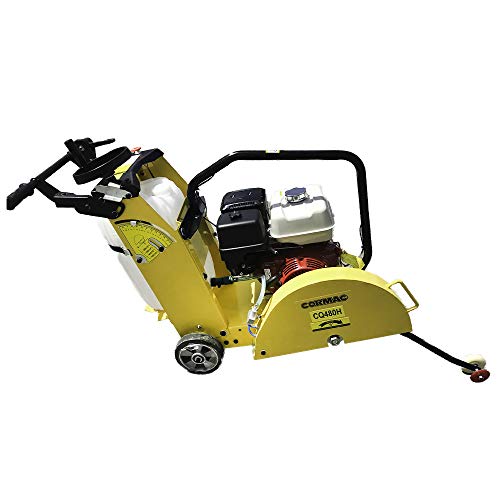
The CQ480H takes a blade up to 20 inches, runs a Honda GX390 gas engine and ships with a 20-inch concrete blade and a water tank. A 20-inch diamond blade is a significant extra cost on its own, so having one in the box changes the math against saws that ship without one.
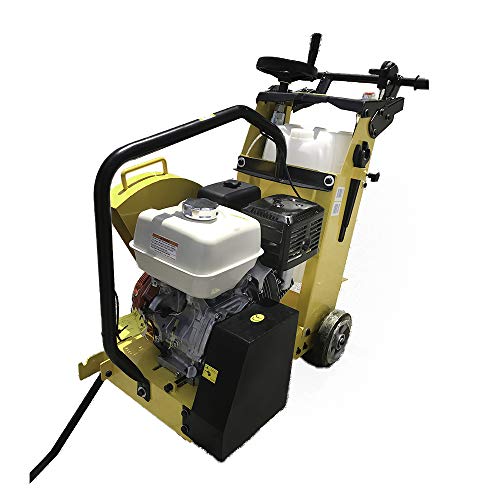
CORMAC uses a reinforced steel box frame, which it says reduces vibration and resists warping, and an easy crank to raise and lower the blade. The listing weight is 287 pounds. That’s the weight of a serious floor saw, and you’ll need a ramp or liftgate to move it. It has 4.5 stars from 3 ratings.
Pros: Honda GX390; 20-inch blade included; water tank; rigid steel box frame; crank depth control.
Cons: 287 pounds; maximum cut depth not listed; very few ratings.
Skip it if: you need to move the saw around by yourself. The 112-pound Husqvarna 14-inch is far easier to load.
4. CORMAC CQ480 Walk-Behind Floor Saw – Best Value 20-Inch

The CQ480 is the same 20-inch CORMAC frame as the CQ480H, with a 13 HP gas engine instead of the Honda GX390, and it costs less. It also includes a 20-inch concrete blade and a water tank, and it uses the same crank depth adjustment and reinforced steel box frame.
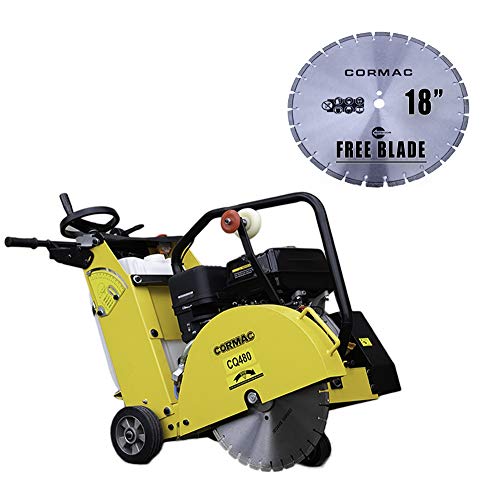
The listing doesn’t name the engine maker, which is the reason to pay more for the CQ480H: Honda engines are easier to get serviced. It also weighs 287 pounds and has 3.5 stars from 5 ratings.
Pros: 20-inch blade and water tank included; lower price than the Honda version; rigid box frame.
Cons: Engine maker not named; 3.5-star rating from very few buyers; 287 pounds.
Skip it if: you want easy engine service. Pay more for the CQ480H.
5. MechMaxx FS350Z 14-Inch Walk-Behind Floor Saw – Best Budget Gas Saw
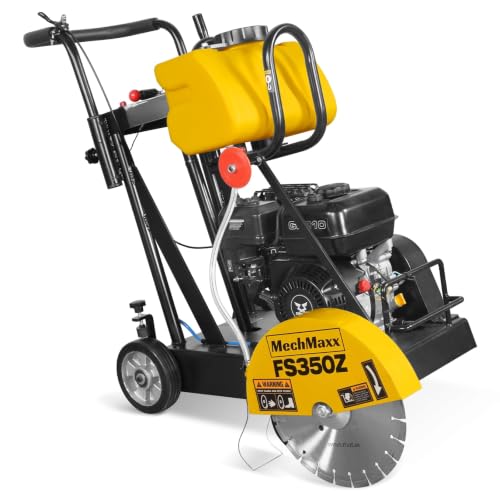
The MechMaxx FS350Z is the lowest-cost full-size floor saw here that lists its specs in detail. A 5.8 HP Zongshen GB210 engine drives a 14-inch blade to a 4-inch cut depth, enough for most residential slabs, sidewalks and expansion joints.
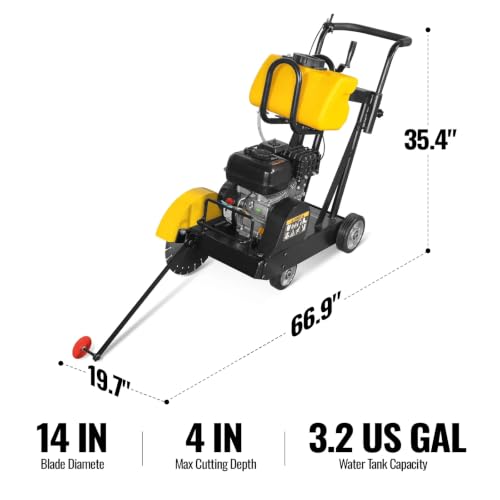
It has a 3.2-gallon water tank for wet cutting, an adjustable handle with rubber grips, an operator control console and a mechanical wheel lock that holds the saw in place while you line up. The frame has lifting handles for loading. At 226 pounds it’s twice the weight of the Husqvarna 14-inch with a smaller engine. There were no Amazon ratings yet when we checked.
Pros: Lowest-cost full floor saw with detailed specs; 4-inch cut depth; 3.2-gallon water tank; wheel lock and lifting handles.
Cons: 5.8 HP is the smallest gas engine among the 14-inch saws; 226 pounds; no Amazon ratings yet.
Skip it if: you’ll cut cured concrete every week. The Husqvarna’s bigger engine and lighter frame are worth the extra money.
6. Stark USA 6.5 HP Gas Walk-Behind Concrete Saw – Lowest-Cost Gas Saw

The Stark is the cheapest gas walk-behind saw we found, at roughly half the price of the MechMaxx. It runs a 6.5 HP gas engine, takes most 14-inch diamond blades and has adjustable cutting depth on a welded steel chassis. Stark lists concrete, asphalt, brick, pavers and stone as targets.

Read the listing closely: the blade appears to be sold separately, so add a 14-inch diamond blade to the cost. It has 3.7 stars from 10 ratings. That’s a thin, mixed record, which fits a saw at this price.
Pros: Lowest price of any gas walk-behind here; 6.5 HP engine; takes standard 14-inch blades; adjustable depth.
Cons: Blade likely not included; mixed 3.7-star rating; engine maker, weight and max depth not clearly listed.
Skip it if: you’re cutting for paying customers. A failed saw on a job costs more than the price difference.
Electric Walk-Behind Saws
7. SKIL SPT79A-10 7-Inch Walk-Behind Worm Drive Saw – Best Electric Walk-Behind
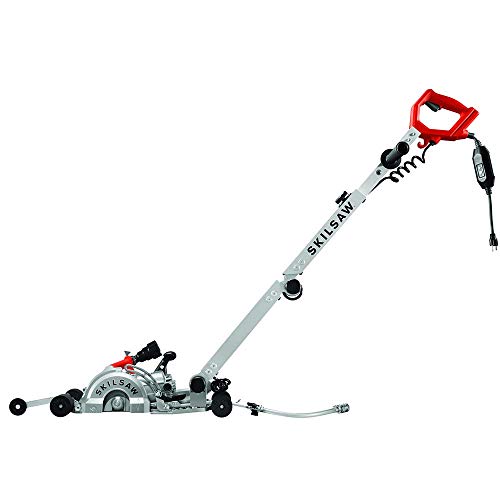
SKIL calls this the only worm drive walk-behind concrete saw, and it’s the best-reviewed saw in this guide, with 4.6 stars across 226 ratings. It takes a 7-inch blade, so it’s a control-joint and shallow-cut saw, not a slab-cutting saw. In exchange, it weighs 31.7 pounds and runs on a household outlet with no exhaust, so you can use it in a garage or basement where a gas saw isn’t safe.
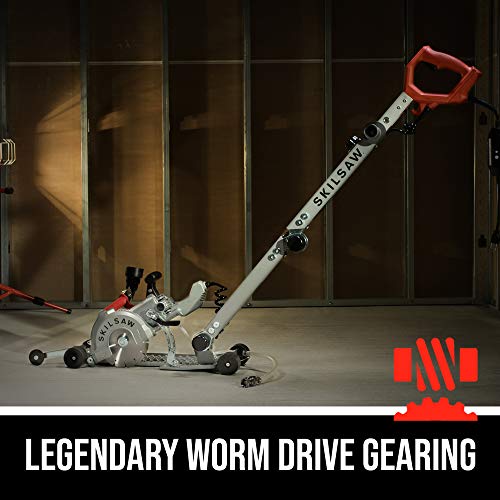
The handle adjusts to your height and folds for transport. A pivoting pointer helps follow a chalk line, and a two-finger trigger reduces fatigue on long cuts. The wet/dry dust system works with the included water feed attachment or the vacuum adapter. The box also includes a side handle, a multi-function wrench stored on the tool and a carry bag. Housings, guard and foot are die-cast aluminum with rust-resistant brackets and fasteners.
If you want the blade in the same order, SKIL also sells the SPT79A-10 bundled with a segmented diamond blade (SPT79A-10 with SPT4004 blade) or with a Bosch DB741C blade (SPT79A-10 with Bosch blade).
Pros: Best Amazon rating in this guide; safe to use indoors; folding, height-adjustable handle; wet or dry with water feed and vacuum adapter included.
Cons: 7-inch blade limits it to shallow cuts; costs more than the Medusaw below; not for cutting through a slab.
Skip it if: you need to cut all the way through a 4-inch slab. You need a 14-inch gas saw.
8. SKILSAW SPT79-00 Medusaw 7-Inch Worm Drive for Concrete – Best Budget Electric
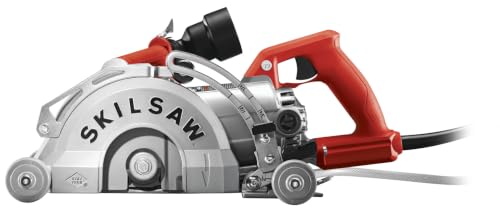
The Medusaw is the earlier SKILSAW concrete saw, and it’s a handheld saw with a rolling foot plate rather than a full walk-behind with a tall handle. Rubber wheels on the foot plate let it roll smoothly across the slab while you guide it, and it costs a good deal less than the SPT79A-10. It has 4.6 stars across 240 ratings.

It has a 15-amp worm drive motor, an adjustable plunge lock, a retractable front pointer for following your line, a wet/dry dust system and GFCI protection. The box includes a vacuum hose adapter, a water feed assembly and a multi-function wrench. It weighs 16.9 pounds. You’ll be bent over to use it, which is the reason to pay more for the SPT79A-10’s walk-behind handle on long cuts.
Pros: Much lower price than the SPT79A-10; rolling foot plate; GFCI protection; water feed and vacuum adapter included; strong rating record.
Cons: No walk-behind handle, so long cuts mean bending over; 7-inch blade limits depth.
Skip it if: you cut long joints often. The SPT79A-10’s handle saves your back.
Early-Entry Saws
9. Tomahawk 6-Inch Early Entry Concrete Saw – Best Early-Entry Saw
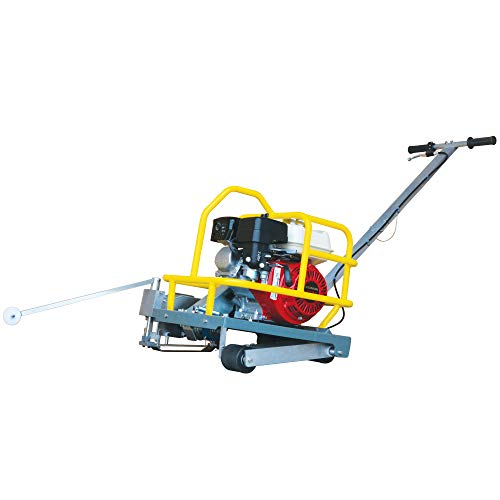
The Tomahawk early-entry saw is built for one job: cutting control joints in fresh concrete, soon after finishing, to control where the slab cracks. It runs a 3.5 HP Honda GX120 engine, takes blades up to 6 inches and comes with a 6-inch Soff-Cut blade. Maximum cut depth is 1-3/16 inches, matched to joint cutting rather than cutting through slabs. It has dust control.

It has 3.8 stars across 29 ratings, the most buyer feedback of any gas saw in this guide. Parts of the listing are in German, which looks like a listing error, so check the details with the seller.
Pros: Built for early-entry joint cutting; Honda GX120 engine; Soff-Cut blade included; most ratings of any gas saw here.
Cons: 1-3/16-inch depth only; not for cured concrete; listing partly in German.
Skip it if: you’re cutting existing, cured concrete. Use a 14-inch floor saw.
10. Husqvarna Soff-Cut 150 – Best Low-Noise Early-Entry Saw
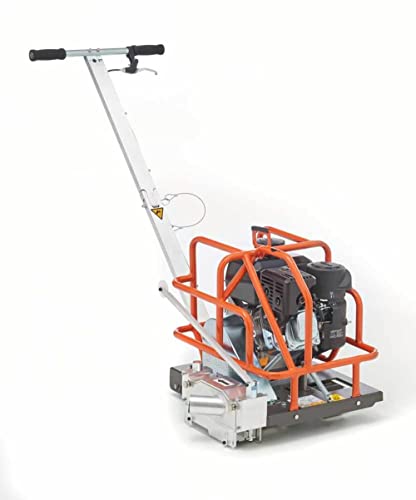
Soff-Cut is Husqvarna’s line of early-entry saws. The Soff-Cut 150 is the lightest gas saw in the Soff-Cut range, according to the listing. It has a patented low-noise blade enclosure and a low-dust blade block system, and it weighs 155 pounds.
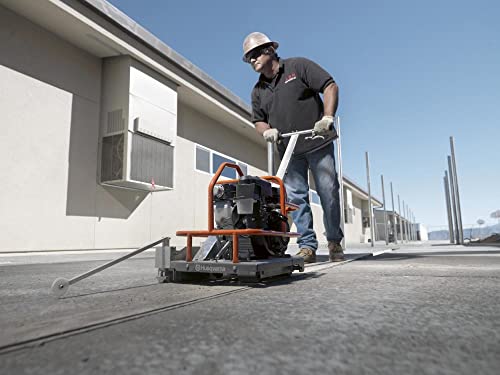
The Amazon listing is thin. It doesn’t give engine size, blade size or cut depth, and there were no ratings yet. Confirm those details with the seller or Husqvarna before buying. It’s the choice for a contractor who already knows the Soff-Cut system and wants a lighter gas model.
Pros: Lightest gas saw in the Soff-Cut line; low-noise blade enclosure; low-dust blade block system.
Cons: Very little detail on the listing; no Amazon ratings; engine, blade size and cut depth not listed.
Skip it if: you’re new to early-entry cutting. The Tomahawk 6-inch lists its specs in full and costs less.
Rent or Buy?
Equipment rental yards carry walk-behind saws, and for a single driveway or one garage floor, renting is usually the cheaper choice. You also get a saw that’s been serviced and, often, a blade billed by wear.
Buying starts to make sense when you cut regularly: control joints on every slab you pour, utility trenches every month, or work far from a rental yard. Then the saw pays for itself in rental fees and trips. Electric 7-inch saws like the SKIL are easy to justify for any contractor who pours slabs, because they’re used on almost every job.
Choosing a Blade
Diamond blades are matched to the material. A blade for hard, cured concrete uses a softer bond so fresh diamonds keep exposing. A blade for abrasive green concrete or asphalt uses a harder bond so it doesn’t wear away too fast. Match the blade’s diameter and arbor to the saw, and never run a blade on a saw faster than the blade’s rated RPM. Wet-rated blades need water; running them dry can overheat and damage the segments.
Buying Guide
Engine and Power
Honda GX-series engines (on the Tomahawk and CORMAC CQ480H) are the easiest to get serviced. Bigger engines hold blade speed in deeper cuts. Electric saws are limited to 7-inch blades but can run indoors.
Depth Control
Look for a crank, a spring-assisted lever or a depth stop. Consistent depth is the main reason to use a walk-behind saw at all.
Water System
A water tank that feeds both sides of the blade keeps dust down and the blade cool. Check the tank size against how long you’ll cut between refills.
Weight and Transport
Floor saws here range from 112 to 287 pounds. Plan how you’ll load it: a ramp, liftgate or a second person.
Safety
Wear safety glasses and hearing protection, plus steel-toe boots. Call 811 to locate buried utilities before you cut into a slab or driveway, and never run a gas saw indoors.
Frequently Asked Questions
How deep can a 14-inch walk-behind saw cut?
The 14-inch saws here list 4 to 4-5/8 inches of maximum cut depth, enough for a typical 4-inch slab. For thicker concrete, use a 20-inch saw like the Tomahawk (7.1 inches).
When should I cut control joints in a new slab?
As soon as the concrete can take the saw without raveling the edges. With an early-entry saw, that can be within a few hours of finishing. With a conventional wet saw, it’s usually later the same day or the next day, before random cracks form.
Can I use a gas concrete saw indoors?
No. Gas engines produce carbon monoxide. Use an electric saw like the SKIL SPT79A-10 indoors, with water or a vacuum for dust.
Do I need water to cut concrete with a walk-behind saw?
For silica control, yes. OSHA’s Table 1 option for walk-behind saws requires water continuously fed to the blade. Water also keeps the blade from overheating.
Is a walk-behind concrete saw worth buying for one job?
Usually not. Rent one for a single driveway or garage floor. Buy if you cut concrete regularly.
Can a walk-behind saw cut asphalt?
Yes, with an asphalt-rated blade. The Husqvarna 14-inch, Tomahawk 20-inch and Stark listings all mention asphalt.
Bottom Line
Pick by cut depth first, then by how often you’ll use the saw.
- Best overall gas floor saw: Husqvarna 14-Inch – 8.5 HP, 4-5/8-inch depth, 112 pounds.
- Best 20-inch saw: Tomahawk 20-Inch – Honda GX390, 7.1-inch depth, 3-year warranty.
- Best 20-inch with blade included: CORMAC CQ480H – Honda GX390 and a 20-inch blade in the box.
- Best value 20-inch: CORMAC CQ480 – same frame and blade, lower price.
- Best budget gas saw: MechMaxx FS350Z – 14-inch blade, 4-inch depth, 3.2-gallon tank.
- Lowest-cost gas saw: Stark USA 6.5 HP – for occasional use; budget for a blade.
- Best electric walk-behind: SKIL SPT79A-10 – indoor-safe, best-rated saw here.
- Best budget electric: SKILSAW Medusaw SPT79-00 – rolling foot plate at a lower price.
- Best early-entry saw: Tomahawk 6-Inch – Honda GX120 and a Soff-Cut blade for fresh slabs.
- Best low-noise early-entry: Husqvarna Soff-Cut 150 – the lightest gas model in the Soff-Cut line.
If you’re cleaning up the slab after cutting, our guide to the best pressure washers for concrete driveways covers that step. For cutting tile on the same job, see our best tile saw guide.


