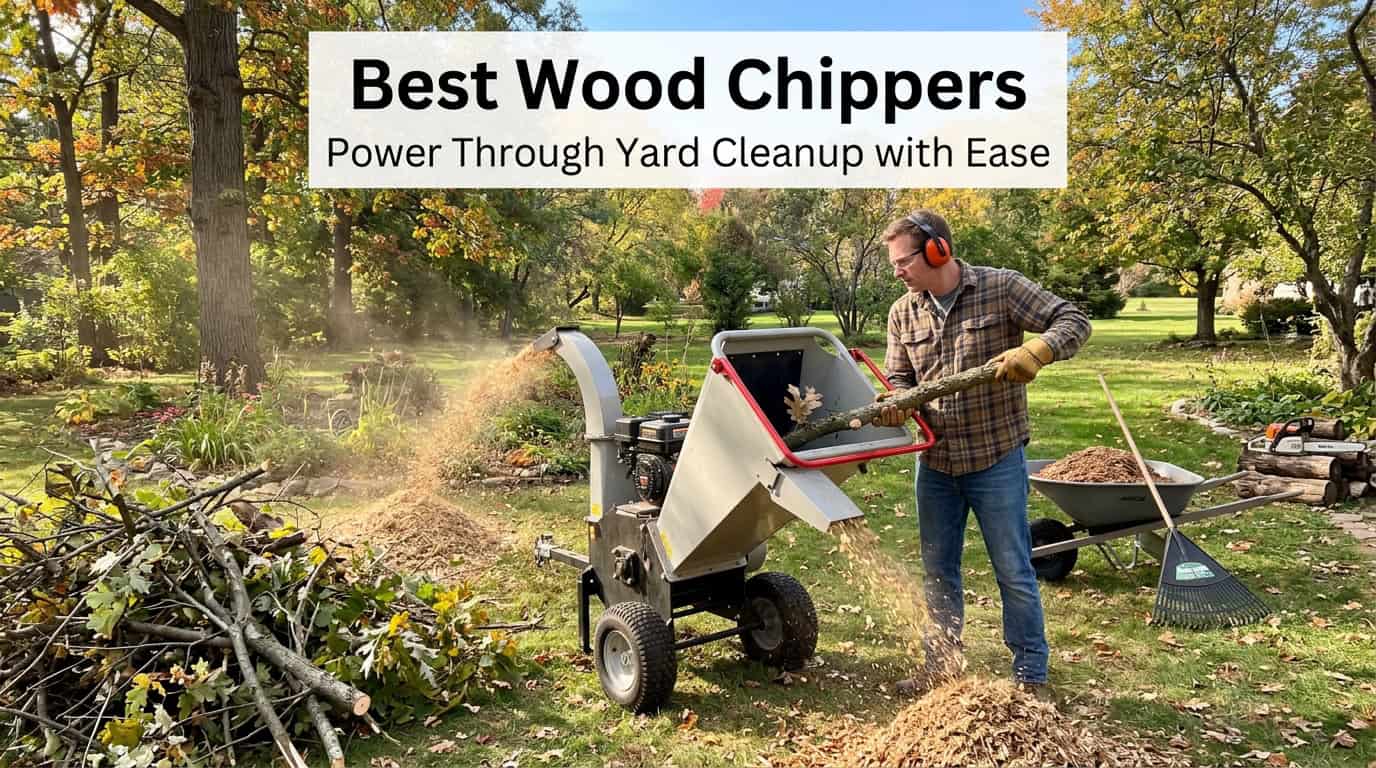
Every pruning season, every windstorm, and every overgrown hedge leaves behind the same problem: a pile of branches too big to bag and too small to justify a dump trailer. Hauling it away takes hours. Burning it isn’t legal in most places. Leaving it to rot takes years. A wood chipper solves the problem in minutes – feeding branches in one end and producing usable mulch out the other.
The decision that matters most before you buy is electric versus gas. Electric chippers are quiet, require almost no maintenance, and run clean – but they’re genuinely limited to twigs and smaller branches. Gas chippers handle thick branches and high volume but come with noise, fuel, and engine upkeep. Get this decision wrong and you’ll either underpower your cleanup or own far more machine than your yard needs.
This guide covers 12 wood chippers available on Amazon right now – six electric models for light-to-medium yard work and six gas-powered machines ranging from entry-level 7HP units to a 15HP, 4-wheel, electric-start heavy hitter. Every review gives you the realistic capacity, not just the marketing number, so you can match the machine to your actual yard.

Quick Comparison: Best Wood Chippers (2026)
| Product | Power | Max Diameter (Rated) | Reduction Ratio | Cutting System | Best For |
|---|---|---|---|---|---|
| Yeryork Wood Chipper | Electric 15A | 1.8″ | 21:1 | Dual SK5 blades | Best Overall Electric |
| LawnMaster FD1503 | Electric 15A | 1.5″ | 15:1 | Reversible blades | Best for Beginners |
| AIVOLT 15-Amp Shredder | Electric 15A | 1.6″ | 16:1 | Dual blades | Best Electric Value |
| Sun Joe Corded Chipper | Electric 15A | 1.5″ | 21:1 | Reversible 2-blade | Best Known Brand |
| Yireal 3-Blade | Electric 15A | 1.7″ | 18:1 | Triple blade | Best Cutting Consistency |
| 2800W Electric Mulcher | Electric 2800W | 1.8″ | 20:1 | Dual blades | Best Electric Bag Capacity |
| S3 Wood Chipper 7HP | Gas 7HP 212cc | 3″ | 15:1 | Blade + hammer | Best Entry Gas |
| C40 Wood Chipper 9HP | Gas 9HP 274cc | 4″ | 15:1 | Dual knife + L-frame | Best for Thick Branches |
| Landworks 3-in-1 | Gas | 3″ | ~15:1 | Blade + hammer hybrid | Best for Mixed Debris |
| ZONSEN 15HP E-Start | Gas 15HP 459cc | 6″ | ~20:1 | Heavy blade + hammer | Best Heavy-Duty / Largest Capacity |
| SuperHandy Ultra HD | Gas 7HP | 3″ | 15:1 | Dual blade | Best Reliability Track Record |
| BILT HARD 4″ 9HP | Gas 9HP 274cc | 4″ | 15:1 | Drum blade + hammer | Best with Tow Hitch |
Electric vs. Gas Wood Chippers – The Core Decision
Before comparing individual models, the electric-vs-gas decision determines almost everything else about your purchase. Get this part right and any reasonably-reviewed model in that category will serve you well.
Electric Wood Chippers
Electric chippers run on standard 13–15 amp motors, plug into a regular household outlet, and operate at roughly 60–75 decibels — quiet enough for early morning or residential use without upsetting neighbors. They produce zero emissions, require essentially no engine maintenance, and start with the flip of a switch every time. Their real-world limitation is branch diameter: while many are marketed for branches up to 1.5–1.8 inches, that rating assumes dry, straight, knot-free wood. On green or forked branches, expect noticeably reduced performance below the advertised maximum.

Gas Wood Chippers
Gas chippers use small engines ranging from 7HP up to 15HP and beyond, and they process branches from 3 inches up to 6 inches in diameter depending on the model. The trade-off is noise — typically 85–100 decibels, loud enough that OSHA recommends hearing protection above the 85dB threshold — plus the ongoing maintenance of any small gas engine: oil changes, air filters, spark plugs, and fuel system care. In exchange, gas models process storm debris, fallen limbs, and thick brush at a volume and speed no electric chipper can match.
The “Ambitious Rating” Problem
One of the most consistent findings across independent testing is that manufacturer branch diameter ratings are optimistic. A chipper rated for 1.5-inch branches may handle that size only when the wood is dry and fed straight-on; a knotty or slightly green branch at the same diameter can bog the motor down or jam the feed. The practical rule: buy a chipper rated for branch sizes noticeably above what you expect to process regularly, and treat the advertised maximum as an occasional capability rather than a comfortable working limit.
Quick Decision Rule
If you’re clearing twigs, small prunings, and branches under 2 inches a few times per season in a residential neighborhood, an electric chipper is the right tool — quieter, cheaper, and sufficient. If you’re regularly processing storm debris, fallen limbs, or branches in the 3-to-6-inch range, or working on a larger rural property, a gas chipper is worth the noise and maintenance trade-off.
What to Look for in a Wood Chipper
Blade vs. Hammer vs. Hybrid Cutting Systems
The cutting mechanism inside a chipper determines what kind of yard debris it handles best, and this is rarely explained clearly anywhere.
Blade systems use one or more sharp steel knives mounted on a rotating disc or flywheel. Blades cut clean, dry branches efficiently and produce uniform chip sizes — but they dull faster on dirty, rocky, or debris-contaminated material, and they don’t shred soft material like leaves particularly well (leaves tend to slide past a blade rather than being cut).
Hammer (flail) systems use multiple swinging metal hammers that impact and tear material rather than slice it. This works very well on leaves, soft green material, and stringy yard waste, but is less efficient at cleanly cutting thick, dry branches — hammers tend to chew rather than chip them, producing a rougher, less consistent mulch.
Hybrid systems combine both — typically a blade-equipped disc paired with hammer assemblies on the same rotor, or a chipper inlet alongside a separate shredder hopper. This is the most versatile setup for typical yard waste, which is almost always a mix of branches and leaves/soft debris. Several models in this guide (S3, C40, Landworks, ZONSEN, BILT HARD) use this hybrid approach.
Reduction Ratio – What the Number Actually Means
Every wood chipper lists a reduction ratio — 15:1, 18:1, 20:1, 21:1 — but the number means little without translation. A 15:1 ratio means 15 units of loose volume (branches, leaves, brush as they sit in a pile) become roughly 1 unit of chipped material. In practical terms: a pickup truck bed’s worth of loose brush (roughly 2–3 cubic yards) chipped at 15:1 becomes a volume you could carry in a couple of 5-gallon buckets. Higher ratios (20:1, 21:1) produce even finer, more compact mulch — useful when storage space or mulch volume for garden beds is a consideration. Lower ratios produce coarser chips that work better as ground cover or pathway material.
Realistic vs. Advertised Branch Capacity
As covered above, treat the rated maximum diameter as a best-case figure under ideal conditions — dry wood, straight branches, no forks or knots. For consistent day-to-day use without bogging the motor or jamming the feed, plan around branches roughly 20–30% smaller than the advertised maximum. If your yard regularly produces 3-inch branches, look at a chipper rated for 4 inches, not one rated exactly at 3.
Wet/Green Wood vs. Dry/Seasoned Wood
Moisture content dramatically affects chipping performance. Green (freshly cut, high-moisture) wood is softer and more fibrous — blades tend to slip and compress the wood rather than cut cleanly through it, which causes jams, bogging, and increased strain on the motor or engine. Dry, seasoned wood (cut and left to dry for 1–2 weeks or more) cuts cleanly and feeds through far more reliably. If you have the option, let branches sit for a week or two before chipping, especially on electric models where motor power is already limited. If you must chip wet wood immediately (storm cleanup, for example), expect to feed material more slowly and accept reduced effective capacity below the rated maximum.
Self-Feeding vs. Push-Stick Feed Systems
Self-feeding (roller-fed) chippers pull branches in automatically once engaged with the rollers — convenient, but this works best on straight, single-stem branches. Forked branches or those with multiple side stems can feed at odd angles, increasing the risk of kickback (material being thrown backward out of the hopper). Manual push-stick feed systems give you more direct control over feed rate and angle, which can be safer when processing irregular or bushy material. Regardless of feed type: always limb forked branches into single stems before feeding, and never use your hands to push material or clear a jam — use the supplied push stick and always power off the machine before clearing any obstruction.
Extension Cord Requirements for Electric Models
This is a commonly overlooked factor that directly affects electric chipper performance. A 15-amp motor needs adequate amperage delivered through the cord — use a 12-gauge (minimum), outdoor-rated extension cord under 50 feet in length. Thinner cords (16-gauge or 14-gauge) or longer runs cause voltage drop, which translates directly into reduced motor power, overheating risk, and a chipper that underperforms even though the motor itself is fine. If you need a longer run, step up to 10-gauge cord rather than accepting voltage drop on a thinner cable.
Tow Hitch and Mobility Features
Several gas models include a standard 2-inch coupler hitch, allowing the chipper to be towed behind an ATV or lawn tractor — extremely useful on larger properties where pushing the machine across the yard repeatedly is impractical. Important caveat: most residential wood chippers are not designed or rated for towing at road speeds on public roads — check local regulations before towing on anything other than private property at low speed.
Collection Bag Capacity in Practice
Bag size is listed in liters or bushels, but the practical question is how often you’ll stop to empty it. A 45L bag on a model processing dense, dry branches will fill faster than the same bag processing light leaf material — expect to empty a 45–60L bag every 15–25 minutes of steady feeding on typical mixed yard debris. Larger bags (60L and up) reduce interruption frequency meaningfully on bigger cleanup jobs.
Electric Wood Chippers
1. Yeryork Wood Chipper — Best Overall Electric
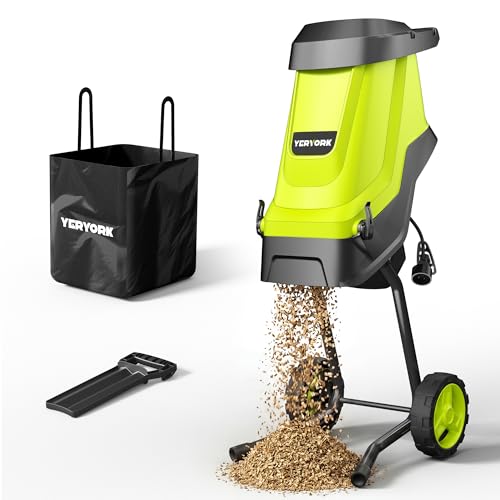
The Yeryork earns the top electric spot through a combination of genuinely useful design details rather than any single standout spec. Its 15-amp motor drives dual SK5 high-carbon steel blades rated for branches up to 1.8 inches — among the higher realistic capacities in the electric category — with a 21:1 reduction ratio that produces fine, compact mulch suitable for direct garden bed application. The blades are rotatable, meaning you can flip them to a fresh cutting edge once one side dulls, extending the interval between blade replacements considerably compared to fixed single-edge designs.

The standout practical feature is the anti-jamming design, which noticeably reduces the frequency of feed stoppages compared to basic electric chippers — particularly helpful given that electric motors have less reserve power to push through a jam than gas engines do. The 45-liter collection bag is a reasonable size for residential use, requiring emptying roughly every 20 minutes of steady feeding on typical mixed branch material. The housing is described as waterproof and dent-resistant, a genuine consideration for a tool that lives outdoors in a shed or garage rather than climate-controlled storage.

Mobility is handled well with 7-inch wheels that roll smoothly over grass and uneven yard terrain — a small detail that matters more than it sounds once you’re repositioning the chipper around a yard during a cleanup session. Assembly is straightforward, and the chute design positions material at a comfortable feeding height without excessive bending. As with all electric chippers, treat the 1.8-inch rating as a best-case figure on dry, straight branches — expect somewhat reduced real-world capacity on green wood or anything with forks or knots.
Pros
- Among the highest realistic branch capacity in the electric category (1.8″)
- Rotatable SK5 blades extend usable life before replacement
- Anti-jamming design reduces feed interruptions
- Waterproof, dent-resistant housing for outdoor storage durability
- 21:1 reduction ratio produces fine, garden-ready mulch
Cons
- Still limited to dry, straight branches at the upper end of its rating
- 45L bag requires frequent emptying on larger cleanup sessions
Specs
- Power: Electric 15A
- Max branch diameter: 1.8″ (rated)
- Reduction ratio: 21:1
- Blades: Dual rotatable SK5 steel
- Collection bag: 45L
Best for: Homeowners with regular yard maintenance needs who want the strongest realistic branch capacity available in a quiet, low-maintenance electric chipper.
2. LawnMaster FD1503 Electric Wood Chipper — Best for Beginners

The LawnMaster FD1503 is the chipper to start with if you’ve never used one before and want a straightforward, no-surprises introduction to the tool category. Its 15-amp motor drives a set of reversible blades rated for branches up to 1.5 inches — a conservative, honest rating that the machine actually delivers on consistently rather than stretching toward an optimistic maximum. The reversible blade design means that when one cutting edge dulls, a simple flip restores sharp performance without buying replacement parts immediately.

The 15:1 reduction ratio is on the lower end of this guide’s electric lineup, which means slightly coarser chips than the higher-ratio alternatives — fine for general yard cleanup and basic mulch use, less ideal if you specifically want very fine garden-bed mulch. The locking hopper with a safety interlock switch is standard safety practice across this category, shutting the motor down automatically if the hopper is opened during operation. The motor runs quietly relative to gas alternatives, and the straightforward single-speed operation means there’s nothing to configure incorrectly — plug in, switch on, feed branches.

This is intentionally a simple, light-duty machine, and it performs best when expectations match that positioning: small deadfall after a storm, routine pruning cleanup, and general twig-and-small-branch yard maintenance. It is not the machine for anyone expecting to process anything approaching its rated maximum on a regular basis with green wood — for that, the Yeryork’s stronger 1.8-inch capacity and anti-jam design are the better electric choice. For a first chipper at an accessible price with honest performance, the FD1503 is a safe, low-risk starting point.
Pros
- Honest, conservative branch rating that the machine reliably delivers
- Reversible blades extend usable cutting life
- Simple, single-speed operation with no setup complexity
- Locking hopper safety switch standard
- Quiet, low-maintenance entry point into the category
Cons
- 15:1 ratio produces coarser chips than higher-ratio alternatives
- Limited to genuinely small branches and twigs — not for anything approaching 2 inches
Specs
- Power: Electric 15A
- Max branch diameter: 1.5″ (rated)
- Reduction ratio: 15:1
- Blades: Reversible
- Safety: Locking hopper interlock
Best for: First-time chipper buyers and homeowners with light, occasional yard cleanup needs who want a simple, reliable, low-maintenance machine.
3. AIVOLT 15-Amp Electric Wood Chipper Shredder — Best Electric Value
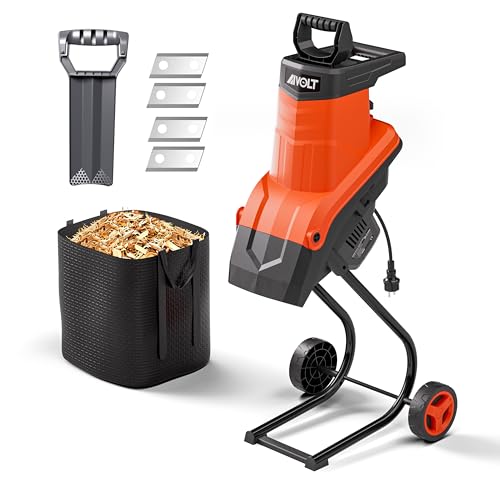
The AIVOLT delivers solid mid-pack electric chipper performance at a price that undercuts several established brand names in this guide without meaningfully sacrificing core functionality. The 15-amp motor and dual-blade cutting system handle branches up to a rated 1.6 inches, sitting comfortably between the conservative LawnMaster and the more capable Yeryork in terms of realistic capacity. The 16:1 reduction ratio produces moderately fine mulch suitable for general garden and landscaping use.

The compact body keeps the AIVOLT lightweight and easy to maneuver — a genuine advantage for anyone who needs to move the chipper between different areas of the yard during a single cleanup session rather than working from one fixed position. The feed hopper accepts twigs and small-to-medium branches without excessive resistance, and the discharge chute directs chips into the attached collection bag with minimal scatter onto surrounding ground.

Build quality reflects its competitive price point — solid for the intended residential use case but not engineered for heavy or daily use. For homeowners doing routine seasonal yard maintenance who want dependable performance without paying a premium for brand recognition, the AIVOLT represents one of the better value propositions in the electric category covered in this guide.
Pros
- Strong value relative to established brand-name electric chippers
- Lightweight, easy to reposition around the yard during use
- 1.6″ rated capacity covers most routine pruning debris
- Compact footprint for storage in smaller sheds or garages
Cons
- Build quality suited to occasional rather than heavy daily use
- Smaller brand ecosystem for replacement parts compared to Sun Joe
Specs
- Power: Electric 15A
- Max branch diameter: 1.6″ (rated)
- Reduction ratio: 16:1
- Blades: Dual blade system
- Weight: Lightweight compact body
Best for: Budget-conscious homeowners who want dependable electric chipper performance for routine yard maintenance without paying a brand-name premium.
4. Sun Joe Corded Wood Chipper Shredder — Best Known Brand
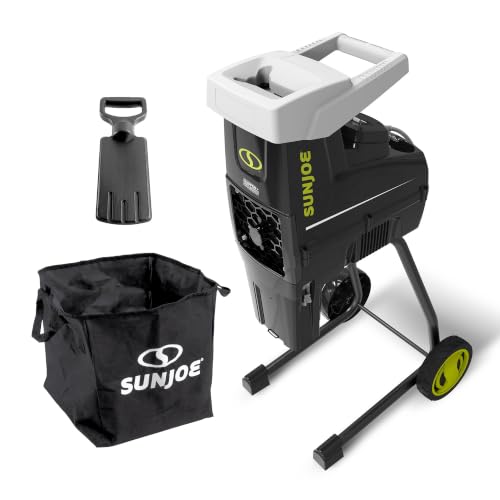
Sun Joe is one of the most recognized names in outdoor power equipment, and its corded wood chipper shredder reflects the brand’s broader strength: consistent, well-documented performance backed by a large installed user base and extensive independent review coverage. The reversible two-blade system spins at 4,300 RPM and is rated for branches and twigs up to 1.5 inches — independent testing has noted this rating runs slightly optimistic in practice, so plan around branches closer to 1.2–1.4 inches for consistently smooth feeding.

The 21:1 reduction ratio is among the highest in this guide’s electric lineup, producing notably fine wood chips that multiple reviewers have compared favorably to chainsaw-processed material in terms of consistency — genuinely useful if your goal is fine garden mulch rather than coarse ground cover. A standout practical feature is the forward and reverse switch on the motor, which allows you to reverse blade direction to clear a jam without disassembling the hopper or reaching into the cutting chamber — a meaningful safety and convenience advantage that several budget alternatives in this guide lack.

The locking hopper with a safety shutoff switch is standard, and the motor runs quietly relative to the gas alternatives in this guide while still producing noticeably less ambient noise than several electric competitors. Replacement parts and accessories are widely available given Sun Joe’s market presence, which matters over the multi-year lifespan of a seasonal-use tool like this. For buyers who value brand reliability, parts availability, and a genuinely useful jam-clearing reverse feature, the Sun Joe is a dependable choice — just calibrate expectations slightly below the advertised 1.5-inch maximum.
Pros
- Forward/reverse switch for safe, convenient jam clearing
- 21:1 reduction ratio — among the finest chip output in the electric category
- Strong brand reliability and wide parts/accessory availability
- Reversible blades extend cutting life before replacement needed
Cons
- Independent testing suggests the 1.5″ rating runs slightly optimistic
- Standard locking hopper but no advanced anti-jam design beyond reverse function
Specs
- Power: Electric 15A
- Max branch diameter: 1.5″ (rated; ~1.2–1.4″ realistic)
- Reduction ratio: 21:1
- Blade speed: 4,300 RPM
- Feature: Forward/reverse motor switch
Best for: Buyers who prioritize brand reliability, parts availability, and the convenience of a reverse-direction jam-clearing feature in an electric chipper.
5. Yireal Upgraded 3-Blade Electric Wood Chipper — Best Cutting Consistency
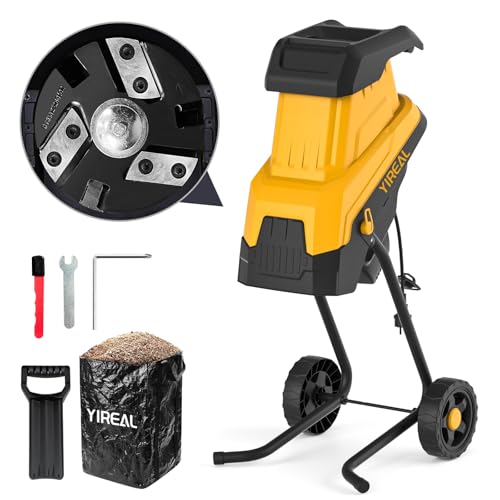
The Yireal distinguishes itself through its three-blade cutting head — a design upgrade over the standard dual-blade configuration found on most electric chippers in this guide. With three cutting edges engaging the material per rotation instead of two, the Yireal produces more consistent chip sizing and a smoother feed experience on branches near its rated capacity, since there’s less rotational gap between cutting engagements. The 15-amp motor is rated for branches up to 1.7 inches, supported by an 18:1 reduction ratio that lands comfortably in the middle of this guide’s electric range for chip fineness.

In practice, the additional blade reduces the “thud-thud-thud” uneven feel that some single- and dual-blade electric chippers exhibit on branches near their diameter limit — the three-blade head engages more frequently and evenly, which translates to less motor strain and a smoother overall chipping experience. This is a genuine mechanical advantage rather than a marketing distinction, and it’s noticeable specifically when processing branches in the 1.3–1.7 inch range where lesser blade counts start to feel labored.

The rest of the machine follows familiar electric chipper conventions: a locking safety hopper, wheeled base for yard mobility, and a collection bag sized appropriately for residential use. For buyers who have used a basic dual-blade electric chipper before and found the feed experience rough or inconsistent on mid-sized branches, the Yireal’s three-blade upgrade directly addresses that specific frustration.
Pros
- Three-blade head produces smoother, more consistent feeding than dual-blade designs
- 1.7″ rated capacity with good real-world consistency near that limit
- 18:1 reduction ratio for solid all-purpose mulch fineness
- Reduced motor strain compared to standard dual-blade alternatives
Cons
- Three-blade design means more cutting edges to eventually sharpen or replace
- Still an electric chipper — same fundamental capacity ceiling as the category
Specs
- Power: Electric 15A
- Max branch diameter: 1.7″ (rated)
- Reduction ratio: 18:1
- Blades: Triple-blade cutting head
Best for: Buyers who want the smoothest, most consistent feeding experience in the electric category, particularly on branches near the 1.5–1.7 inch range.
6. Wood Chipper Shredder, Electric Mulcher 2800W — Best Electric Bag Capacity
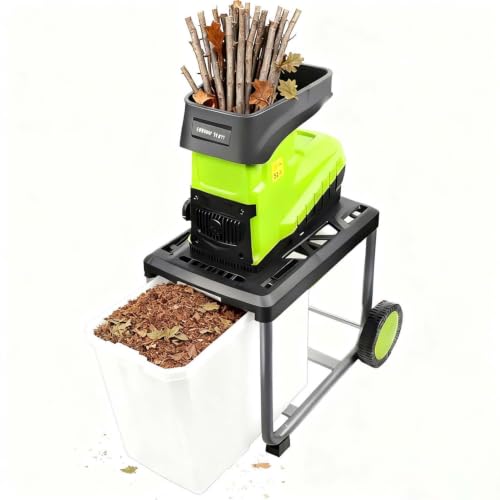
This 2800-watt electric mulcher pushes the upper boundary of what’s achievable on standard household electrical power, and the extra wattage shows up most clearly in sustained feeding performance — it handles a steady stream of branches up to its 1.8-inch rating with less tendency to bog down than lower-wattage 15-amp alternatives in this guide. The 20:1 reduction ratio produces fine, compact mulch, and the dual-blade cutting system is sized appropriately for the higher power input.

The standout feature is the 60-liter collection bag — the largest capacity among the electric chippers in this guide, roughly 33% larger than the 45L bags found on several competitors. In practical terms, this translates to noticeably fewer interruptions to empty the bag during an extended cleanup session, which matters more than it might initially seem once you’re an hour into processing a substantial brush pile. For anyone who has used a smaller-bag electric chipper and found the constant emptying cycle frustrating, the larger capacity here is a genuine quality-of-life improvement.

Because this model draws more power than standard 15-amp units, pay particular attention to extension cord specification if you’re not running it directly from a wall outlet — a 12-gauge or heavier outdoor-rated cord is essential to avoid voltage drop that would undercut the very power advantage this machine is built around. For homeowners with larger yards or more substantial seasonal cleanup volume who want to stay in the electric category rather than stepping up to gas, this is the strongest capacity-and-volume option available.
Pros
- 60L collection bag — largest capacity in the electric category in this guide
- 2800W motor sustains feeding better than standard 15A units under continuous use
- 20:1 reduction ratio for fine, compact mulch output
- Fewer interruptions for bag emptying on larger cleanup jobs
Cons
- Higher power draw requires careful extension cord gauge selection
- Larger bag and motor add bulk compared to compact electric alternatives
Specs
- Power: Electric 2800W
- Max branch diameter: 1.8″ (rated)
- Reduction ratio: 20:1
- Collection bag: 60L
Best for: Homeowners with larger yards who want maximum collection capacity and sustained feeding performance while staying within the electric chipper category.
Gas Wood Chippers
7. S3 Wood Chipper Shredder, 7HP 212cc Gas Powered — Best Entry Gas

The S3 is the natural step-up point for anyone who has outgrown an electric chipper’s branch capacity but doesn’t yet need the largest, most powerful gas machines in this guide. Its 7HP 212cc engine provides genuinely usable power for branches up to 3 inches in diameter — a meaningful jump from anything in the electric category — while remaining a reasonably compact, manageable machine for a single person to operate and reposition around a residential yard.

The hybrid cutting system combines chipper blades for clean branch cutting with a separate shredder hopper input for leaves and soft debris, giving it genuine versatility across the mixed yard waste that most residential cleanup actually involves rather than uniform branches alone. The 15:1 reduction ratio is standard for this engine class, producing a practical balance of processing speed and mulch fineness. Heavy-duty steel construction throughout the housing and chute reflects the increased stress of gas-engine vibration and the more aggressive material it’s designed to process compared to electric alternatives.

As with all gas chippers, expect noise in the 85–100 decibel range during operation — hearing protection is genuinely necessary, not optional, and this is not a machine for early morning use in a tightly packed residential neighborhood without considering your neighbors. Basic small-engine maintenance applies: oil checks before each use, periodic air filter cleaning, and standard fuel system care between seasons. For homeowners ready to move beyond electric capacity limits without jumping to the largest and most expensive gas machines, the S3 hits a sensible middle ground.
Pros
- 3″ branch capacity — a major step up from any electric model in this guide
- Hybrid blade + shredder hopper system handles both branches and leaves
- Compact and manageable for single-person operation
- Heavy-duty steel construction appropriate for gas-engine vibration and load
Cons
- 85–100dB noise level requires hearing protection
- Standard small-engine maintenance (oil, filter, fuel care) required
Specs
- Power: Gas 7HP 212cc
- Max branch diameter: 3″ (rated)
- Reduction ratio: 15:1
- Cutting system: Blade + shredder hopper hybrid
Best for: Homeowners stepping up from electric chippers who need genuine 3-inch branch capacity without the size and expense of larger gas machines.
8. C40 Wood Chipper, 4″ Max Diameter, 9HP 274cc Gas Powered — Best for Thick Branches

The C40 steps up meaningfully from entry-level gas chippers like the S3, and the upgrade is built around real, measurable differences rather than marginal spec bumps. The 9HP 274cc engine — substantially larger than the S3’s 212cc unit — drives a larger 15.9-inch flywheel that maintains rotational momentum through thicker branches rather than bogging down, which is the single biggest factor separating a chipper that handles 4-inch material confidently from one that merely claims to.

The cutting system uses two knives paired with an L-shaped support structure rather than a simple blade-and-hammer combination — this design holds a sharper edge longer and resists dulling better than basic hammer-style cutting components, which matters significantly given how much more material a 9HP engine will push through over a season compared to a 7HP unit. The 15:1 reduction ratio stays consistent with the rest of this guide’s gas lineup, and the larger flywheel mass actually helps maintain consistent chip sizing even as branch diameter approaches the 4-inch maximum.

For dry hardwood branches — oak, maple, and similarly dense species — the C40’s additional power and flywheel mass make a genuine practical difference over smaller engines, which can stall or require significantly slower feeding on the same material. The trade-off is size and weight: this is a larger, heavier machine than the S3, better suited to being parked in one area and fed material brought to it rather than frequently repositioned around a yard. For anyone regularly processing branches in the 3–4 inch range, particularly hardwood, the C40’s extra power is the difference between confident processing and constant struggle.
Pros
- 9HP 274cc engine with larger 15.9″ flywheel for sustained power through thick material
- Dual-knife + L-frame cutting system holds an edge longer than basic hammer designs
- Genuine 4″ capacity, including dense hardwood branches
- Consistent chip sizing even near maximum rated diameter
Cons
- Larger and heavier than entry-level gas alternatives — less convenient to reposition frequently
- Higher fuel consumption than smaller-engine alternatives
Specs
- Power: Gas 9HP 274cc
- Max branch diameter: 4″ (rated)
- Reduction ratio: 15:1
- Flywheel: 15.9″
- Cutting system: Dual knife + L-shaped structure
Best for: Property owners regularly processing thick branches, especially dense hardwood, who need sustained power rather than a machine that merely claims 4-inch capacity.
9. Landworks Wood Chipper Shredder Mulcher — Best for Mixed Debris

The Landworks earns its place in this guide through genuine 3-in-1 versatility — chipping, shredding, and mulching capability built into a single gas-powered machine designed specifically for the reality that most yard cleanup involves a mix of material types rather than uniform branches alone. The hybrid cutting system pairs chipper blades for clean branch processing with a separate shredder capability for leaves, small twigs, and soft green material — addressing the common frustration of owning a chipper that handles branches well but chokes on a pile of leaves, or vice versa.

The gas engine provides sufficient power for branches up to roughly 3 inches in diameter, putting it in the same general capacity class as the S3 while differentiating itself through the breadth of material it handles well. This matters considerably for anyone whose yard waste is genuinely mixed — fall leaf cleanup combined with seasonal pruning, or general property maintenance that produces both woody and soft debris in the same session. Rather than switching tools or running two passes with different equipment, the Landworks processes both material types without requiring you to sort debris beforehand.

Build quality and engine maintenance requirements follow standard gas chipper expectations — regular oil checks, air filter care, and the noise considerations inherent to any gas-powered yard equipment in the 85–100 decibel range. For homeowners and small property owners whose cleanup needs genuinely span both branches and leaf/soft debris rather than skewing heavily toward one material type, the Landworks’ mulcher functionality eliminates the need for separate dedicated equipment.
Pros
- Genuine 3-in-1 chip/shred/mulch capability for mixed yard waste
- Handles both woody branches and soft leaf material without switching equipment
- 3″ branch capacity comparable to other entry-to-mid gas chippers
- Eliminates the need for separate leaf shredder equipment
Cons
- Jack-of-all-trades design trades some specialization for versatility
- Standard gas engine maintenance and noise considerations apply
Specs
- Power: Gas
- Max branch diameter: 3″ (rated)
- Cutting system: Blade + hammer hybrid (3-in-1)
- Function: Chip, shred, and mulch in one machine
Best for: Property owners whose yard waste genuinely mixes woody branches with leaves and soft debris, who want one machine that handles both well.
10. ZONSEN 459cc 15HP E-Start, 4-Wheel Wood Chipper — Best Heavy-Duty / Largest Capacity
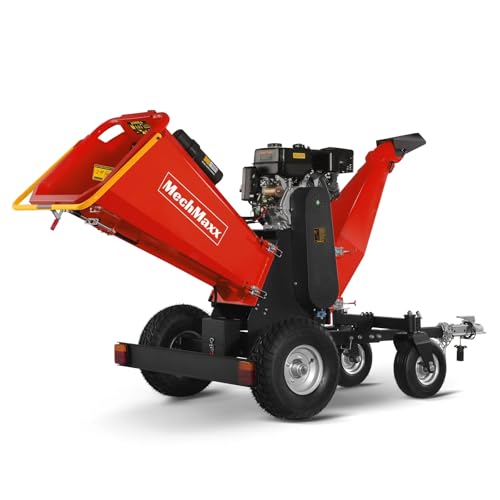
The ZONSEN is, by a clear margin, the most capable machine in this guide — and it’s built for buyers whose chipping needs genuinely exceed what any other product here can handle. The 459cc 15HP engine is more than triple the displacement of the entry-level S3, and it drives a chipping capacity rated at a full 6 inches — branches and small logs that would stall or jam every other machine in this lineup. This is the right tool specifically for rural and farm properties, larger acreage with significant tree cover, or anyone regularly dealing with substantial storm debris and fallen limbs rather than routine pruning.

Two features distinguish the ZONSEN beyond raw engine size. The electric start (E-start) eliminates the considerable physical effort of pull-starting a 15HP engine — a genuinely significant quality-of-life feature, since pull-starting larger displacement engines requires real strength and can become a recurring frustration or even a barrier for users with shoulder or back limitations. Second, the 4-wheel chassis provides meaningfully better stability than the 2-wheel designs used by smaller chippers in this guide, particularly when loading large, heavy branches into the hopper or operating on uneven rural terrain where a 2-wheel machine could tip or roll unexpectedly.

With this much power comes proportional noise and weight — expect this machine to be on the louder end of the 85–100 decibel gas chipper range, and its size and weight make it considerably less convenient to move by hand compared to smaller machines (a tow hitch for ATV or tractor towing is the practical mobility solution at this scale). Fuel consumption and maintenance intervals scale with engine size accordingly. For anyone whose property genuinely produces material in the 4–6 inch range on a regular basis, no other machine in this guide will keep up — this is the only realistic option at that capacity level.
Pros
- 6″ branch capacity — by far the largest in this guide
- 15HP 459cc engine handles material that stalls smaller machines
- Electric start eliminates pull-cord effort on a large engine
- 4-wheel chassis provides superior stability on uneven terrain
- The clear choice for rural/farm properties and storm debris cleanup
Cons
- Significant size, weight, and fuel consumption — overkill for typical residential yards
- Loudest machine in this guide — hearing protection essential
- Higher purchase price reflecting its substantially greater capability
Specs
- Power: Gas 15HP 459cc
- Max branch diameter: 6″ (rated)
- Start: Electric start
- Chassis: 4-wheel
Best for: Rural and farm property owners, large acreage with significant tree cover, and anyone regularly processing storm debris or branches in the 4–6 inch range.
11. SuperHandy Wood Chipper Shredder Mulcher Ultra Heavy Duty — Best Reliability Track Record
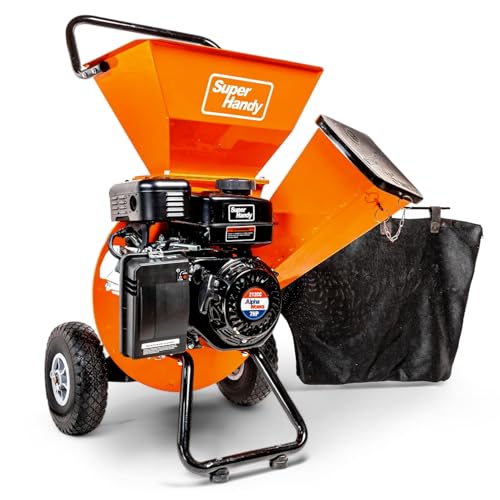
SuperHandy has built a notably strong reputation in independent review aggregation specifically for reliability and customer satisfaction in this product category — its mini/compact wood chipper models have consistently topped third-party comparison scoring among gas chippers, reflecting a track record that goes beyond marketing claims. The Ultra Heavy Duty model uses a 7HP engine with dual cutting blades rated for branches up to 3 inches, putting it in direct capability comparison with the S3 while differentiating itself primarily through build quality and demonstrated long-term dependability across a large base of real-world users.

The 15:1 reduction ratio is standard for this engine class, and the cutting system handles dry branches in its capacity range efficiently. What distinguishes SuperHandy in practice is consistency of performance over time and across units — a meaningful consideration for any gas-powered equipment, where build quality variance between budget manufacturers can be substantial. The polyurethane wheels avoid the flat-tire risk of pneumatic tires, a small but genuinely practical detail for equipment that may sit unused in a shed for months between seasonal use.

Like other 7HP-class gas chippers in this guide, expect standard noise levels in the 85–100 decibel range and routine small-engine maintenance — oil checks, air filter care, and seasonal fuel system attention. For buyers who weight long-term reliability and proven track record heavily in their purchase decision — rather than chasing the highest spec numbers — SuperHandy’s demonstrated consistency across a large user base makes it a low-risk choice in the mid-capacity gas category.
Pros
- Strong independent reliability track record across a large user base
- Polyurethane wheels avoid pneumatic tire flat risk during storage
- 3″ capacity comparable to other 7HP-class gas chippers
- Consistent performance reported across units — lower build-quality variance risk
Cons
- No major capability advantage over the S3 at similar engine size
- Standard gas engine noise and maintenance requirements apply
Specs
- Power: Gas 7HP
- Max branch diameter: 3″ (rated)
- Reduction ratio: 15:1
- Wheels: Polyurethane (flat-proof)
Best for: Buyers who prioritize a proven, independently-verified reliability track record over chasing the highest available spec numbers in the mid-capacity gas category.
12. BILT HARD 4″ 274cc 9HP E-Start Drum Wood Chipper — Best with Tow Hitch
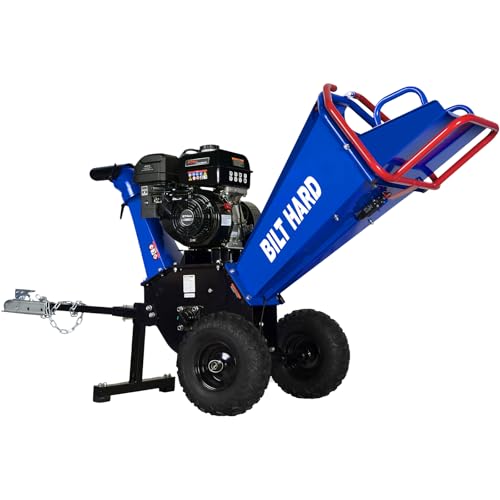
The BILT HARD combines genuine mid-to-large capability with two convenience features that meaningfully separate it from comparably-powered alternatives in this guide. The 9HP 274cc engine drives a drum-style cutting rotor equipped with chipper blades and J-type hammer slices, rated for branches up to 4 inches — putting it in the same capacity class as the C40 while adding electric start to eliminate pull-cord effort on this larger engine size, a genuinely appreciated feature once you’ve manually pull-started a 9HP engine a few dozen times across a season.

The standout differentiator is the included tow hitch — a standard 2-inch coupler that allows the BILT HARD to be towed behind an ATV or lawn tractor rather than pushed by hand across a larger property. Combined with sturdy off-road-capable wheels, this makes repositioning the chipper around extensive acreage dramatically less physically demanding than with non-towable alternatives. The hybrid cutting system — chipper blades plus hammer slices on the same drum — handles both clean branch material and rougher, more irregular debris reasonably well in a single pass.

As with the C40, this is a larger and heavier machine appropriate for being positioned and fed rather than frequently relocated by hand — which is precisely why the tow hitch matters so much here. Standard gas engine maintenance and the expected 85–100 decibel noise range apply. For property owners with enough land that towing the chipper between work areas is a genuine practical need, the BILT HARD’s combination of 4-inch capacity, electric start, and tow capability is the strongest match in this guide.
Pros
- 4″ branch capacity with electric start on a 9HP engine
- Included 2″ tow hitch for ATV/tractor towing across larger properties
- Drum-style hybrid cutting system handles both branches and rougher debris
- Off-road-capable wheels for uneven terrain mobility
Cons
- Sizeable, heavy machine best suited to towed rather than hand-pushed use
- Tow hitch convenience is wasted value if your property doesn’t need it
Specs
- Power: Gas 9HP 274cc
- Max branch diameter: 4″ (rated)
- Start: Electric start
- Mobility: 2″ tow hitch included
- Cutting system: Drum-style blade + J-hammer hybrid
Best for: Larger property owners who need 4-inch branch capacity, electric start convenience, and the ability to tow the chipper between work areas with an ATV or tractor.
What Never to Feed a Wood Chipper
Regardless of which machine you choose, certain materials should never go into any wood chipper — they cause jams, accelerate blade wear, or create safety hazards.
Wet or green branches: Excess moisture causes blades to slip and compress the wood rather than cut it cleanly, leading to jams and motor strain. Season branches for 1–2 weeks when your timeline allows.
Pinecones and heavily resinous material: Pine resin gums up blades and hammer assemblies over time, gradually reducing cutting efficiency. Process these in small quantities if at all, and clean the cutting chamber more frequently if you regularly chip resinous softwoods.
Vines and stringy plant material: Rather than being cut cleanly, vines tend to wrap around the rotor or flywheel, which can stall the motor and create a tangled mess that’s tedious and potentially hazardous to clear. Cut vines into short segments before feeding, or avoid chipping them altogether.
Rocks, dirt-caked roots, or debris with embedded metal: Any hard foreign material instantly damages or dulls blades on contact. Always knock dirt and embedded debris off root balls or stump material before feeding, and visually inspect brush piles for embedded rocks or metal (fencing wire, nails) before processing.
Forked branches and multi-stem material: Branches with forks or multiple side stems can feed at irregular angles, particularly in self-feeding chippers, increasing the risk of kickback. Limb forked branches into single stems before feeding them into any chipper, regardless of feed mechanism.
Maintenance Guide — By Power Type
Electric Models
Inspect blade sharpness every 10–15 hours of active use — dull blades on an electric chipper struggle far more noticeably than on gas models, given the lower reserve power available. Clean the chute and rotor housing after each session to prevent sap and debris buildup. Check the power cord and plug for wear or damage before each use, and store the machine indoors away from moisture to prevent electrical component corrosion.
Small Gas Engines (7HP, Under 250cc — S3, SuperHandy)
Change the oil every 25 hours of use or once per season, whichever comes first. Clean or replace the air filter every 25 hours — a clogged filter is one of the most common causes of reduced power and hard starting in small engines. Inspect the spark plug every 50 hours and replace if the electrode is worn or fouled. Sharpen or rotate blades every 25–50 hours depending on use intensity and material type (resinous or dirty material accelerates wear).
Larger Gas Engines (9HP+, 270cc+ — C40, BILT HARD)
Follow the same oil and air filter schedule as smaller engines, but inspect belt tension and drive components more frequently given the heavier load these engines are designed to process. On 4-wheel chassis models like the ZONSEN, periodically grease wheel bearings to maintain smooth rolling performance, particularly if the machine is used on rough or muddy terrain.
End-of-Season Storage
For gas models, either run the fuel tank dry before storage or add a fuel stabilizer to prevent the gasoline from degrading and gumming up the carburetor over winter. Lightly oil exposed blade surfaces to prevent rust during extended storage. For electric models, store in a dry location and coil the power cord loosely rather than tightly to avoid internal wire damage from repeated sharp bends.
Tow-Behind and Mobility Features Explained
Several gas models in this guide (ZONSEN, BILT HARD) include a standard 2-inch coupler hitch, enabling the chipper to be towed behind an ATV or riding lawn tractor. This is genuinely valuable on larger properties where pushing a 100+ pound machine by hand across significant distances between work areas is impractical or physically demanding.
Road-towing legality: Most residential wood chippers are designed for low-speed towing across private property — fields, yards, unpaved paths — and are not engineered or rated for towing at road speeds on public roads. Check your local regulations before towing any wood chipper on a public road, even briefly.
4-wheel vs. 2-wheel chassis: 4-wheel models like the ZONSEN provide noticeably better stability on uneven terrain and when loading large, heavy branches into the hopper — there’s significantly less risk of the machine tipping or rolling unexpectedly compared to a 2-wheel design under the same conditions. 2-wheel chippers are lighter and easier to maneuver in tighter spaces, which matters more on smaller residential lots than on open rural acreage.
Electric-start value: On engines above roughly 7HP, pull-starting becomes a genuinely significant physical effort, and it gets harder, not easier, as the engine ages and compression characteristics shift slightly over time. Electric start (found on the ZONSEN and BILT HARD in this guide) eliminates this entirely with the press of a button — worth real consideration for anyone with shoulder, back, or general strength limitations, or simply anyone tired of multiple pull-cord attempts on a cold morning.
Use-Case Guide — Best Wood Chipper Per Scenario
Small Suburban Yard, Occasional Pruning
The Yeryork or LawnMaster FD1503 — quiet enough for residential use, low maintenance, and sufficient for twigs and small branches handled a few times per season.
Frequent Yard Work, Slightly Thicker Branches
The Sun Joe or Yireal 3-Blade — proven reliability and smoother cutting consistency for residential users who chip more regularly than the occasional cleanup.
Large Collection Needs, Less Frequent Emptying
The 2800W Electric Mulcher with its 60L bag — the best electric option when collection volume matters without stepping up to a gas engine.
Medium Property, Storm Cleanup, 3″ Branches
The S3 7HP or SuperHandy Ultra HD — reliable gas power for genuine 3-inch capacity without stepping up to the largest, most expensive machines in this guide.
Large Property, Hardwood Limbs Up to 4″
The C40 9HP or BILT HARD 4″ 9HP — sufficient engine power and flywheel mass for dense hardwood branches that would stall smaller machines.
Rural/Farm Property, Heaviest Debris, Easiest Mobility
The ZONSEN 15HP 4-wheel E-start — the most capable machine in this guide, built for repeated heavy use, 6-inch branches, and the stability/mobility features that matter on larger acreage.
Mixed Yard Waste (Leaves + Branches)
The Landworks 3-in-1 — genuine chip, shred, and mulch functionality for yard waste that combines woody and soft debris in the same cleanup session.
Frequently Asked Questions
What size branches can a wood chipper handle?
It depends on the power type. Electric chippers in this guide realistically handle branches between 1.5 and 1.8 inches in diameter under good conditions (dry, straight wood). Gas chippers range from 3 inches on entry-level 7HP engines up to 6 inches on the largest 15HP models. Always treat the manufacturer’s maximum rating as a best-case figure rather than a comfortable everyday working limit — real-world performance on green, knotty, or forked branches runs noticeably below the advertised maximum.
Is an electric or gas wood chipper better for home use?
For typical residential yards with routine pruning and occasional storm cleanup of smaller branches, electric chippers are quieter, require less maintenance, and are entirely adequate. For larger properties, frequent processing of branches above 2 inches, or significant storm debris cleanup, a gas chipper’s added power and capacity becomes worth the noise and maintenance trade-off. Most homeowners with a standard residential lot do well with electric; rural or larger-acreage property owners typically need gas.
What does reduction ratio mean on a wood chipper?
The reduction ratio describes how much the chipper compacts loose material by volume. A 15:1 ratio means 15 units of loose volume — branches and brush as they sit in a pile — become roughly 1 unit of chipped material. In practical terms, a pickup truck bed of loose brush chipped at 15:1 reduces to a volume you could carry in a couple of 5-gallon buckets. Higher ratios (18:1, 20:1, 21:1) produce finer, more compact mulch; lower ratios produce coarser chips.
Can I chip wet or green branches?
You can, but expect reduced performance. Green wood’s higher moisture content causes blades to slip and compress the material rather than cut cleanly through it, leading to jams and increased motor or engine strain. When your timeline allows, let branches season for 1–2 weeks before chipping for noticeably smoother, faster processing. If you must process wet wood immediately — after a storm, for example — feed material more slowly and expect somewhat reduced effective capacity below the rated maximum.
What extension cord do I need for an electric wood chipper?
Use a 12-gauge (minimum) outdoor-rated extension cord under 50 feet in length for standard 15-amp electric chippers. Thinner cords (16-gauge or 14-gauge) or longer cord runs cause voltage drop, which directly reduces motor power and can cause overheating — the chipper will underperform even though the motor itself is functioning correctly. For runs longer than 50 feet, step up to a 10-gauge cord rather than accepting the voltage drop on a thinner cable.
How loud is a wood chipper, and can I use it in a residential area?
Electric chippers typically run 60–75 decibels — quiet enough for residential use without significant neighbor disturbance. Gas chippers typically run 85–100 decibels, loud enough that OSHA recommends hearing protection above the 85dB threshold; this noise level is noticeable well beyond your own property line. If you’re in a tightly packed residential neighborhood and noise is a concern, an electric chipper is the more considerate choice, or limit gas chipper use to reasonable daytime hours.
How often should I sharpen wood chipper blades?
For gas-powered chippers under typical residential use, sharpen or rotate blades every 25–50 hours of operation, adjusting toward the more frequent end if you regularly process resinous, dirty, or rocky material. For electric chippers, inspect blade sharpness every 10–15 hours, since the lower-power motor struggles more noticeably with dull blades than a gas engine does. Reversible or rotatable blade designs (found on several models in this guide) let you flip to a fresh edge before a full replacement is needed.
Can I tow a wood chipper behind my lawn tractor?
If the chipper includes a tow hitch (such as the ZONSEN and BILT HARD in this guide, both using a standard 2-inch coupler), yes — this is designed specifically for low-speed towing across private property like yards, fields, and unpaved paths. Most residential wood chippers are not designed or rated for towing at road speeds on public roads, so check your local regulations before towing on anything other than private property at low speed.
Final Verdict
The right wood chipper depends almost entirely on the size of your property and the typical diameter of material you need to process. Here are the clear picks by buyer type:
- Best overall electric: Yeryork — strongest realistic capacity (1.8″) and anti-jam design in the electric category.
- Best electric for beginners: LawnMaster FD1503 — honest rating, simple operation, low risk first purchase.
- Best electric value: AIVOLT 15-Amp — solid performance at a competitive price.
- Best known electric brand: Sun Joe — reliable, widely supported, with a genuinely useful reverse jam-clearing feature.
- Best cutting consistency: Yireal 3-Blade — smoothest feed experience near its rated capacity.
- Best electric bag capacity: 2800W Electric Mulcher — 60L bag for fewer interruptions on bigger jobs.
- Best entry gas: S3 7HP — the sensible step-up from electric to genuine 3″ capacity.
- Best for thick branches: C40 9HP — sustained power through dense hardwood up to 4″.
- Best for mixed debris: Landworks 3-in-1 — genuine chip, shred, and mulch versatility.
- Best heavy-duty / largest capacity: ZONSEN 15HP E-Start — 6″ capacity with electric start and 4-wheel stability for rural and farm use.
- Best reliability track record: SuperHandy Ultra HD — consistently strong independent review performance.
- Best with tow hitch: BILT HARD 4″ 9HP — 4″ capacity, electric start, and towable mobility for larger properties.
Whatever you choose, buy slightly above your expected branch size rather than exactly at it, season wood when your timeline allows, and never substitute your hands for the push stick when clearing a jam. Those three habits will keep your chipper running smoothly and your fingers intact for many seasons of yard cleanup.
If a stump is left over from the tree that fed your chipper, see our guide to the best stump grinders for walk-behind and towable picks to finish the job.