A check engine light tells you something is wrong without telling you what. The gap between a $30 code reader and a genuine professional bidirectional scan tool is the difference between guessing at a repair and actually confirming it before you buy a part. The line that separates a useful diagnostic tool from an expensive paperweight on a difficult job isn’t the price tag alone — it’s whether the tool can talk back to your car’s computers, not just listen to them.
This guide covers nine professional and serious-DIYer scan tools available on Amazon in 2026, with the technical depth that competing roundups consistently skip: what actually happens when a scanner lacks CAN FD or DoIP support on a newer vehicle, the real five-year cost of “free updates” once the subscription renewal kicks in, how to spot a fake bidirectional claim before you buy, and a dedicated buying framework for shop owners weighing multi-bay costs against a technician’s learning curve. Whether you’re a serious home mechanic tired of guessing at parts or a shop owner comparing tools for your bays, this guide has the specific recommendation for your situation.
Quick answer: The LAUNCH X431 CRP919XBT is the best overall pick for most serious DIYers and professionals who want the deepest vehicle database and full protocol coverage. The Autel MaxiCOM MK900BT V2.0 is the right choice if battery and charging system diagnostics are a regular part of your work. The BLCKTEC 460T is the best entry point into genuine bidirectional control on a tighter budget. Read the full guide below to match the right tool to your specific diagnostic needs.
Quick navigation: Standard vs. Bidirectional | CAN FD & DoIP Explained | Active Test Depth by Scenario | Online vs. Offline ECU Coding | The Subscription Cost Trap | Spotting Fake Bidirectional Claims | Dongle vs. Tablet | Buying for a Shop | Battery & Charging Testing | European Vehicle Coverage | AI-Assisted Diagnostics | Topology Mapping | Comparison Table | Full Reviews | FAQs

Standard OBD2 vs. Bidirectional — What “Talking Back” to Your Car Actually Means
A standard OBD2 scanner reads data from your car’s computers — it pulls trouble codes, shows live sensor data, and tells you what the car’s computers are reporting. That’s useful, but it only gives you half the picture. A bidirectional scan tool lets you talk back to the car by sending commands to individual components, letting you activate a part directly and watch the real-time sensor response to confirm whether it’s actually bad — before you spend money on a replacement.
Here’s why that distinction has direct financial consequences in practice:
- EVAP purge valve fault (P0443): A standard scanner tells you the circuit has a fault — but not whether the valve itself is bad or the wiring is broken. A bidirectional tool lets you command the valve open and closed directly while watching current draw, confirming the actual culprit before you order a part.
- ABS pump that won’t cycle during a bleed: Bidirectional control lets you command the pump motor directly during the bleed procedure, confirming whether the pump itself works before condemning an entire ABS module — a part that can run $600 or more on many vehicles.
- Misfire diagnosis: Bidirectional tools let you selectively disable individual injectors or cylinders to isolate which cylinder is actually misfiring, rather than relying on the trouble code alone, which often points to a general system rather than a specific cylinder.
Direct buying rule: if you regularly diagnose anything beyond “read the code, look it up, replace the part,” bidirectional capability pays for itself in avoided unnecessary parts purchases within two or three uses.
The CAN FD and DoIP Problem — Why Some Scanners Just Stop Working on Newer Cars
CAN FD (Controller Area Network Flexible Data-rate) and DoIP (Diagnostics over Internet Protocol) are newer vehicle communication protocols that have replaced or supplemented the standard CAN bus on a growing number of recent vehicles. This matters because new GM vehicles from 2020 onward, along with many Volvo, BMW, and Stellantis (Chrysler, Dodge, Jeep, Ram) products, have moved to these newer protocols.
The critical point almost nobody explains clearly: a scanner without native CAN FD and DoIP support doesn’t typically throw a clear “protocol not supported” error. It can plug in, appear to establish a connection, and then return incomplete data, fail silently on specific modules, or simply hang. This looks like a vehicle problem or a random glitch — not a tool limitation — which is exactly why it’s so frustrating and so rarely correctly diagnosed by the person holding the scanner.
Some budget tools sidestep this problem by selling a separate adapter purchased later. That means the “budget” price isn’t really the budget price once you discover you need an add-on purchase just to get usable data from a current-generation vehicle.
Direct buying rule: confirm native CAN FD and DoIP support is built into the base tool, not sold separately as an optional add-on — especially if you work on any 2020-or-newer GM, Stellantis, BMW, or Volvo vehicle.
Active Test Depth — What Actually Differs Between “Bidirectional” Tools
Every competing guide uses the same single fuel-injector example to explain bidirectional control. Here is the fuller picture, organized by the repair scenario you’re actually working on.
| Repair Scenario | Active Test Needed | Why It Matters |
|---|---|---|
| EVAP system fault | Purge/vent valve actuation, smoke test integration | Confirms valve function vs. wiring or a leak before replacing parts |
| ABS / brake system | Pump motor activation, individual wheel speed sensor monitoring, bleed procedure control | Confirms pump function before condemning the entire module |
| Misfire diagnosis | Individual injector/cylinder disable | Isolates the actual misfiring cylinder rather than guessing from the code alone |
| HVAC / blend door issues | Actuator motor commands, blend door position control | Confirms actuator function vs. a mechanical linkage issue |
| TPMS service | Sensor activation, relearn procedures | Required after tire rotation or sensor replacement on most modern vehicles |
| Battery / charging system | In-vehicle and out-of-vehicle battery test, alternator load test | Confirms whether a no-start is battery, alternator, or wiring related |
| Steering angle sensor (SAS) | Calibration / zero-point reset | Required after an alignment or steering component replacement |
Direct guidance: match the active test categories your tool actually supports against the repairs you do most often. A tool advertising “3,000+ active tests” sounds impressive, but the number is meaningless if it doesn’t cover the specific systems you actually work on.
Online vs. Offline ECU Coding — A Distinction Almost Nobody Explains
Offline coding means the scan tool has pre-loaded coding routines stored locally for supported makes and models. It works without an internet connection, but coverage is limited to whatever has already been programmed into the tool’s database at the time of your last update.
Online coding means the tool connects to a manufacturer or third-party cloud database and pulls VIN-specific coding data in real time. This provides broader and more current coverage, but it requires an active internet connection and sometimes a subscription.
A practical example: VAG (Volkswagen Audi Group) vehicles specifically benefit from online coding, because VAG updates module software and coding requirements more frequently than most domestic manufacturers, and an offline-only tool’s local database can fall behind quickly.
Direct buying rule: if you work across a wide variety of makes including European brands, online coding capability is worth prioritizing even at a price premium. If you work primarily on domestic vehicles within a few model years, offline coding on a regularly updated tool is often sufficient.
The Subscription Cost Trap – What “Free Updates” Really Costs Over 5 Years

Almost every scan tool advertises free updates somewhere in its marketing. The real question is: free for how long, and what happens after that?
| Update Policy | Year 1 | Years 2-5 (typical) | 5-Year Total Add-On Cost |
|---|---|---|---|
| Lifetime free updates | $0 | $0 | $0 |
| 2-3 years free, then paid renewal | $0 | ~$80-100/year for remaining years | $160-400+ |
| 1 year free, then paid renewal | $0 | ~$80-100/year x 4 years | $320-400+ |
| Annual subscription from day 1 | ~$80-100 | ~$80-100/year x 4 years | $400-500+ |
To put a real figure on this: one major brand’s renewal cost after its free period ends runs around $89 per year. Other brands in this category — THINKCAR and MUCAR among them — are noted for offering free lifetime updates on core diagnostic functions, while Autel and Launch typically charge for annual subscriptions once the initial free period expires.
Direct buying rule: a tool that’s $100 cheaper upfront but charges $90 a year starting in year two can cost more than the “expensive” tool with lifetime updates within three to four years. Always calculate the real five-year cost, not just the sticker price on day one.
“Fake Bidirectional” – How to Spot Marketing Claims vs. Real Active-Test Capability
This is a genuine, named problem in the category: some budget tools market themselves as “bidirectional” because they can perform basic service resets — which is real, but limited — while implying buyers should assume this means full active-test control over individual components like injectors, ABS pumps, or actuators. It often doesn’t.
How to verify before buying:
- Check whether the listing specifically names active test categories — injector test, ABS pump activation, actuator control — rather than just using the word “bidirectional” alone with no detail behind it.
- Cross-reference the specific vehicle coverage list for active tests against your actual vehicle. Bidirectional coverage is frequently make, model, and year-specific, not universal across “all systems” the way broad marketing language implies.
- Look for independent reviewer or owner forum confirmation that specific active tests actually work on real vehicles, not just a manufacturer specification sheet.
Direct guidance: the single word “bidirectional” on a product listing is not sufficient verification on its own. The real signal is a tool that documents which active tests it performs on which systems, ideally with a vehicle-specific compatibility lookup you can check before purchasing.
Dongle + Phone vs. Standalone Tablet – What Actually Matters in a Working Bay
Dongle/VCI + Smartphone App
Advantages: lower cost, smaller form factor, leverages a screen you already own and charge daily.
Real-world drawbacks: phone notifications interrupting a diagnostic session at the worst moment, screen visibility issues in bright shop lighting or direct sunlight, Bluetooth connection drops when you’re working with your hands deep in an engine bay far from where the phone sits, and battery drain on your personal phone during long diagnostic sessions.
Standalone Tablet
Advantages: a dedicated screen sized and brightness-calibrated for outdoor and shop use, no notification interruptions, generally longer continuous battery life for extended sessions, and better durability for the inevitable drops that happen around a working bay.
Real-world drawbacks: higher upfront cost, another device to charge and keep track of, and generally bulkier to carry between bays than a phone you’re already carrying anyway.
Direct buying rule: for a single home-garage user doing occasional diagnostics, a dongle-plus-phone setup is usually sufficient and more economical. For anyone using a tool daily in a working bay — multiple vehicles per day, varying lighting conditions, hands frequently occupied — the standalone tablet’s dedicated screen and connection reliability pays for itself in reduced frustration alone, independent of any feature difference between the tools themselves.
Buying for a Shop — Multi-Bay, Branded Reports, and the Training Curve
Branded PDF reports. Several tools allow customizing diagnostic reports with shop logos and branding — a genuine differentiator for any shop providing written diagnostic summaries to customers, and a feature professionals specifically value for customer-facing documentation rather than internal use alone.
Multi-bay and multi-technician cost scaling. A tool requiring an annual per-device subscription becomes a real recurring cost multiplied across every bay you equip. Tools with lifetime or one-time update policies scale far better for a shop buying multiple units, since the subscription math in the table above compounds with every additional unit purchased.
The training curve. Some full-systems bidirectional tools genuinely assume the user is already somewhat familiar with advanced diagnostics, and are not the right scanner for someone new to automotive repair unless they’re ready to climb a real learning curve. For a shop hiring less experienced technicians, this is a real onboarding cost to factor in — not just a hardware spec on a comparison chart.
Direct buying rule for shop owners: calculate total cost across the number of bays and technicians who’ll actually use the tool, factor subscription costs multiplied across every unit, and weigh training time against a simpler interface if staff turnover or junior technician onboarding is a regular factor in your shop.
Battery and Charging System Testing — The Overlooked Capability Tier
A meaningful share of “no-start” diagnoses come down to the battery, alternator, or wiring — not the engine or computer systems most scan tool marketing focuses on almost exclusively.
In-vehicle testing checks the battery as part of the full charging system circuit, which is more representative of real-world performance since it accounts for the alternator and wiring along with the battery itself. Out-of-vehicle testing isolates the battery alone, which is useful for warranty claims or confirming a battery is genuinely bad before you commit to removing and replacing it.
Some tools require a separate connected module or VCI to unlock full battery and charging system test capability — confirm this is included with your purchase rather than a separate add-on cost before assuming a tool has this capability at the price listed.
Direct buying rule: if you regularly diagnose no-start or intermittent electrical issues, prioritize a tool with genuinely integrated battery and charging system testing over one that only covers engine and emissions systems, even if the latter has a longer feature list elsewhere on the spec sheet.
European Vehicle Coverage — The Most Common Weak Spot
Manufacturer-specific codes and bidirectional functions vary enormously by tool and by brand, and European vehicle support is consistently the most common weak spot across this category broadly. If you drive or service BMW, Mercedes, Volvo, or Audi/VW vehicles specifically, check the compatibility database for your exact make, model, and year before buying — don’t assume a “150+ brand coverage” claim on a spec sheet means deep functional coverage on your specific vehicle.
Direct guidance: a broad brand count measures breadth, not depth. A tool claiming coverage for 150-plus brands may still offer only basic code reading — not bidirectional active tests — on less common European marques, while having full functional depth on domestic and Asian brands. Verify depth, not just the headline brand count.
AI-Assisted Diagnostics — What It Actually Adds in 2026
AI-assisted diagnostic features typically work by cross-referencing trouble codes, live data patterns, and known repair databases to suggest likely root causes and relevant technical service bulletins (TSBs) — essentially automating part of the diagnostic research a technician would otherwise do manually through forums or service manuals.
What it genuinely helps with: speeding up initial triage on less-common fault codes, surfacing relevant TSBs a technician might not have known to search for, and reducing diagnostic time on straightforward, well-documented faults.
What it does NOT replace: actual active testing and physical verification. An AI suggestion is a starting hypothesis, not a confirmed diagnosis — the bidirectional active test capability covered earlier in this guide remains the step that actually confirms a suspected root cause before you commit to a repair.
Direct buying rule: AI-assisted insights are a genuine time-saving convenience layer on top of solid bidirectional hardware. They are not a substitute for active test depth, and a tool with flashy AI features but weak active test coverage underneath is not a good trade.
Topology Mapping — What It Is and Which Tasks It Actually Speeds Up
Topology mapping generates a visual diagram of a vehicle’s module network, showing how the various control modules — engine control, body control, infotainment, and others — connect and communicate across the vehicle’s data bus.
Why this matters practically: on a complex intermittent fault that could originate in any of several interconnected modules, a topology map helps a technician visualize which modules are actually present and communicating on this specific vehicle, rather than guessing from a generic system list that may not match the exact trim or options package on the car in front of you.
This is most useful for complex electrical intermittent faults, vehicles with extensive aftermarket modifications where module communication may have been altered, and technicians newer to a specific platform who benefit from seeing the actual network layout rather than memorizing it from experience.
Direct guidance: topology mapping is a genuine diagnostic accelerant for complex network-level faults, but it’s a convenience and speed feature rather than a capability that unlocks repairs otherwise impossible. Don’t let its presence alone outweigh active test depth or protocol coverage in your final buying decision.
TPMS Relearn, Key Programming, and Ecosystem Accessories — When They’re Worth It
Several manufacturers in this category sell companion accessories — TPMS relearn tools, key programming modules — that integrate with their main scan tool’s app or platform rather than functioning as fully standalone purchases. These are worth the additional cost if you regularly perform tire rotations or replacements (TPMS relearn is required on most vehicles after sensor service) or key programming and duplication as part of your regular work.
They are generally not worth it if these are occasional, rare tasks for you — a mobile locksmith or tire shop can handle infrequent needs more economically than owning specialized hardware that sits idle most of the year.
Quick Comparison — All 9 Scan Tools at a Glance
| Model | Tier | Protocols | ECU Coding | Update Policy | Best For | Buy |
|---|---|---|---|---|---|---|
| ★ LAUNCH X431 CRP919XBT | Flagship | Native CAN FD / DoIP | Online + offline | 2yr free, ~$89/yr after | Best Overall | View → |
| Autel MaxiCOM MK900BT V2.0 | Flagship | Native CAN FD / DoIP | Offline | Paid subscription model | Best Battery / Charging Diagnostics | View → |
| TOPDON Bidirectional Scan Tool | Mid-Flagship | Native CAN FD / DoIP | Offline | Check listing | Best AI-Assisted Value | View → |
| BLCKTEC 460T | Budget Entry | Standard OBD2 + select protocols | Limited | Check listing | Best Budget Entry Bidirectional | View → |
| FOXWELL NT604 Elite | Mid-Range | Standard OBD2 + select protocols | Limited | Check listing | Best Mid-Range All-Systems | View → |
| Innova 5610 | Mid-Range | Standard OBD2 + select protocols | Limited | Free — no subscription | Best Old + New Vehicle Mix | View → |
| KINGBOLEN K8 Elite | Mid-Range | Standard OBD2 + select protocols | Offline | Check listing | Best Full-Systems Value | View → |
| THINKCAR THINKSCAN 689BT | Mid-Flagship | Native CAN FD / DoIP | Offline | Lifetime free (core) | Best Topology Mapping | View → |
| MUCAR 892BT | Mid-Flagship | Native CAN FD / DoIP | Offline | Lifetime free (core) | Best AI-Assisted Diagnostics | View → |
The 9 Best Automotive Scan Tools — Full Reviews
1. LAUNCH X431 CRP919XBT OBD2 Scanner — Best Overall
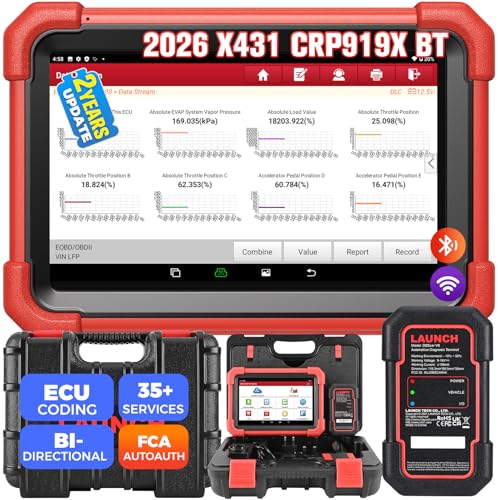
LAUNCH has been making diagnostic tools for more than thirty years, and the X431 database is among the deepest in the business — supporting well over 150 vehicle brands and a vehicle model database that runs into six figures. The CRP919XBT pairs that database depth with native CAN FD and DoIP protocol support built in, rather than sold as a later add-on, which directly matters per the protocol section earlier in this guide for any 2020-or-newer GM, Stellantis, BMW, or Volvo vehicle.

| Key Specifications | |
|---|---|
| Protocol Support | Native CAN FD and DoIP |
| ECU Coding | Online and offline — online coding for select makes including VAG vehicles |
| Brand Coverage | 150+ brands, 100,000+ models |
| Update Policy | 2 years free, approximately $89/year renewal after |
| Connectivity | Bluetooth VCI |

What we like:
- Native CAN FD and DoIP support built into the base tool — per the silent-failure problem explained earlier in this guide, this is the single specification that determines whether the scanner returns usable data on a current-generation GM, Stellantis, BMW, or Volvo, or quietly fails without telling you why.
- Online ECU coding for VAG vehicles specifically matters directly per the online-vs-offline coding section above — VAG updates coding requirements frequently enough that an offline-only tool’s local database falls behind quickly, and online coding closes that gap.
- A vehicle database this deep, built on three decades of brand history, genuinely reduces the odds of hitting a coverage gap on an unusual or older vehicle that a newer competing brand simply hasn’t had time to map yet.
- Two years of free updates is among the more generous policies at this tier — per the subscription cost table earlier in this guide, this delays the renewal cost further out than several competitors that only offer one year free.
What to know:
- The ~$89/year renewal after the free period ends is a real, disclosed cost — factor this into your five-year total cost calculation using the subscription trap table earlier in this guide rather than evaluating only the upfront sticker price.
Best for: Serious DIYers and professionals who want the deepest overall vehicle database, full native protocol coverage on current-generation vehicles, and genuine online ECU coding for European brands.
→ Check Current Price on Amazon
2. Autel Scanner MaxiCOM MK900BT V2.0 — Best for Battery and Charging System Diagnostics
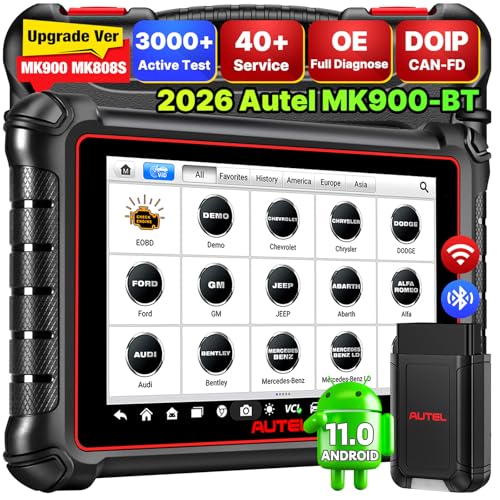
Autel’s MK900BT V2.0 distinguishes itself in this roundup specifically through battery and charging system testing depth, per the dedicated capability section earlier in this guide. With over 3,000 active tests and a wireless VCI Mini offering a genuinely useful 33-foot (10-meter) range for working around a vehicle without cable tangles, this tool is positioned for diagnosing the no-start and intermittent electrical complaints that engine-and-emissions-focused tools often treat as an afterthought.

| Key Specifications | |
|---|---|
| Protocol Support | Native CAN FD and DoIP |
| Active Tests | 3,000+ bidirectional active tests |
| Battery/Charging Testing | In-vehicle and out-of-vehicle, via VCI Mini integration |
| Wireless Range | Approximately 33 feet (10 meters) |
| Service Resets | 28+ maintenance reset functions |

What we like:
- Genuine in-vehicle and out-of-vehicle battery and charging system testing — per the battery testing section earlier in this guide, this directly addresses the meaningful share of no-start diagnoses that come down to the battery, alternator, or wiring rather than the engine or computer systems most other tools focus on.
- 33-foot wireless VCI range is a genuine working-bay advantage per the dongle-vs-tablet section above — you can walk around the full vehicle, pop the hood, and check the trunk without the connection dropping or needing to stay tethered close to the vehicle.
- 3,000+ active tests across all major systems gives this tool broad active-test depth that goes well beyond the single fuel-injector example most competing reviews lean on.
- 28+ service reset functions cover the routine maintenance procedures (oil reset, SAS calibration, and others) that come up constantly in day-to-day diagnostic and service work.
What to know:
- Autel’s update policy follows a paid subscription model after any initial free period — confirm current renewal pricing and run it through the five-year cost framework earlier in this guide before comparing total cost against lifetime-update competitors.
Best for: Technicians and serious DIYers who regularly diagnose no-start and electrical complaints and want dedicated battery/charging system depth alongside full general bidirectional capability.
→ Check Current Price on Amazon
3. TOPDON Bidirectional Scan Tool — Best AI-Assisted Value
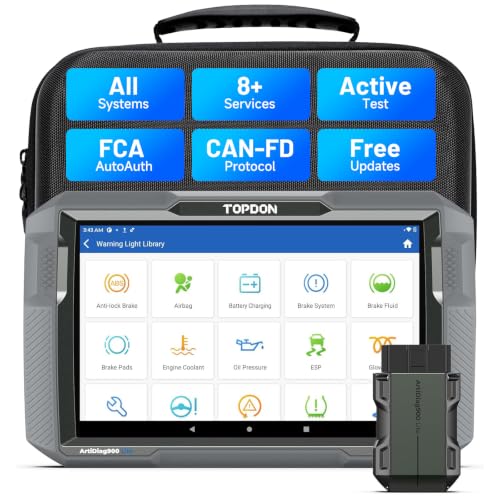
TOPDON brings AI-assisted diagnostic insights to bidirectional scanning at a price positioned between true budget entry tools and the flagship tier above. Per the AI diagnostics section earlier in this guide, the value here is the time saved on initial triage — the AI layer cross-references trouble codes and live data patterns to surface likely root causes and relevant technical service bulletins, while the underlying bidirectional hardware still does the actual confirming work.

| Key Specifications | |
|---|---|
| Protocol Support | Native CAN FD and DoIP |
| AI Diagnostics | AI-driven insights and TSB cross-referencing |
| Brand Coverage | 120+ global brands |
| Service Functions | 13+ critical maintenance functions |

What we like:
- AI-assisted triage genuinely speeds up the research phase of a diagnosis — per the AI section earlier in this guide, this is most valuable on less-common fault codes where surfacing a relevant TSB you wouldn’t have known to search for saves real time.
- Native CAN FD and DoIP support means this isn’t a budget tool that quietly fails on newer vehicles — the protocol coverage holds up against the flagship tier above it.
- Broad 120+ brand coverage at a price below the flagship tier makes this a strong value pick for anyone who doesn’t need the absolute deepest single-brand database depth of the LAUNCH tool above.
What to know:
- Per the AI diagnostics guidance earlier in this article, treat AI-suggested root causes as a starting hypothesis to verify with active testing, not a confirmed diagnosis on its own.
Best for: Buyers who want genuine AI-assisted diagnostic triage layered on top of solid bidirectional hardware, at a price between budget entry and full flagship tools.
→ Check Current Price on Amazon
4. BLCKTEC 460T OBD2 Scanner — Best Budget Entry Bidirectional

The BLCKTEC 460T is the accessible entry point in this roundup into genuine bidirectional control rather than basic code reading alone. Per the “fake bidirectional” detection guidance earlier in this guide, the right way to evaluate any tool at this price point — including this one — is to check specifically which active test categories are documented for your vehicle, rather than assuming the word “bidirectional” alone guarantees full injector, ABS, and actuator control across every system.

| Key Specifications | |
|---|---|
| Positioning | Budget entry bidirectional |
| Connectivity | Bluetooth / USB |
| Best For | Home mechanics testing the bidirectional category before upgrading |

What we like:
- The most accessible price point in this roundup for genuine bidirectional functionality — for a home mechanic who has only ever used a basic code reader and wants to experience active testing for the first time without a flagship-tier investment, this is the sensible starting point.
- Provides a real, functional step up from passive code reading toward active component control, even if the depth doesn’t match the flagship tools reviewed above.
What to know:
- Apply the fake-bidirectional verification checklist from earlier in this guide directly to this tool — confirm exactly which active tests are documented for your specific vehicle before assuming full system-wide bidirectional coverage at this price tier.
- Protocol coverage and CAN FD/DoIP support should be confirmed against the current listing before relying on this tool for any 2020-or-newer GM, Stellantis, BMW, or Volvo vehicle, per the protocol section earlier in this guide.
Best for: Budget-conscious home mechanics who want a genuine first step into bidirectional diagnostics without flagship pricing, and who will verify specific active test coverage for their own vehicle before relying on it for a difficult diagnosis.
→ Check Current Price on Amazon
5. FOXWELL Car Scanner NT604 Elite OBD2 Scanner — Best Mid-Range All-Systems Diagnostic
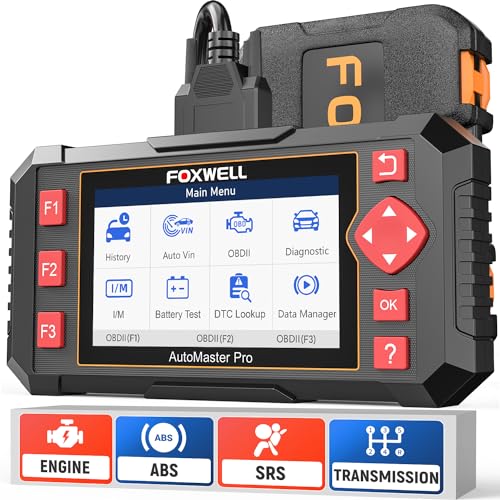
FOXWELL has built a recognizable reputation in the scan tool category spanning from the basic NT301 code reader up through the more capable NT604 Elite reviewed here — and the Elite tier specifically adds the all-systems diagnostic coverage (engine, ABS, SRS, transmission) that distinguishes a genuine diagnostic tool from a single-purpose code reader. For a mid-range buyer who wants broader system coverage than entry-level tools provide without stepping all the way up to flagship pricing, the NT604 Elite occupies a sensible middle position.

| Key Specifications | |
|---|---|
| Coverage | All-systems — engine, ABS, SRS, transmission |
| Positioning | Mid-range diagnostic tool |
| Connectivity | USB / Bluetooth |

What we like:
- All-systems coverage at a mid-range price — engine, ABS, SRS (airbag), and transmission diagnostics in one tool addresses the majority of common diagnostic needs without flagship pricing.
- FOXWELL’s established brand presence across multiple tiers, from basic code readers to this Elite tier, provides reasonable confidence in build quality and ongoing software support compared to newer or less-established competitors.
What to know:
- As a mid-range tool, confirm specific active test depth per system against the active test scenario table earlier in this guide if your diagnostic needs lean heavily toward one particular system, such as ABS bleed procedures or HVAC actuator testing.
Best for: Mid-range buyers who want genuine all-systems coverage — engine, ABS, SRS, and transmission — from an established brand without flagship-tier pricing.
→ Check Current Price on Amazon
6. Innova 5610 OBD2 Bidirectional Scan Tool — Best for Mixed Old and New Vehicle Fleets

The Innova 5610 fills a specific and genuinely underserved niche in this roundup: reliable bidirectional diagnostic coverage that works equally well across both older vehicles and newer ones, without the subscription costs that several competitors carry. For anyone working on a mix of vehicle ages — a home garage with one older sedan and one newer truck, or a small shop servicing whatever comes through the door regardless of model year — this cross-generational reliability is the defining strength.

| Key Specifications | |
|---|---|
| Vehicle Coverage | Strong across both older and newer vehicle generations |
| Bidirectional Functions | Genuine active tests — fuel pump activation, component testing |
| Update Policy | No subscription fees |
| Connectivity | USB / Bluetooth |

What we like:
- Genuinely reliable coverage across early-2000s vehicles through newer trucks and sedans in the same tool, without dropping data or struggling on modules buried deep in either generation’s system architecture — a real differentiator from tools optimized primarily for the newest vehicles alone.
- No subscription fees sidesteps the entire subscription cost trap detailed earlier in this guide entirely — the functionality you get on day one is the functionality you keep without a recurring renewal bill.
- Real bidirectional control — activating a fuel pump directly, testing components rather than just reading codes — sits in the genuine middle ground between basic readers and the more expensive, subscription-dependent professional tools.
What to know:
- Confirm native CAN FD and DoIP support against the current listing if your “newer” vehicles include 2020-or-later GM, Stellantis, BMW, or Volvo models specifically, per the protocol section earlier in this guide.
Best for: Home garages and small shops working across a genuine mix of vehicle ages who want reliable bidirectional control on both ends of that spectrum without ongoing subscription costs.
→ Check Current Price on Amazon
7. KINGBOLEN K8 Elite Full Systems Bidirectional Scan Tool — Best Full-Systems Value Pick
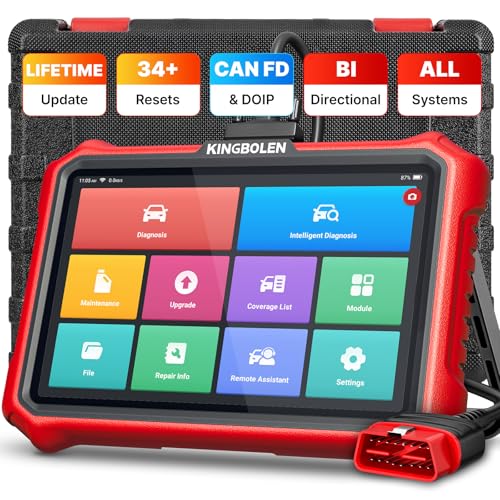
The KINGBOLEN K8 Elite positions itself directly against the FOXWELL NT604 Elite and similarly priced mid-range competitors with full-systems bidirectional coverage at an accessible price. For a buyer comparing several mid-tier options side by side, the K8 Elite’s combination of full-systems diagnostic scope and offline ECU coding makes it a genuine contender in the crowded mid-range bracket of this category.

| Key Specifications | |
|---|---|
| Coverage | Full systems — bidirectional across major systems |
| ECU Coding | Offline coding for supported makes |
| Positioning | Mid-range value, full-systems scope |

What we like:
- Full-systems bidirectional coverage at a mid-range price point brings genuine active testing across engine, ABS, SRS, and other major systems into the same accessible price bracket as more limited competitors.
- Offline ECU coding for supported makes provides real functional depth beyond basic code reading, per the ECU coding section earlier in this guide — appropriate for buyers whose vehicle mix is primarily domestic and Asian brands rather than European makes needing online coding specifically.
What to know:
- As with any mid-range tool, run the specific active test categories you need most (per the scenario table earlier in this guide) against this tool’s documented coverage before assuming full parity with the flagship tools reviewed above.
Best for: Buyers comparing mid-range full-systems bidirectional tools who want offline ECU coding included without flagship-tier pricing.
→ Check Current Price on Amazon
8. THINKCAR Bidirectional Scan Tool, THINKSCAN 689BT — Best Topology Mapping / Home Shop Pro Tool
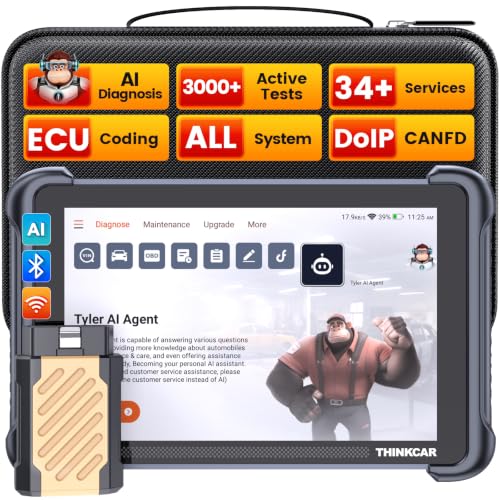
The THINKSCAN 689BT is the clearest example in this roundup of professional-grade tooling delivered without professional-grade pricing — topology mapping, native CAN FD and DoIP support, Bluetooth wireless operation, and lifetime free updates on core diagnostic functions, all in one tool. Per the topology mapping section earlier in this guide, the visual module network diagram this tool generates is a genuine diagnostic accelerant for complex intermittent electrical faults, making this the standout home-shop-to-professional crossover pick in this roundup.

| Key Specifications | |
|---|---|
| Topology Mapping | Yes — visual module network diagram |
| Protocol Support | Native CAN FD and DoIP |
| Update Policy | Lifetime free updates on core diagnostic functions |
| Connectivity | Bluetooth — wireless tablet operation |
| Ecosystem Accessories | Compatible with TKey 101 (key programming) and VENU-i Pro (TPMS service) |

What we like:
- Topology mapping included at this price tier is a genuine standout — per the dedicated section earlier in this guide, visualizing a vehicle’s actual module network speeds up complex intermittent fault diagnosis meaningfully, and this feature is typically reserved for more expensive tools.
- Lifetime free updates on core diagnostic functions sidesteps the subscription cost trap covered earlier in this guide entirely — over a five-year ownership period, this alone can represent several hundred dollars of savings compared to competitors charging annual renewals.
- Native CAN FD and DoIP support ensures this tool doesn’t quietly fail on current-generation vehicles, matching the flagship tier above on this critical specification.
- Ecosystem accessory compatibility (TKey 101 for key programming, VENU-i Pro for TPMS service) per the ecosystem accessories section earlier in this guide means buyers who regularly need these specific services can add them as a genuine extension of this platform rather than purchasing entirely separate tools.
What to know:
- This is a genuinely capable professional-tier tool — buyers newer to advanced diagnostics should expect a real learning curve per the shop-buying section earlier in this guide, even with the more accessible price point.
Best for: Home mechanics and small shop owners who want professional-grade topology mapping, full protocol support, and lifetime free core updates without paying flagship-tier prices.
→ Check Current Price on Amazon
9. MUCAR 892BT AI-Assisted Bidirectional Scan Tool — Best AI-Assisted Diagnostics
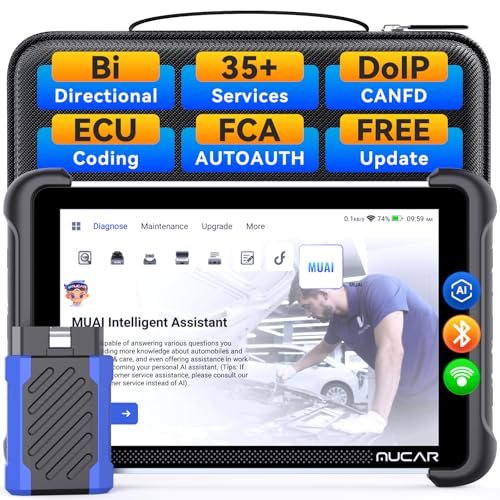
The MUCAR 892BT positions itself as a direct THINKCAR alternative at a similar tier, combining topology mapping with AI-assisted diagnostic insights in one package. Per both the AI diagnostics and topology mapping sections earlier in this guide, this tool layers the time-saving convenience of AI-driven triage on top of the genuine visual network-mapping capability that speeds up complex fault diagnosis — a combination that few competitors in this price bracket offer together.

| Key Specifications | |
|---|---|
| AI Diagnostics | AI-assisted root cause and TSB cross-referencing |
| Topology Mapping | Yes — visual module network diagram |
| Protocol Support | Native CAN FD and DoIP |
| Update Policy | Lifetime free updates on core diagnostic functions |

What we like:
- AI-assisted diagnostics paired with topology mapping in one tool is a genuinely useful combination — the AI layer suggests likely root causes per the AI section earlier in this guide, while the topology map helps verify which modules are actually present and communicating on the specific vehicle in front of you.
- Lifetime free updates on core diagnostic functions, matching THINKCAR’s policy above, sidesteps the subscription cost trap detailed earlier in this guide.
- Native CAN FD and DoIP support keeps this tool relevant on current-generation vehicles rather than quietly failing on the protocols newer GM, Stellantis, BMW, and Volvo vehicles increasingly use.
What to know:
- As with any AI-assisted tool per the guidance earlier in this guide, use the AI suggestions as a diagnostic starting point to verify with active testing — not as a final, confirmed diagnosis on its own.
Best for: Buyers who specifically want the combination of AI-assisted diagnostic triage and topology mapping in one tool, as a direct alternative to the THINKCAR THINKSCAN 689BT at a similar tier.
→ Check Current Price on Amazon
Frequently Asked Questions — Automotive Scan Tools & OBD2 Diagnostics
What is the difference between a standard OBD2 scanner and a bidirectional scan tool?
A standard OBD2 scanner reads data from your car’s computers — it pulls trouble codes, shows live sensor data, and tells you a circuit or system has a fault. A bidirectional scan tool can also send commands back to individual components, letting you actuate a fuel injector, cycle an ABS pump, or open a purge valve directly from the scanner screen to confirm whether a part is actually bad or whether the fault is wiring or a connector.
What is CAN FD and DoIP, and why does my scan tool need it?
CAN FD and DoIP are newer vehicle communication protocols used on a growing number of 2020-and-newer vehicles, including many GM, Stellantis, BMW, and Volvo models. A scanner without native support for these protocols can still plug in and appear to connect, but will often return incomplete data or fail silently on specific modules rather than displaying a clear error, which is why this gap is so often misdiagnosed as a vehicle problem rather than a tool limitation.
What does ECU coding mean, and do I need a tool that supports it?
ECU coding lets a scan tool reprogram or configure settings inside a vehicle’s control modules, such as enabling a feature or recalibrating a replacement part to match the vehicle. Offline coding uses routines stored locally on the tool and works without internet access but has limited coverage. Online coding connects to a cloud database for broader, VIN-specific coverage, which matters most for European brands like VAG vehicles that update coding requirements frequently.
How much does a professional scan tool really cost over time with subscriptions?
Many tools include one to three years of free updates, then charge an annual renewal commonly around $80-100 per year. Over five years, a tool with paid renewals can cost $300-500 more than its sticker price, sometimes exceeding the total cost of a more expensive tool that includes lifetime free updates on its core diagnostic functions.
How can I tell if a scan tool’s bidirectional claims are real or just marketing?
Check whether the listing specifically names active test categories, such as injector testing, ABS pump activation, or actuator control, rather than just using the word bidirectional alone. Cross-reference the vehicle coverage list against your specific make, model, and year, since bidirectional functions are frequently vehicle-specific rather than universal, and look for independent owner or reviewer confirmation that specific active tests actually work on real vehicles.
Should I buy a Bluetooth dongle scanner or a standalone tablet?
A dongle paired with your smartphone is more economical and compact, and works well for occasional home use. A standalone tablet costs more but offers a dedicated screen calibrated for shop lighting, no notification interruptions, more reliable connections when your hands are deep in an engine bay, and better durability for daily professional use.
What scan tool features matter most for European vehicles?
European vehicle support is the most common weak spot across the scan tool category broadly. A high brand-count claim like 150-plus brands measures breadth, not depth, and a tool may offer only basic code reading on less common European marques while having full bidirectional depth on domestic and Asian brands. Always check the specific compatibility database for your exact make, model, and year before buying if you work on BMW, Mercedes, Volvo, or VAG vehicles.
What is topology mapping on a scan tool?
Topology mapping generates a visual diagram of a vehicle’s actual module network, showing how its various control modules connect and communicate across the data bus. This helps technicians visualize which modules are present and communicating on a specific vehicle rather than guessing from a generic system list, which is most useful for complex intermittent electrical faults and vehicles with extensive aftermarket modifications.
Do I need a scan tool with battery and charging system testing?
If you regularly diagnose no-start or intermittent electrical issues, yes. Many no-start complaints come down to the battery, alternator, or wiring rather than the engine or computer systems most scan tool marketing focuses on. Look for both in-vehicle testing, which checks the battery as part of the full charging circuit, and out-of-vehicle testing, which isolates the battery alone for warranty or replacement decisions.
What’s the best scan tool for a small auto repair shop?
For a shop, prioritize tools with lifetime or low-cost update policies that scale across multiple bays without compounding subscription costs, branded PDF reporting for customer documentation, and an interface simple enough for newer technicians to learn quickly, since some full-systems bidirectional tools have a real learning curve that adds onboarding time for junior staff.
Final Verdict — Best Automotive Scan Tool for Every Buyer
| Best For | Our Pick | Key Reason | Buy on Amazon |
|---|---|---|---|
| Best Overall | LAUNCH X431 CRP919XBT | Deepest vehicle database, native CAN FD/DoIP, online ECU coding for VAG | Buy Now → |
| Best Battery / Charging Diagnostics | Autel MaxiCOM MK900BT V2.0 | 3,000+ active tests, in/out-of-vehicle battery testing, 33ft wireless VCI | Buy Now → |
| Best AI-Assisted Value | TOPDON Bidirectional Scan Tool | AI triage and TSB cross-referencing at a mid-tier price | Buy Now → |
| Best Budget Entry Bidirectional | BLCKTEC 460T | Most accessible genuine entry into active component testing | Buy Now → |
| Best Mid-Range All-Systems | FOXWELL NT604 Elite | Engine, ABS, SRS, and transmission coverage from an established brand | Buy Now → |
| Best Old + New Vehicle Mix | Innova 5610 | Reliable bidirectional coverage across vehicle generations, no subscription | Buy Now → |
| Best Full-Systems Value | KINGBOLEN K8 Elite | Full-systems bidirectional with offline ECU coding at a mid-range price | Buy Now → |
| Best Topology Mapping | THINKCAR THINKSCAN 689BT | Topology mapping, lifetime free core updates, native CAN FD/DoIP | Buy Now → |
| Best AI-Assisted Diagnostics | MUCAR 892BT | AI triage plus topology mapping, lifetime free core updates | Buy Now → |
Before you buy, run through three checks regardless of which tool you’re considering: confirm native CAN FD and DoIP support if you work on any 2020-or-newer GM, Stellantis, BMW, or Volvo vehicle; calculate the real five-year cost including subscription renewals, not just the sticker price; and verify exactly which active tests are documented for your specific vehicles rather than trusting the word “bidirectional” alone. Get those three things right and any of the tools in this guide will serve you well within its tier.