

You’re standing in front of two pairs of work pants – or hovering over two Amazon listings — and the question is the same one that tradespeople, outdoor workers, and serious DIYers have been asking for decades: Carhartt or Dickies? Both brands have over a century of heritage. Both have loyal, vocal fan bases. Both are genuinely durable work pants. And yet, they are not the same — not in fabric construction, not in durability under pressure, not in who they’re actually built for.
The honest answer to “which is better” is not what most comparison articles give you. It’s not “Carhartt always wins.” Dickies is genuinely the smarter choice for specific workers, specific jobs, and specific budgets — and buying expensive Carhartt duck canvas for a warehouse job is the same kind of mistake as buying lightweight Dickies twill for daily concrete work. The right pant depends on your job, your body, and how hard your days actually are.
This guide compares six categories head-to-head — fabric and construction, durability, fit and comfort, pockets and features, price and value, and women’s options — using four specific model pairs across both brands. We’ll give you a clear, persona-segmented verdict and a product grid at the end so you can click straight to the right pair for your situation.
Jump to: Fabric & Construction | Durability | Fit & Comfort | Pockets & Features | Price & Value | Women’s Options | Who Should Buy What
Carhartt vs Dickies: 60-Second Brand Overview
Carhartt was founded in 1889 in Detroit by Hamilton Carhartt, originally to make bib overalls for railroad workers. It’s been family-owned for 135 years — an unusual achievement in American manufacturing — and still produces select items domestically in Tennessee and Kentucky. Carhartt’s positioning is premium-to-heavy-duty: proprietary technologies (Rugged Flex stretch, Rain Defender DWR, Force moisture management), heavier fabric weights, and higher price points. Work pants range from around $40 to $95 depending on the line.
Dickies was founded in 1922 in Fort Worth, Texas and is now owned by VF Corporation — the same company behind Timberland, Vans, and The North Face. The brand dominates the uniform workwear market: warehouse, food service, facilities management, and light manufacturing. The iconic 874 Work Pant has been in production since 1967. Dickies’ positioning is value-accessible: functional workwear at prices that make buying multiple pairs practical. Work pants range from about $22 to $55.
Both brands have experienced significant fashion crossover — Carhartt worn by celebrities, Dickies adopted by skateboard culture and Gen Z. We’re setting that aside entirely. This comparison is about work pants that work.
Quick Specs Comparison: All 8 Pants at a Glance
| Product | Fabric | Weight | Seam Construction | Stretch | Double Knee | Best For |
|---|---|---|---|---|---|---|
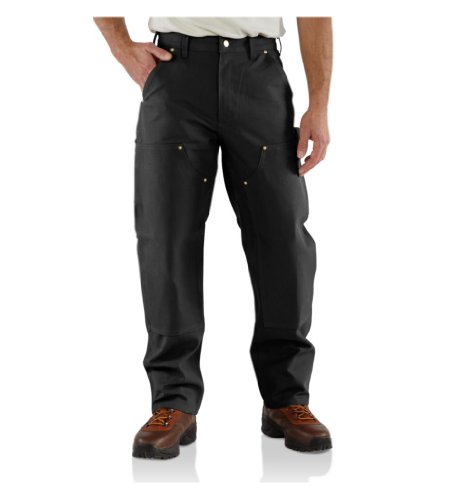
| Carhartt B01 ★ | 100% ringspun cotton duck | 12 oz | Triple-stitched | No | Yes + knee pad openings | Heavy-duty construction |
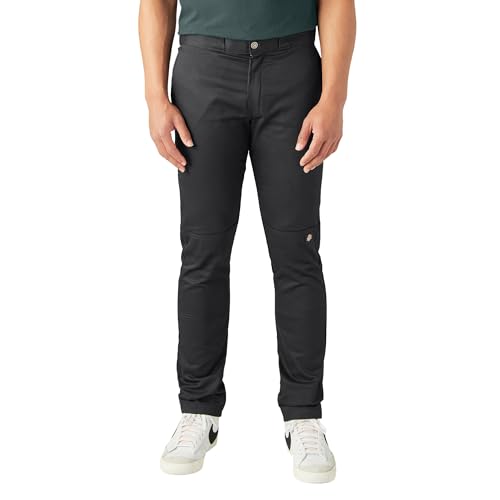
| Dickies Double Knee | 65% Poly / 35% Cotton twill | 8.2 oz | Double-stitched | Yes (Flex) | Yes | Moderate-duty flex work |
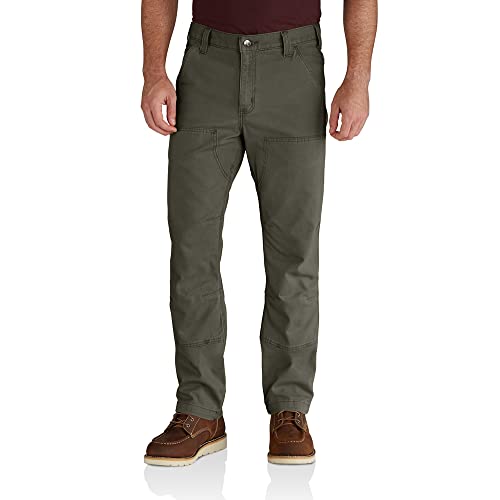
| Carhartt Rugged Flex | 98% cotton / 2% elastane canvas | ~8 oz (midweight) | Triple-stitched | Yes | No | Active tradespeople |
| Dickies 874 Flex | 65% Poly / 35% Cotton twill | Standard twill | Double-stitched | Yes | No | Uniform / everyday work |
| Carhartt Relaxed Dungaree | 100% cotton dungaree | Standard weight | Triple-stitched | No | No | Everyday work / versatile |
| Dickies Original 874 | 65% Poly / 35% Cotton twill | Standard twill | Double-stitched | No | No | Uniforms / light-duty |
| Carhartt Women’s Rugged Flex | 97% cotton / 3% spandex canvas | 8.6 oz | Triple-stitched | Yes | Yes (Double Front) | Women in trades |
| Dickies Women’s Carpenter | Cotton stretch duck | Duck weight | Double-stitched | Yes (stretch duck) | No | Women’s lighter-duty work |
★ = Best overall heavy-duty pick. Prices verified at time of publishing — always confirm current pricing on Amazon before purchasing.
Head-to-Head #1: Fabric Weight & Construction Quality
This is where the comparison gets concrete — and where the gap between the two brands is most visible. Fabric weight, fiber content, and seam construction determine how long a work pant actually lasts under real field conditions.
Carhartt Fabric & Construction
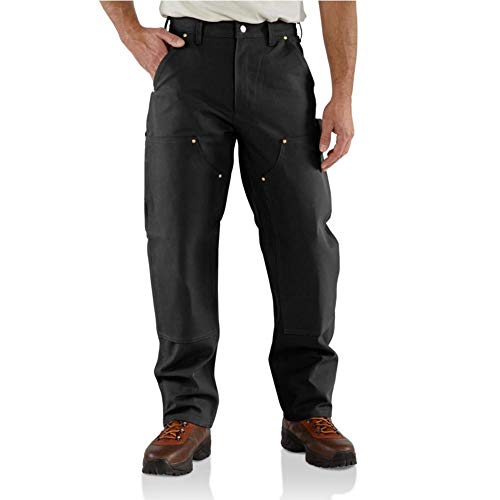
The Carhartt B01 is the benchmark: 12-ounce, firm-hand, 100% ringspun cotton duck canvas — Carhartt’s heaviest work pant fabric and the material that has been used in the B01’s construction since 1939 with minimal changes. Ringspun cotton produces a tighter weave than standard cotton, which means greater resistance to abrasion, snags, and tearing. At 12 ounces per square yard, this fabric is noticeably heavier to hold than standard clothing fabric — a clear indicator of how much material is there to wear through before the pant fails.
Construction across Carhartt’s core lines is triple-stitched on the main seams — three parallel rows of stitching that distribute tension across multiple threads and prevent seam failure under heavy loads. Belt loops are bar-tacked (extra cross-stitching at the attachment points), pocket corners are reinforced, and the B01’s back pockets are described by Carhartt as “heavy-hauling” — reinforced specifically for the weight of hand tools. Turn a pair of Carhartt work pants inside out and the difference from budget brands is immediately visible: dense, even stitching with minimal loose threads, substantial seam tape at key stress points, and fabric that hasn’t thinned at the turn of a pocket.
The Carhartt Rugged Flex Relaxed Fit Canvas takes a different approach — midweight cotton canvas at approximately 8 ounces with 2% elastane for built-in stretch. The fabric weight is lighter than the B01, but it comes pre-broken in (no 6-week stiffness period) and moves with the body in a way that rigid duck canvas does not. Triple-stitch construction is maintained. This is the Carhartt work pant for workers who need real durability but find the B01’s stiffness limiting.
Dickies Fabric & Construction

The Dickies FLEX Double Knee uses 8.2-ounce mechanical stretch twill — 65% polyester, 35% cotton. This is a fundamentally different material from cotton duck. The polyester content adds wrinkle resistance, stain release, and colour retention through repeated washing. The mechanical stretch is woven into the fabric structure rather than added as a separate spandex insert, giving it a clean appearance that maintains its shape. Seam construction is double-stitched — two rows rather than three. The double knee is constructed from two layers of the same twill fabric seamed together, rather than a separate reinforcement panel of heavier material.
The Dickies Original 874 uses the same 65/35 poly-cotton twill in a non-stretch version — the classic Dickies fabric that has defined the brand’s 874 line since 1967. It’s wrinkle-resistant and stain-resistant as standard properties of the polyester blend, maintains a sharp pressed appearance through many wash cycles, and has a standard weight that sits noticeably lighter than Carhartt duck canvas.
Fabric verdict: Carhartt wins on raw material weight and seam reinforcement — the gap is measurable, not marketing. For workers who kneel on concrete, haul tools, and put real mechanical stress on their pants daily, the 12-ounce cotton duck and triple-stitch construction of the B01 lasts significantly longer than Dickies poly-cotton twill under the same conditions. However, for workers who need stain resistance, wrinkle resistance, and a cleaner professional appearance, Dickies’ poly-cotton blend provides functional advantages that heavy cotton duck cannot match.
Head-to-Head #2: How Long Do They Actually Last?
Durability is the central question in this comparison — and the one most comparison articles answer with vague generalizations rather than specific timelines. Here’s what real-world field use consistently shows.
Carhartt Durability
For workers in physically demanding trades — carpenters, framers, concrete workers, roofers, utility linemen — Carhartt B01 pants routinely last 2 to 5 years of daily professional use. Some users report 8-year-old Carhartt bibs still in service. The failure mode, when it happens, is usually fabric wear-through at the knees or seat rather than seam failure — the triple-stitched construction outlasts the fabric itself on most pairs. The B01’s double-layer knees (with openings for knee pads) extend knee life further when knee pads are used.
The Carhartt Rugged Flex Canvas is lighter than the B01 and will wear through faster under equivalent abuse — expect 1 to 3 years of daily professional use. The trade-off is that it moves better and feels better on day one, making it the practical choice for workers who need real mobility (electricians, HVAC techs, mechanics) where the extra fabric weight of the B01 would limit movement in tight spaces.
Dickies Durability
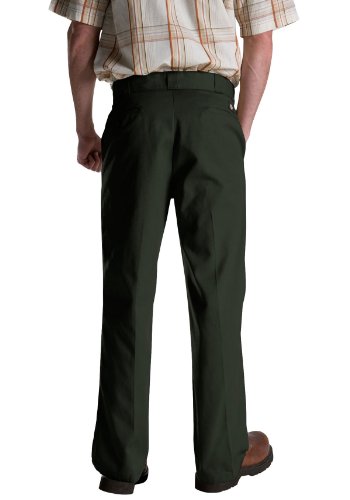
Under light to moderate workloads — warehouse, facilities, food service, light manufacturing — Dickies 874 pants perform adequately for 1 to 2 years. Under heavy construction-site stress (daily kneeling, heavy tool belt loads, rough surface contact), the common failure points are belt loops detaching at 6 to 12 months and thigh fabric thinning at 6 to 8 months. The poly-cotton blend holds colour and resists wrinkles better than cotton duck, but the lighter construction shows wear faster when the workload is demanding.
The Dickies FLEX Double Knee improves on the standard 874 durability specifically at the knee — the double-layer construction adds meaningful protection for workers who kneel regularly. For tradespeople whose primary concern is knee wear on moderate surfaces, this model bridges the gap between standard Dickies durability and the Carhartt B01’s heavy-duty construction.
The Cost-Per-Wear Calculation
The most honest way to compare value is cost per month of use, not sticker price:
| Scenario | Carhartt B01 (~$60) | Dickies 874 (~$28) |
|---|---|---|
| Heavy construction (daily) | ~$1.50/month (40 months) | ~$3.50/month (8 months) |
| Moderate trade work (daily) | ~$2.00/month (30 months) | ~$2.30/month (12 months) |
| Light duty (warehouse, uniform) | ~$2.50/month (24 months) | ~$1.40/month (20 months) |
For heavy daily professional use, Carhartt is measurably cheaper per month despite costing more upfront. For light-duty uniform use — where workers often own and rotate 5 or more pairs — Dickies’ lower unit price makes buying multiple pairs more economical than fewer, longer-lasting Carhartt pairs.
Head-to-Head #3: Fit, Comfort & Sizing
Both brands offer multiple fits, and the right choice depends as much on your body type and work style as on the brand itself.
Carhartt Fit

Carhartt’s traditional cuts — including the B01 — are generous through the seat and thigh, cut to accommodate layers in cold weather and freedom of movement in demanding physical work. This is not a fashion fit; it’s a functional fit. The B01 has a loose, high-rise fit with a straight leg that opens easily over work boots.
The major comfort limitation of traditional Carhartt duck canvas is the break-in period. Fresh-from-the-bag, the 12-ounce cotton feels stiff and boardlike. Allow 6 to 8 weeks of regular washing and wearing before the fabric fully softens. The first wash tip that experienced Carhartt buyers consistently share: wash with fabric softener and tumble dry to accelerate the break-in without compromising durability. After break-in, the cotton duck conforms to your body and the comfort becomes one of the B01’s notable strengths.
The Carhartt Rugged Flex eliminates this issue entirely — the midweight canvas with elastane is pre-softened and stretches immediately. A mid-rise relaxed fit with a secure thigh pocket makes it the most practical day-one comfortable Carhartt work pant. The Carhartt Relaxed Fit Work Dungaree sits in the middle: cotton fabric without the heavy-duck stiffness of the B01, comfortable from the first day, and versatile enough for both job site and casual use.
Carhartt sizing note: Generally runs true-to-size, but inseam lengths can run slightly shorter than stated on some models. Check inseam reviews for the specific model before ordering if inseam length is critical.
Dickies Fit

The Dickies Original 874 has a high-waisted, straight-leg silhouette — the “uniform clean” look with a sharp crease that holds through many washes due to the polyester content. This is the pant that looks pressed even after a busy shift, which makes it the right choice for workers in customer-facing roles or workplace dress code requirements.
Critical Dickies sizing note: The 874 consistently runs 1 inch small in the waist. Size up one full inch from your normal waist measurement as a standard recommendation — this is the most consistent feedback from long-term 874 buyers across all sizes. The 874 Flex version runs slightly more true-to-size due to the mechanical stretch, but sizing up half an inch is still safer than your standard waist.
Comfort is immediate with Dickies — there’s no break-in period with poly-cotton twill. The lighter fabric weight and mechanical stretch (in Flex models) provide a more casual, comfortable feel from day one than traditional duck canvas. For workers in hot climates, the lighter-weight Dickies provides different thermal comfort than heavy Carhartt duck, though “more breathable” is an oversimplification — the poly content retains some heat regardless of weight.
Fit verdict: Carhartt Rugged Flex for workers who want all-day stretch comfort with durability. Dickies 874 for workers who need a cleaner, slimmer silhouette and uniform appearance. Traditional Carhartt B01 for workers who prioritise maximum durability and don’t mind the break-in.
Head-to-Head #4: Pockets, Features & On-Site Utility
For a working tradesperson, pockets are a primary feature — not an afterthought.
Carhartt Pockets
The Carhartt B01 includes two front pockets, two reinforced back pockets specifically designed for hand tool storage, a left-leg hammer loop, a ruler pocket, and multiple utility pockets. The back pocket construction is reinforced — Carhartt explicitly calls them “heavy-hauling” pockets because the construction is designed to hold the weight of pliers, drivers, and similar tools without the pocket mouth distorting or tearing over time. The double-layer knee panels include openings compatible with Carhartt’s knee pad insert system — useful for workers who spend time on their knees and want targeted protection without a separate knee pad strap.
The Carhartt Rugged Flex adds a dedicated secure thigh pocket sized for a smartphone or folding knife — a modern practical addition to the traditional carpenter-style layout. The Carhartt Relaxed Fit Dungaree follows the traditional jean pocket layout with hammer loop and rule pocket on the legs.
Dickies Pockets
The Dickies Original 874 is a minimalist work pant: two front pockets, two back pockets — a clean, uniform-focused layout without the carpenter utility additions. For workers who don’t need on-pants tool storage (their tools are on a belt or in a bag), this is an advantage — fewer pockets means cleaner lines and less fabric bulk.
The Dickies FLEX Double Knee adds reinforced signature belt loops designed for heavier tool belt loads — a meaningful improvement over standard Dickies belt loops, which are a known failure point under sustained heavy tool belt weight. Moisture-wicking treatment is built into the fabric. The stain- and wrinkle-resistant properties of the poly-cotton blend are functional advantages for workers who interact with clients or customers during the workday.
Features verdict: Carhartt wins for on-body tool utility — the hammer loop, rule pocket, heavy-hauling back pockets, and knee pad compatibility are genuinely useful for construction tradespeople. Dickies wins for low-profile utility and professional appearance — the 874’s clean pocket layout and maintained press are advantages in uniform environments.
Head-to-Head #5: Price and Long-Term Value
Current pricing (verify before publishing, as prices fluctuate):
- Dickies Original 874: approximately $22–$30
- Dickies 874 Flex: approximately $28–$38
- Dickies FLEX Double Knee: approximately $32–$45
- Carhartt Relaxed Fit Dungaree: approximately $45–$55
- Carhartt Rugged Flex Canvas: approximately $50–$65
- Carhartt B01 Double Front: approximately $55–$70
As the cost-per-wear table in the durability section shows, the value equation reverses depending on how hard your job is. For heavy daily professional construction use, Carhartt’s longer lifespan makes it the cheaper option per month despite the higher upfront cost. The numbers run against you with Dickies once you’re kneeling on concrete every day.
The case for Dickies value holds clearly in two scenarios. First, for workers who rotate through 5 or more pairs of work pants — buying 5 pairs of Dickies 874 for the cost of 2 pairs of Carhartt B01 gives you a fresh, clean pair every workday and reduces the wear-per-pair dramatically. Second, for employers running uniform programs — Dickies is the dominant brand in commercial uniform supply for exactly this reason, and the unit economics work at scale in a way that Carhartt’s pricing doesn’t support for fleet purchases.
Carhartt value tip: Carhartt Factory Seconds (sold through Carhartt.com) offer garments with minor cosmetic imperfections at 25–40% discount with the same functional build quality. Worth checking before paying full price on Amazon.
Head-to-Head #6: Women’s Work Pants — Carhartt vs Dickies
This section gets a full dedicated comparison because every other Carhartt vs Dickies article either ignores women’s work pants entirely or mentions them in a single sentence. The female trades workforce is growing, the selection matters, and the fit differences between women’s and re-sized men’s workwear are significant.
Carhartt Women’s Rugged Flex Double Front
The Carhartt Women’s Rugged Flex Double Front (B0C4V3JNGN) is purpose-built women’s workwear — not a smaller version of the men’s B01. The fabric is 8.6 oz, 97% cotton/3% spandex micro sand canvas with Rugged Flex stretch technology: a midweight canvas that moves with the body, recovers its shape after wearing, and holds up to real physical work. Mid-rise with a relaxed fit through the seat and thigh and a straight leg opening that fits over work boots. A flexible comfort waistband with a higher rise in the back provides the coverage that workers who bend and squat need without constant adjustment.
The utility features are properly designed for a working environment: double-layer knee fronts with openings for knee pads, multiple utility pockets positioned for women’s proportions, hammer loop, and a right-leg rule pocket. This is a work pant that carries tools, supports knee protection, and survives a physical workday — not a fashion approximation of workwear. Sizing is generally true-to-size with a good size range across the women’s line.
Dickies Women’s Stretch Duck Carpenter
The Dickies Women’s Stretch Duck Carpenter (B07JFKQ95R) uses cotton stretch duck — a real duck fabric rather than the lighter poly-cotton twill of the men’s 874. The stretch element comes from the weave structure rather than spandex content, giving it the classic duck canvas durability profile while allowing more movement than rigid traditional duck. Carpenter-style layout with hammer loop and rule pocket on the legs, knee pad openings, and a slim-fit silhouette that reads more fashion-adjacent than the Carhartt but still performs as a work pant for light to moderate duty.
Sizing: Dickies women’s sizing is less consistent than Carhartt’s women’s range. Review the size chart and specific model reviews before ordering — multiple users report inconsistency between stated and actual fit, particularly through the hip and thigh. The slim carpenter style is intentionally fitted; if you need room for movement layers or have a fuller hip profile, the Carhartt women’s relaxed fit is the more practical choice.
Women’s verdict: The Carhartt Women’s Rugged Flex Double Front is the standout women’s work pant in this comparison. It’s properly proportioned, genuinely protective, and built to the same standard as Carhartt’s men’s professional lines. The Dickies Women’s Stretch Duck Carpenter is a capable option for lighter-duty work or workers who prefer a slimmer profile, but the sizing inconsistency and lighter-duty construction make it a secondary choice for tradeswomen who work hard every day.
Carhartt or Dickies? The Right Choice by Job Type
Here is the persona-based verdict that most comparison articles skip. The right answer genuinely depends on your job — not just on brand preference or price sensitivity.
Construction Workers (Carpenters, Framers, Roofers, Concrete Work)
Buy Carhartt. The B01 Double Front is purpose-built for this audience. Daily kneeling on concrete, heavy tool belt loads on belt loops, constant abrasion against rough surfaces — these conditions expose the gap between 12-oz triple-stitched cotton duck and 8-oz double-stitched poly-cotton twill within months. The B01’s knee pad openings, heavy-hauling pockets, and reinforced construction justify the price premium decisively at this workload level.
Electricians and HVAC Technicians
Buy Carhartt Rugged Flex. The Rugged Flex Canvas delivers the stretch needed for climbing, crouching in panels, and working in tight spaces while maintaining Carhartt’s triple-stitch durability. The rigid B01 can actually limit range of motion in confined electrical and HVAC work. The Dickies FLEX Double Knee is a reasonable budget alternative for lighter commercial work.
Warehouse Workers and Light Manufacturing
Buy Dickies. The Original 874 or 874 Flex are the right tools for this job. Standing, walking, and light lifting don’t stress seams or knees beyond what Dickies’ poly-cotton twill can handle. The stain release, wrinkle resistance, and clean pressed appearance of the 874 are actual functional advantages in these environments. Spending Carhartt money on work pants for warehouse use is wasted investment.
Landscapers and Outdoor Workers (Hot Climates)
Buy Dickies or Carhartt Force. Heavy cotton duck in high heat is genuinely uncomfortable. If budget is a concern, Dickies lightweight twill provides better thermal comfort per dollar in hot conditions. If brand preference is Carhartt, the Force line (not reviewed here) is designed for warm weather with moisture management — avoid the B01 in summer outdoor work.
Mechanics and Auto Technicians
Either works — prioritise pocket placement. Both the Carhartt Rugged Flex and the Dickies FLEX Double Knee handle shop work well. Carhartt wins on long-term longevity under oil and solvent exposure; Dickies wins on stain release. The hammer loop and thigh pocket placement matter more than brand for mechanics specifically.
Women in Trades
Buy Carhartt Women’s Rugged Flex. The Carhartt Women’s Rugged Flex Double Front is properly built for physical work — double-front protection, knee pad openings, and purpose-built women’s proportions. Dickies Women’s Carpenter (Stretch Duck Carpenter) for lighter duty or workers who prefer a slimmer profile, but verify sizing carefully before purchasing.
Budget-Conscious Beginners / First Job
Buy Dickies first. Buy two pairs of the Dickies 874 for the price of one pair of Carhartt B01. Work in them for a season, learn which features matter for your specific work, and then upgrade to Carhartt at the sizes and styles you know you actually need. Buying expensive Carhartt work pants before you know your job requirements is the most common first-job workwear mistake.
How to Care for Carhartt and Dickies Work Pants
Proper care is the cheapest way to extend the life of any work pant — and the care requirements for cotton duck and poly-cotton twill are meaningfully different.
Carhartt cotton duck (B01, Relaxed Dungaree): Wash cold to prevent shrinkage; avoid high dryer heat which degrades cotton fibres over time; tumble dry medium — remove promptly. First wash tip: add fabric softener to the first 2–3 wash cycles to accelerate break-in without compromising the fabric. Always wash inside-out to protect the outer surface from drum abrasion and fade. Do not bleach — it breaks down cotton fibre structure and weakens the canvas. Oil stains require pre-treatment with a commercial degreaser or dish soap before washing.
Carhartt Rugged Flex (canvas with elastane): Machine wash cold on a gentle cycle; tumble dry low — the elastane content degrades faster with high heat than pure cotton. Remove promptly from the dryer. Do not iron. Do not dry clean.
Dickies poly-cotton twill (874, 874 Flex, Double Knee): Machine wash warm or cold; tumble dry low. The poly content holds shape and colour significantly better than pure cotton through repeated washing. The wrinkle-resistant and stain-resistant treatments in the 874 survive approximately 50 machine washes before diminishing noticeably — after that point, consider the pants due for replacement if they’re seeing daily professional use. Avoid dry cleaning, which breaks down the stain-resistant finish. Wash inside-out to maintain the outer surface and reduce pilling.
Universal tip for both brands: Washing work pants inside-out dramatically reduces surface abrasion against the drum, which is the primary cause of premature colour fading and pilling on the outer fabric. This applies equally to Carhartt and Dickies and costs nothing.
Repair note: Both brands can be extended with aftermarket iron-on duck canvas knee patches — inexpensive and widely available on Amazon. A knee patch applied at the first sign of thinning at the knee can add another year to an otherwise-sound pair of work pants.
Quick Decision Checklist: Carhartt or Dickies?
✅ Buy Carhartt if you:
- Kneel on concrete or hard surfaces daily
- Carry heavy tools on your belt loops
- Work outdoors in variable or cold weather
- Need FR-rated work pants (Carhartt has extensive FR range)
- Work in physically demanding trades — construction, framing, utility
- Want pants that last 3+ years without replacement
- Are a woman working in a physical trade (Women’s Rugged Flex)
✅ Buy Dickies if you:
- Work in light to moderate duty roles — warehouse, facilities, food service
- Need a uniform-clean pressed appearance
- Buy multiple pairs for weekly rotation
- Work in hot climates where lighter fabric matters
- Your employer provides or reimburses uniforms
- Are new to a trade and building your first work wardrobe
- Need stain and wrinkle resistance for client-facing work
Frequently Asked Questions
Is Carhartt better than Dickies?
For heavy construction and outdoor trade work, yes — Carhartt’s heavier fabric, triple-stitch construction, and reinforced features are measurably more durable under demanding conditions. For light-duty work, uniform environments, and budget buying, Dickies is the more practical choice. Neither brand is universally better — the right answer depends on your specific job.
How long do Carhartt work pants last?
With daily heavy professional use (construction, framing, concrete work): 2 to 5 years for the B01 Double Front. With daily moderate professional use (electrical, HVAC, mechanics): 1 to 3 years for the Rugged Flex Canvas. With proper care and knee pad use, some Carhartt duck pants remain serviceable for 8+ years. The failure mode is almost always fabric wear-through at the knees or seat rather than seam failure.
Are Dickies good work pants?
Yes — for their intended use case. Dickies 874 pants are well-suited to uniform environments, light to moderate duty workloads, hot climates, and budget-conscious buyers. They are not the right choice for daily heavy kneeling, sustained heavy tool belt loads, or demanding outdoor construction work. For the jobs they’re designed for, they perform well at a price that makes owning multiple pairs practical.
Do Dickies work pants run small?
Yes — the 874 Original consistently runs 1 inch small in the waist. Size up one full inch from your normal waist measurement as a standard recommendation. The 874 Flex runs slightly more true-to-size due to the mechanical stretch content, but sizing up half an inch is still safer. Inseam lengths run true-to-size on most Dickies models.
What is the difference between Carhartt and Dickies fabric?
Carhartt’s core work pants use 100% cotton duck canvas at 8–12 ounces per square yard, with triple-stitched main seams. Dickies’ core 874 line uses a 65% polyester/35% cotton twill blend at approximately 8.2–9.5 ounces, with double-stitched seams. Carhartt cotton duck is heavier, more abrasion-resistant, and more durable under sustained mechanical stress. Dickies poly-cotton twill resists wrinkles and stains more easily, holds colour better through repeated washing, and requires no break-in period.
Can you wear Carhartt work pants in hot weather?
The B01 Double Front (12-oz cotton duck) is genuinely uncomfortable in high heat — the heavy cotton retains warmth and can feel stifling in summer outdoor work. The Carhartt Rugged Flex Canvas (midweight, ~8 oz with stretch) is significantly more comfortable in warm conditions. For hot-climate work, the Carhartt Force line (designed for warm-weather use with moisture management) is the appropriate Carhartt choice. Dickies’ poly-cotton blend in the 874 provides different thermal comfort — lighter weight, but the polyester content still retains some heat.
Does Carhartt have women’s work pants?
Yes — and they’re properly designed for women’s proportions, not just re-sized men’s cuts. The Carhartt Women’s Rugged Flex Double Front is purpose-built with women’s fit through hip and thigh, a higher rise in back for coverage, and the same utility features (double-front protection, knee pad openings, tool pockets) as the professional men’s line. It’s the standout women’s work pant in this comparison.
How do I wash Carhartt work pants without shrinking them?
Wash cold on a regular cycle; tumble dry medium — remove promptly. The primary cause of shrinkage in cotton duck is high dryer heat, not washing temperature. For the Rugged Flex line with elastane, wash cold gentle cycle and tumble dry low — the elastane degrades faster with high heat. Both lines benefit from washing inside-out to protect the outer surface and reduce fading.
Our Final Verdict
For heavy professional construction, outdoor trade, and demanding physical work — the Carhartt B01 Double Front is the right work pant. The 12-oz cotton duck, triple-stitch construction, and knee pad compatibility make it the most durable option at this price point, and the cost-per-wear math runs in its favour for anyone whose job actually stresses a pair of work pants daily.
For active tradespeople who need stretch, comfort, and durability without the B01’s stiffness — the Carhartt Rugged Flex Canvas is the practical choice. It moves better than the B01, requires no break-in, and still outperforms Dickies on durability for physically demanding work.
For warehouse workers, uniform environments, and any situation where stain resistance, wrinkle resistance, and a clean pressed appearance matter more than maximum durability — the Dickies Original 874 is the right call. And for anyone who needs flex in a double-knee work pant at a lower price than Carhartt, the Dickies FLEX Double Knee bridges the gap effectively.
This is not a brand loyalty question — it’s a job requirements question. Buy the pant that matches the actual demands of your workday, and you’ll get your money’s worth from either brand.
This article contains affiliate links. Purchases made through our Amazon links may earn Protguide a small commission at no additional cost to you. All product selections are based on independent research and editorial judgment. Prices are approximate and subject to change — always verify current pricing on Amazon.
All Products in This Comparison
Best Overall Heavy-Duty
Carhartt B01 Double Front
12 oz cotton duck · Triple-stitch · Knee pad openings
Best Flex Double Knee (Dickies)
Dickies FLEX Double Knee
8.2 oz poly-cotton · Moisture-wicking · Stretch
Best Active Trade Pant (Carhartt)
Carhartt Rugged Flex Canvas
~8 oz canvas · 2% elastane · Thigh pocket
Best Uniform Flex Pant (Dickies)
Dickies 874 Flex
Poly-cotton flex · Stain-resistant · Clean profile
Best Everyday Versatile (Carhartt)
Carhartt Relaxed Fit Dungaree
100% cotton · Relaxed fit · No break-in
Best Budget / Uniform (Dickies)
Dickies Original 874
65/35 poly-cotton · Classic since 1967 · Size up 1″
Best Women’s Work Pant
Carhartt Women’s Rugged Flex
8.6 oz canvas · 3% spandex · Double front · True-to-size
Women’s Budget / Lighter Duty
Dickies Women’s Stretch Duck
Cotton stretch duck · Carpenter style · Check sizing


