Every electrician knows the theory: rubber insulating gloves protect against electrical shock. But theory and practice diverge in ways that cost lives. According to the U.S. Bureau of Labor Statistics, electrical contact causes approximately 150–200 fatalities in the construction and extraction sector each year — and around 300 across all U.S. industries combined. The common thread in most of those incidents is not ignorance of the hazard but failure in equipment selection, inspection, or maintenance. Gloves that fail the air inflation test. Gloves used past their re-test date. Leather protectors worn alone. A class rating that doesn’t match the maximum working voltage.
This guide gives you the complete picture: how voltage classes work, why the two-glove system is mandatory and not optional, exactly how to inspect gloves before every use, and which specific kits are worth buying in 2026. If you already own electrical insulating gloves and just need to verify your maintenance protocol, jump to the inspection section. If you are buying for the first time, start with the voltage class chart.
Two-glove system is mandatory: Rubber insulating gloves worn under leather protectors — neither works alone
Inspect before every use: Air-inflation test plus visual check before every single shift
6-month re-testing required: OSHA 29 CFR 1910.137 mandates electrical re-testing by accredited labs every 6 months
When in doubt, replace: A damaged glove offers false security — the only correct action is removal from service
Leather Gloves Electrician Work Gloves
Understanding Voltage Classes — The ASTM D120 Standard
The most critical specification on any rubber insulating glove is its Class rating under ASTM D120 — the U.S. standard referenced by OSHA 29 CFR 1910.137 for all electrical protective equipment. The Class indicates the maximum voltage the glove has been tested and certified to withstand. Buying a glove without verifying this rating against your actual maximum working voltage is the most common and most dangerous purchasing mistake in this category.
One rule applies universally: always choose gloves rated for the maximum voltage you might encounter — not the voltage you typically work at. A residential electrician whose standard system voltage is 240V should still use Class 0 (1,000V rated) gloves to maintain adequate safety margin above the nominal system voltage.
Class
Label Color
Max AC Voltage
Max DC Voltage
Typical Applications
Class 00
Beige
500V
750V
Low-voltage residential, lighting circuits, control panels
Class 0
Red
1,000V
1,500V
Standard residential and commercial work, 120V–480V systems
Class 1
White
7,500V
11,250V
Distribution systems, substations, primary voltage work
Class 2
Yellow
17,000V
25,500V
Utility distribution, medium-voltage overhead and underground
Extra-high voltage transmission, specialised utility work
For residential and commercial electricians: Class 0 (1,000V rated) is the most versatile choice for general contractors. It provides appropriate safety margin for standard 120V–480V systems and is the most widely stocked class at electrical supply distributors. Class 00 is an acceptable option for strictly controlled low-voltage work, but Class 0 is the professional standard recommendation for almost all trade electricians.
ASTM D120 vs. IEC 60903 — Which Standard Applies to You?
If you purchase gloves from international suppliers or work on projects subject to international specifications, you will encounter both ASTM D120 and IEC 60903. Understanding the difference prevents compliance gaps.
Feature
ASTM D120 (US)
IEC 60903 (International)
Origin
American — OSHA-referenced
International Electrotechnical Commission
Voltage ratings
Identical to IEC for all classes
Identical to ASTM for all classes
Re-test interval
Every 6 months — OSHA requirement
Every 6 months — IEC recommendation
Required in US workplaces
✅ Yes — OSHA 29 CFR 1910.137
Not directly, but dual-certified gloves accepted
For any U.S. workplace covered by OSHA, purchase gloves clearly marked with ASTM D120 compliance. Many premium brands — Salisbury, Honeywell Novax — manufacture dual-certified gloves that satisfy both standards simultaneously. These are the best choice for electricians working across multiple jurisdictions or on projects with international specifications.
Type I vs. Type II Rubber Gloves
Insulated Electrician Work Gloves
Both ASTM D120 and IEC 60903 classify rubber insulating gloves into two types based on ozone resistance — a distinction that directly affects how long the glove maintains its protective integrity between re-tests.
Type I
Type II
Ozone resistance
None
Ozone-resistant
Typical material
Natural rubber
Synthetic rubber (EPDM or neoprene-based)
Service life
Shorter near ozone sources
Significantly longer in trade environments
Cost
Lower
Slightly higher
Best environment
Low-ozone residential settings
Near motors, welders, UV sources, switchgear
Ozone is produced by arc discharges, electric motors, welding equipment, and UV lighting — all common in trade environments. Type II gloves resist this degradation and hold their dielectric integrity between re-tests significantly longer than Type I in professional settings. For most professional electricians, Type II is the correct choice. Type I remains reasonable for infrequent low-voltage residential work where ozone exposure is minimal.
Glove Length — 11″, 14″, and 16″ Explained
Glove length is not a preference — it is a task requirement based on how much of your forearm is exposed to energised parts. Many employers now specify 14″ as the minimum for all commercial panel work regardless of voltage class. When in doubt, go longer.
Length
Classes Available
When Required
Notes
11 inches
Class 00, 0
Standard hand and wrist work — residential and commercial
Most common for general electricians. Adequate when only hands and lower wrist approach energised parts.
14 inches
Class 0, 1, 2
Switchgear, panel boards, confined spaces where forearm exposure is possible
Increasingly specified as minimum on commercial and industrial jobs. Adds forearm coverage without significant bulk.
16 inches
Class 2, 3, 4
Utility linework, substation maintenance, overhead and underground high-voltage
Standard for transmission and distribution work. Extends coverage from hand to elbow.
The Two-Glove System — Why Both Components Are Mandatory
This is the most misunderstood aspect of electrical hand protection in 2026. Leather and rubber gloves are not interchangeable options — they are two separate components of a single mandatory protection system. Using one without the other is not a partial solution. It is a gap that creates false confidence.
Component 1: Rubber Insulating Gloves
Purpose: Dielectric protection — they stop electrical current from passing through to your hands. The rubber barrier is the protection.
Critical limitation: Rubber is physically vulnerable. A single puncture, cut, or small abrasion eliminates the glove’s entire dielectric capability. The rubber itself has no mechanical resistance to physical damage — which is precisely why leather protectors are mandatory over it, not optional.
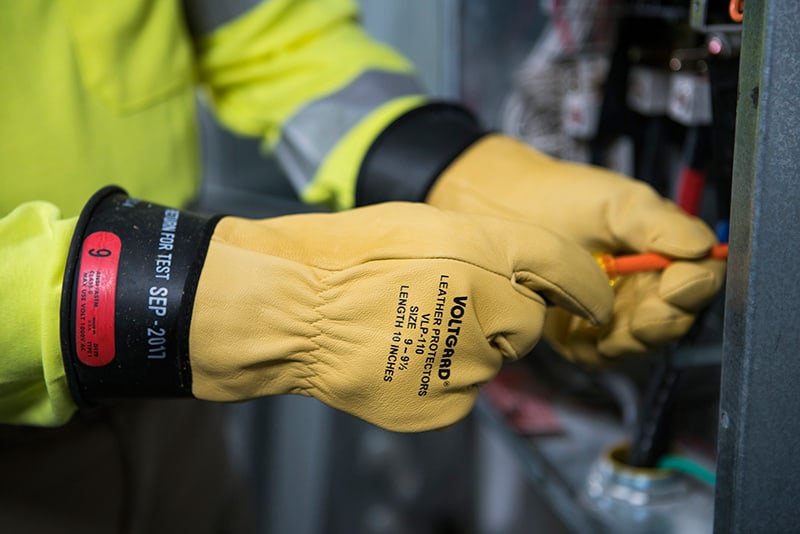
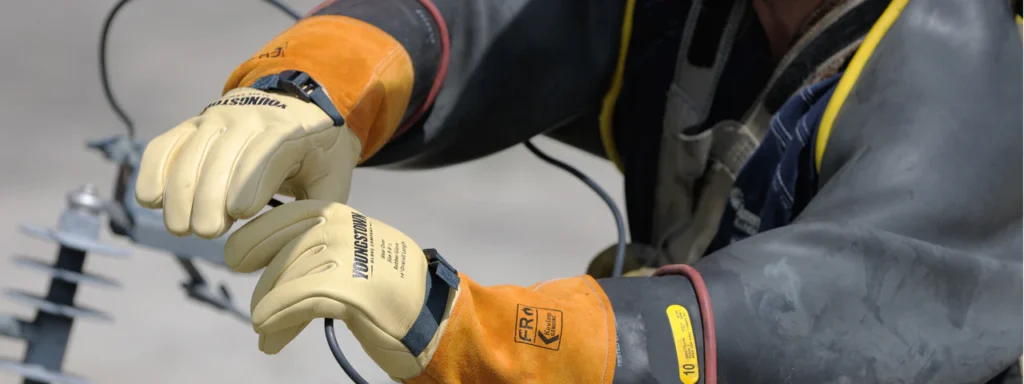
Component 2: Leather Protector Gloves
Purpose: Mechanical protection — they shield the rubber insulating glove from the punctures, cuts, and abrasion that the work environment creates. Sharp edges, metal burrs, wire fragments, rough concrete: leather handles all of these. Rubber does not.
Electrical protection: Zero. Leather provides no voltage protection whatsoever. Worn alone near energised conductors, leather protectors are not a safety measure. They are a hand covering with no dielectric value.
The rule is absolute: rubber insulating gloves always under leather protectors. Leather never replaces rubber. Rubber never operates without leather over it.
How to Don the Two-Glove System Correctly
Perform the air inflation test on the rubber insulating glove — see the inspection section below
Complete the visual inspection of the inflated glove
Put on the rubber insulating gloves — ensure proper fit with no overstretching
Inspect leather protectors for embedded debris, holes, or worn-through areas
Pull leather protectors over the rubber gloves
Verify you can grip small connectors, operate hand tools, and feel adequate feedback through both layers
How to Choose the Right Gloves for Your Work
Step 1: Identify Your Maximum Working Voltage
The decision starts here — not with brand, not with price, not with comfort. What is the highest voltage you might encounter on this job? Use that number to select your class:
Residential electrician (standard 240V): Class 0 (1,000V) — the safety margin above 240V nominal is the reason Class 0 is correct, not Class 00
Commercial electrician (up to 480V): Class 0 minimum; Class 1 for work scope involving distribution panels or medium-voltage services
Industrial maintenance (600V+ possible): Class 1 (7,500V) minimum
Utility distribution or transmission: Class 2, 3, or 4 as determined by the specific circuit voltage and your employer’s arc flash risk assessment
Step 2: Get the Fit Right
Glove fit is a safety factor, not just a comfort factor. The wrong size creates genuine hazards in both directions.
Too small: Over-stretches the rubber wall, thinning the dielectric barrier. Creates hand fatigue and cramping during long jobs. Increases tear risk under work loads. Restricts blood flow over extended wear.
Too large: Reduces manual dexterity for handling terminals, connectors, and small tools. Can slip at critical moments. Makes precision work slow and unreliable.
The correct fitting protocol: try on the rubber insulating glove with the leather protector over it and verify you can grip small wire connectors, operate hand tools with precision, and feel adequate tactile feedback through both layers. Always use the manufacturer’s sizing chart — electrical gloves often run differently from standard hand sizes.
Step 3: Assess Your Environment
Temperature extremes: Cold reduces rubber flexibility; heat accelerates material degradation. Both affect inspection frequency and glove lifespan.
Chemical exposure: Solvents and oils attack rubber — always check the manufacturer’s chemical compatibility chart for your specific work environment.
Ozone exposure: Switchgear rooms, motor rooms, welding environments, and areas with UV lighting — choose Type II.
Physical hazards: Metal burrs, sharp conduit edges, rough concrete — ensure leather protectors are properly fitted and in good condition.
Pre-Use Inspection — Required Before Every Single Use
Disposable Gloves Electrician Work Gloves
A compromised rubber insulating glove can look intact while a small defect has already eliminated its entire dielectric capability. There is no visual way to confirm protection without performing the inflation test. The inspection takes under two minutes. It must happen before every shift.
Step 1: The Air Inflation Test
Roll the glove cuff tightly toward the fingers to trap air inside the glove body
Squeeze the trapped air to inflate the glove like a balloon
Listen: Any hissing sound indicates a leak — remove from service immediately
Feel: Hold the inflated glove near your cheek — feel for any escaping air current
Observe: Watch for visible deflation over 10–15 seconds after releasing the squeeze
Any air leakage — regardless of how small — means the glove must be removed from service and replaced. There is no acceptable threshold for a slow leak. A pinhole that passes air is a pinhole that may pass current.
Step 2: Visual Inspection (While Inflated)
With the glove still inflated from the air test, systematically inspect the entire surface — finger tips, palm, back of hand, thumb, and cuff — stretching small sections to check for:
Punctures, cuts, or tears of any size
Embedded metal shavings, wire fragments, or splinters
Discoloration from chemical exposure (localized color changes)
Swelling or ballooning — weak spots that deform excessively under air pressure
Texture changes — sticky, hardened, or brittle areas indicate material degradation
Ozone damage — cracking, particularly at stress points and the cuff fold
UV damage — surface chalking or deterioration from sunlight exposure
Step 3: Leather Protector Check
Inspect for holes, worn-through areas, or tears — particularly at the palm and thumb
Check for embedded sharp debris that could damage the rubber beneath
Verify stitching at all seams is intact
Remove any abrasive material before putting on over rubber gloves
When to Remove a Glove from Service Immediately
Any failure of the air inflation test — including pinholes that produce only a faint hiss
Visible punctures, cuts, or tears of any size anywhere on the glove
Re-test date expired — even by a single day
Chemical damage, swelling, or significant discoloration
Hardening, cracking, or brittleness anywhere in the rubber
Embedded foreign material that cannot be safely removed without damaging the rubber
A new pair of Class 0 rubber insulating gloves costs $50–$100. There is no legitimate cost justification for using gloves of questionable integrity on an energised circuit.
Mandatory 6-Month Re-Testing — OSHA Requirements
OSHA 29 CFR 1910.137 and ASTM D120 both require that all rubber insulating gloves be electrically tested by OSHA-accredited laboratories every 6 months. This is not an employer guideline or industry recommendation — it is a regulatory requirement. Using gloves past their re-test date is an OSHA violation.
During re-testing, gloves are tested at voltages above their class rating, inspected by certified technicians, and either stamped with a new test date (pass) or removed from service (fail). The re-test date is stamped on the glove cuff — check it before every use as part of your inspection routine.
The manufacturing date is equally important: do not purchase gloves manufactured more than 12 months ago regardless of the re-test date. Rubber degrades from the date of manufacture — a glove that has sat in a distributor’s warehouse for 18 months before purchase may have less remaining service life than its test date suggests.
Storage and Care — How to Protect Your Investment Between Uses
Correct Storage Protocol
Store in the dedicated glove bag that should be included with any quality kit — positions the gloves cuffs-down to prevent dust and contamination from settling inside
Keep away from direct sunlight and UV exposure — UV degrades rubber from the outside in
Maintain temperature between 50–70°F where possible
Store away from ozone-producing equipment — motors, welders, and UV light fixtures
Keep separate from tools and sharp objects at all times
What Never to Do
Do not fold, bend, or crimp gloves — creates stress points that crack the rubber over time
Do not store in tool buckets alongside sharp tools
Do not leave in hot vehicles or direct sun — heat accelerates material breakdown
Do not store near solvents, oils, or chemicals
Do not hang by clothespins or clips — creates permanent stress creases
Cleaning
Clean with mild soap and water only — no solvents, no harsh chemicals, no degreasers. Air dry away from heat sources; never use a clothes dryer or direct heat. Inspect again after cleaning — the cleaning process sometimes reveals surface damage that was obscured by dirt or contamination. Document cleaning and inspection in a maintenance log if your workplace requires formal compliance records.
Other Gloves for Non-Energised Work
When working on properly locked-out and tagged-out circuits, electricians use other glove types for general mechanical and installation tasks. Understanding which glove is appropriate for which context prevents both under-protection and the inappropriate use of non-rated gloves near energised equipment.
Cut-Resistant Work Gloves — ANSI/ISEA 105
For wire pulling, conduit bending, cable tray installation, terminating, and any mechanical task on de-energised circuits, cut-resistant gloves provide meaningful hand protection without the bulk of the full two-glove system.
ANSI Cut Level
Protection Level
Best Electrical Applications
A1–A3
Light
General assembly, light indoor maintenance
A4–A6
Medium
Wire pulling, cable tray, conduit bending, sheet metal
A7–A9
Heavy
Sharp metal edges, demolition, glass handling
Disposable Gloves — Correct Use and Critical Limitations
Disposable nitrile or vinyl gloves are appropriate for: applying wire-pulling lubricant, handling adhesives or resins, keeping hands clean during greasy mechanical work, and chemical handling in non-electrical contexts. They provide zero electrical protection and must never be used as a substitute for rated rubber insulating gloves — even on low-voltage circuits, even for “just a moment.”
Mechanics Gloves
Mechanics gloves offer excellent dexterity and knuckle protection for tool handling, general assembly, and non-electrical installation work. Like disposable gloves, they provide no voltage protection. They are appropriate only after circuits have been properly de-energised and locked out per your LOTO procedure.
Gloves Are Part of Your Complete PPE System
Electrical insulating gloves are one layer in a comprehensive protection system. For energised work — as opposed to de-energised locked-out work — the gloves address only the hand contact pathway. A complete system addresses every exposure simultaneously.
Lockout/Tagout (LOTO) — Always First
The safest circuit is a de-energised circuit. Before any work, follow the full LOTO procedure: identify all energy sources, notify affected personnel, shut down equipment, lock and tag all disconnects, and — critically — test before touch using a calibrated voltage tester to verify de-energisation before making any contact. Do not assume a circuit is dead because the breaker was tripped. Test it.
Insulated Tools — VDE-Certified 1,000V+
When working on or near live components, use tools certified under VDE standards at 1,000V or above. Insulated screwdrivers, pliers, wire strippers, nut drivers, and adjustable wrenches all provide a secondary barrier at the tool-to-conductor contact point. Inspect insulation before each use — chips, cracks, or exposed metal anywhere on the tool shaft eliminates that protection completely.
EH-rated boots provide secondary insulation at the ground contact point, rated to withstand 600V in dry conditions per ASTM F2413 EH designation. Non-conductive soles interrupt the ground fault path that a shock event would otherwise travel through your body. EH footwear must be kept clean and dry — contamination with water or conductive material reduces or eliminates its insulating effectiveness.
Arc Flash Protection — NFPA 70E Required
For any energised electrical work above the arc flash boundary, NFPA 70E: Standard for Electrical Safety in the Workplace governs PPE selection. An incident energy analysis or arc flash PPE category method determines the required protection level. For work above 2 cal/cm², arc-rated face protection, arc-rated hard hat (Class E), and arc-rated FR clothing are required alongside rubber insulating gloves. Your employer must conduct an arc flash risk assessment per NFPA 70E Article 130 before any energised electrical work is authorised. The most recent NFPA 70E edition is 2024 — compliance is mandatory, not optional.
Voltage Testing — Test Before You Touch
Every contact with an electrical system must be preceded by verified de-energisation. Use a non-contact voltage tester for initial proximity check, confirm with a contact tester rated for the circuit, and follow the test-before-touch protocol: test the tester itself before use, test the circuit, test the tester again after. A dead tester and a live circuit look identical — the only protection against that scenario is testing your tester.
Recommended Glove Kits by Application (2026)
The correct glove is always the one matched to your maximum working voltage, the right length for the task, and the right type for your environment. The kits below represent the most trusted options across trade applications — all ASTM D120 compliant. Verify current pricing and availability before purchasing, and always confirm the glove class against your specific voltage requirements.
Kit / Model
Class
Type
Length
Leather Protector
Best For
Salisbury E014B/9
Class 0 (1,000V)
Type II
11″
Salisbury LP0
Residential electricians, general contractors, 120V–480V work
Honeywell Novax 150-11
Class 0 (1,000V)
Type II
11″
Honeywell 2095
Commercial electricians, switchboard and panel work
Salisbury GK0114B/9
Class 1 (7,500V)
Type II
14″
Salisbury LP1
Industrial maintenance, distribution systems, substations
Salisbury GK214B/10
Class 2 (17,000V)
Type II
14″
Salisbury LP2
Utility distribution, medium-voltage overhead and underground
Salisbury GK414B/10
Class 4 (36,000V)
Type II
16″
Salisbury LP4
Transmission linework, substation maintenance, extra-high voltage
What to verify before purchasing any kit:
ASTM D120 compliance clearly printed on the glove cuff — not just in the listing description
Class rating and colour-coded label permanently marked on the cuff
Manufacturing date stamped — do not buy gloves manufactured more than 12 months ago
Complete kit includes rubber insulating gloves + leather protectors + glove bag
Sizing chart available from the manufacturer — always size with the leather protector over the rubber glove
Budget Reference Points
Entry-level kits (Class 00/0): $50–$100
Professional-grade (Class 0/1): $100–$200
High-voltage (Class 2 and above): $200–$500+
The most expensive gloves are the ones you do not have when you need them — or the ones you have but failed to inspect before the shift they failed.
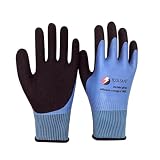
ASTM D120 Certified 1000V Protection: Designed for electrical work under 1000V, these insulated electrician gloves meet ASTM D120 standards, providing reliable shock protection for professional maintenance and repair tasks.
High Voltage Insulation Safety: Made with durable insulating rubber material, these electrical safety gloves offer dependable protection against electric shock while ensuring safe handling of electrical equipment.
Non-Slip Grip Design: Textured palm provides a secure anti-slip grip when handling tools, wires, and equipment, improving work accuracy and reducing accidental slips.
Flame Retardant & Durable Build: Wear-resistant and flame-retardant material enhances durability for long-term use in demanding work environments such as industrial and electrical applications.
Wide Application : Ideal for electricians, power maintenance, appliance repair, automotive work, industrial operations, and household electrical maintenance tasks.
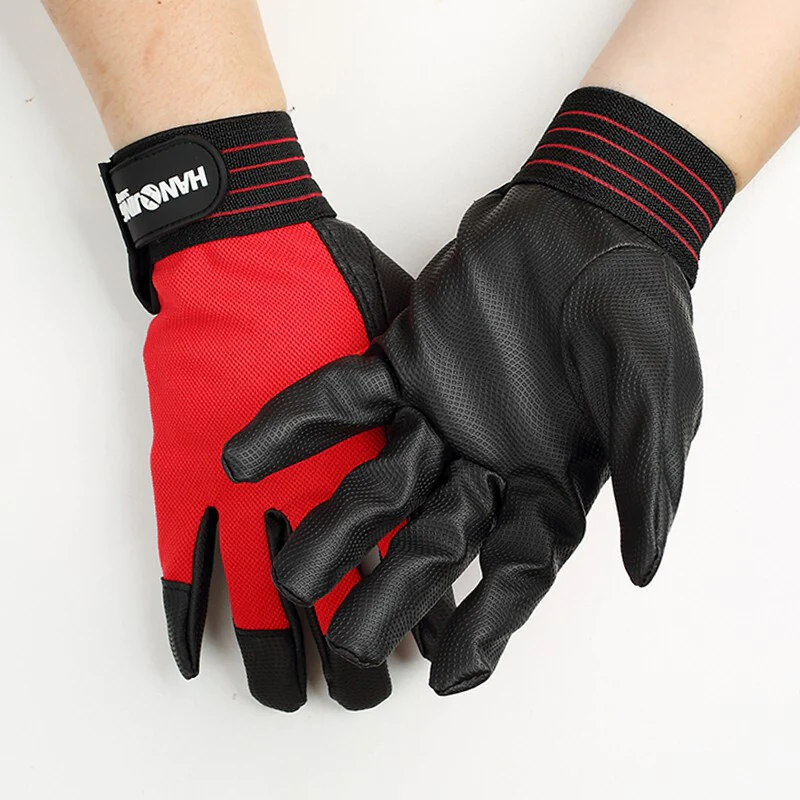
Insulation Performance: These work gloves have insulated palms and fingers and are designed for Non-Live Electrical household electrical tasks. Before each use, carefully inspect the gloves for any damage, cracks, punctures, moisture, or contamination, and do not use them if any defect is found.
Rubber Palm: The gloves have rubber palms that offer strong insulating and flame-retardant properties, providing safety and reliability during use.
Anti-Slip Grip: The textured palms ensure a firm grip with anti-slip design, helping you handle tasks with confidence and prevent mistakes.
Durable Nylon Fabric: Made from nylon fabric, the electrician's gloves are tough, resistant to wear and aging, and have a long-lasting lifespan.
Versatile Use: These gloves are suitable for home and low-risk electrical maintenance tasks, such as handling instruments, appliances, mechanical equipment, automotive work, and other installation or maintenance projects. For electrical work where abrasion, cutting, puncture, or mechanical damage may occur, use appropriate leather protector gloves over the insulating gloves and follow applicable electrical safety practices.
Insulation Performance: These electrician gloves feature insulated palms and fingers and comply with ASTM D120 standard, providing effective electrical safety gloves protection when operating electrical equipment at 1000V and below
Rubberized Palm & Fingers: The slip-resistant electrical insulated gloves are made of rubber with excellent insulating and flame retardant properties, ensuring safety and reliability during operation for electrician tasks
Rubberized Non-Slip Design: The textured palm of these nylon electrician gloves increases friction through an anti-slip design, giving you a better grip on tools with reliable high voltage gloves performance
Durable Flexible Nylon: These electrical safety gloves are made of wear-resistant, breathable nylon fabric that is strong, durable, flexible to wear, breathable and comfortable, with a long service life
Multi-Scene Application: These electrical insulated gloves are suitable for home repair and professional electrician work, such as automotive repair, electrical maintenance, and equipment installation
Professional Electrical Safety: Rubber insulating gloves engineered for lineman work, electrical contractors, utility workers, and high-voltage machine operations; Essential PPE for electrical hazard protection
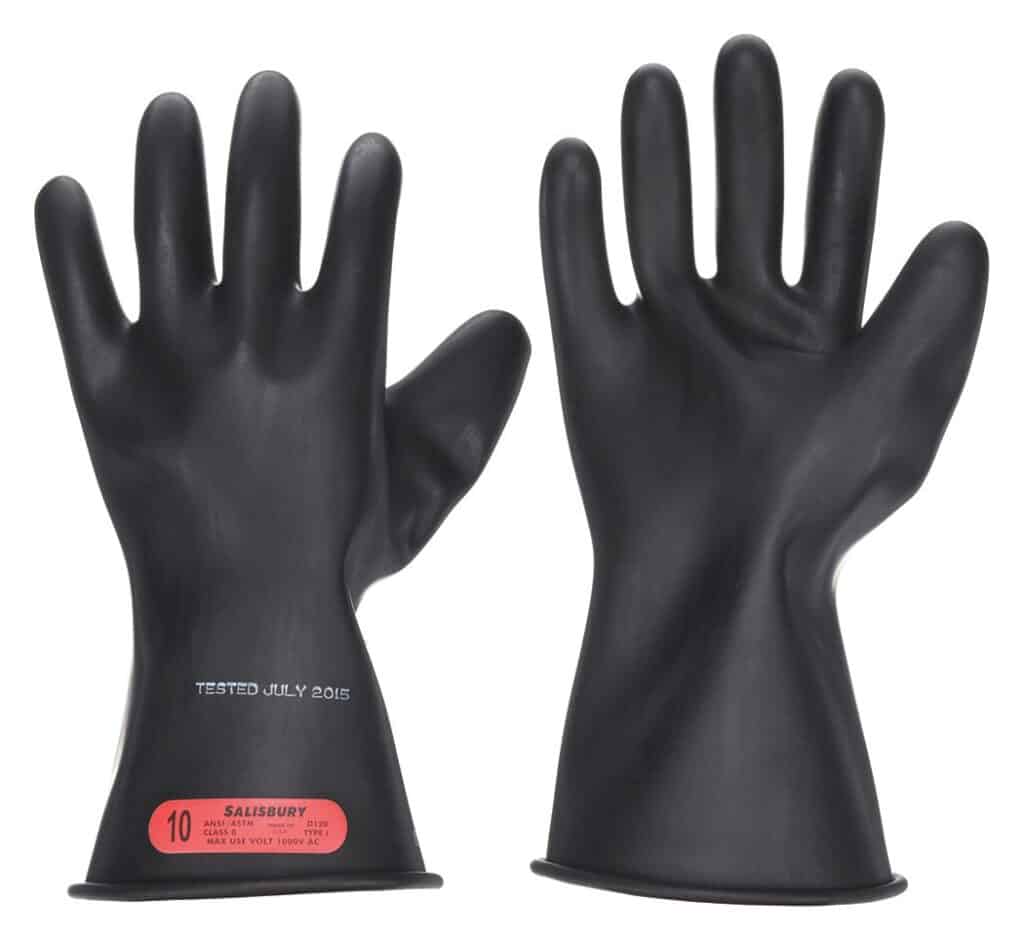
Class 0 Voltage Protection: Rated for applications up to 1,000 Volts AC / 1,500 Volts DC; Provides critical electrical insulation barrier; Must be worn with leather protector gloves (sold separately) for maximum safety and durability
Premium Natural Rubber Latex: Black dielectric rubber construction provides superior elasticity, flexibility, and puncture resistance compared to nitrile, chloroprene, or vinyl; Non-conductive material ensures reliable electrical insulation
Extended 11-Inch Length: Provides protection beyond the wrist and over the forearm; Straight cuff with rolled edge design ensures secure fit and easy donning/doffing; Contoured shape reduces hand fatigue during extended wear
ASTM & OSHA Compliant: Manufactured to meet ASTM D120-09, OSHA 29C FR 1910.269, and NFPA 70E standards; Requires electrical testing and recertification every 6 months per OSHA regulations; Flush rear label won't interfere with protector gloves
Professional Electrical Safety: Rubber insulating gloves engineered for lineman work, electrical contractors, utility workers, and high-voltage machine operations; Essential PPE for electrical hazard protection
Class 0 Voltage Protection: Rated for applications up to 1,000 Volts AC / 1,500 Volts DC; Provides critical electrical insulation barrier; Must be worn with leather protector gloves (sold separately) for maximum safety and durability
Premium Natural Rubber Latex: Black dielectric rubber construction provides superior elasticity, flexibility, and puncture resistance compared to nitrile, chloroprene, or vinyl; Non-conductive material ensures reliable electrical insulation
Extended 11-Inch Length: Provides protection beyond the wrist and over the forearm; Straight cuff with rolled edge design ensures secure fit and easy donning/doffing; Contoured shape reduces hand fatigue during extended wear
ASTM & OSHA Compliant: Manufactured to meet ASTM D120-09, OSHA 29C FR 1910.269, and NFPA 70E standards; Requires electrical testing and recertification every 6 months per OSHA regulations; Flush rear label won't interfere with protector gloves
Class 0 Double‑Layer Natural Latex Electrical Gloves, ASTM D120 Tested. Dielectric proof‑tested at 1000V AC to provide dependable electrical‑safety performance for electrical work; test report is available for reference in product images.
Designed for electricians, maintenance technicians and contractors, well‑suited for routine electrical assignments and on‑site equipment repair work.
Built for dielectric safety performance in electrical‑related operations, applicable to industrial sites and power‑system maintenance scenarios
Wrinkled non‑slip latex surface delivers secure grip even in wet and oily environments. Flexible latex material reduces hand strain during extended work shifts.
Electrical insulated gloves / guantes para electricista / electrical safety gloves, ideal for construction projects, DIY household repairs and professional‑site daily use.
Frequently Asked Questions
How often should I inspect my electrician gloves?
A complete visual inspection and air-inflation test must be performed before every use — no exceptions. Also inspect after any incident that could have caused damage, after any chemical exposure, and before returning gloves to storage. Documentation of inspections is required for formal compliance programs.
Can I use disposable gloves for electrical shock protection?
No. Disposable nitrile, latex, or vinyl gloves provide zero voltage protection and must never be used near live electrical components at any voltage level. They are suitable only for keeping hands clean during non-electrical tasks on de-energised circuits.
Are leather gloves sufficient for low-voltage work?
No. Leather gloves provide mechanical protection against cuts and abrasions but offer zero electrical insulation at any voltage. They must always be worn over properly class-rated rubber insulating gloves — never as a standalone substitute, not even briefly, not even at low voltages.
What is a Class 0 glove used for?
Class 0 gloves carry a red label and are rated for maximum use at 1,000V AC or 1,500V DC. They are the most common choice for residential, commercial, and light industrial electricians working on standard 120V–480V systems, providing adequate safety margin above nominal system voltages.
What does the test date on my gloves mean?
The stamped date on the glove cuff is the mandatory re-test date under OSHA 29 CFR 1910.137. Rubber insulating gloves must be electrically tested by an OSHA-accredited laboratory every 6 months. Gloves used past this date are non-compliant and cannot be considered protective equipment, regardless of their apparent physical condition.
What is the difference between Type I and Type II rubber gloves?
Type I gloves have no ozone resistance. Type II gloves resist ozone degradation and maintain their dielectric integrity significantly longer in professional trade environments where motors, welding equipment, switchgear, or UV lighting are present. Type II is the correct choice for most professional electricians — the modest price premium is recovered through longer service life and fewer premature replacements.
What glove length do I need?
Standard 11-inch for residential and commercial work where only the hands and lower wrist approach energised parts. Move to 14-inch any time your forearm may be near energised surfaces — inside switchgear, panel boards, or confined spaces — this length is increasingly specified as a minimum on commercial and industrial jobs. 16-inch for linework and substation maintenance where full forearm-to-elbow coverage is standard.
Can I repair damaged electrical gloves?
Never. Rubber insulating gloves must never be repaired. Any damage — punctures, cuts, chemical exposure, or material degradation — removes them from service permanently. They should be physically destroyed before disposal to prevent accidental reuse by someone unaware of the damage.
Do I need different gloves for AC vs. DC?
The same rubber insulating gloves serve both AC and DC work. DC ratings are 1.5× the AC rating for the same class — a Class 0 glove rated for 1,000V AC is also rated for 1,500V DC. Always confirm you are using the correct rating for the type of current present in your specific circuit.
Can I wear rings or jewellery under electrical gloves?
No — this is a firm requirement under NFPA 70E. All metal jewellery must be removed before donning electrical insulating gloves. Metal creates potential arc paths, can puncture the rubber from inside the glove, and poses serious risk if the outer leather protector is compromised. This applies to rings, watches, bracelets, and metal-fastened items.
How long do electrical gloves last?
With proper storage and regular maintenance, rubber insulating gloves can remain in service 2–5 years — provided they pass the required 6-month electrical re-tests throughout that period. Replace immediately upon any test failure, visible physical damage, or material degradation, regardless of how recently the gloves were purchased or last tested.
What is ASTM D120 vs. IEC 60903?
ASTM D120 is the U.S. standard referenced by OSHA for electrical insulating gloves. IEC 60903 is the equivalent international standard. Both use identical class numbering and voltage ratings. For U.S. workplaces under OSHA jurisdiction, ASTM D120 compliance is required. Many premium brands manufacture dual-certified gloves meeting both standards, which is the best option for electricians working across jurisdictions.
Final Summary — Seven Rules That Protect You Every Day
Always match glove class to your maximum working voltage — not the typical voltage, not the nominal system voltage. The maximum.
Inspect before every use — air inflation test plus full visual check. No exceptions, no shortcuts.
Never use leather gloves alone — they provide zero electrical insulation. Rubber under leather, always.
Honour the 6-month re-test date — expired gloves are non-compliant equipment, not a borderline case.
Choose the right length — 11″ for standard hand work, 14″ when forearm exposure is possible, 16″ for linework.
Choose Type II rubber for professional environments — ozone resistance extends service life and protects your investment.
Gloves are one layer of a complete system — LOTO, insulated tools, EH footwear, arc flash PPE per NFPA 70E, and voltage verification are all required alongside the gloves.
Invest in properly rated, well-maintained voltage-rated gloves from an established manufacturer. Inspect them, store them correctly, send them for re-testing on schedule, and replace them the moment any inspection raises a doubt. That routine is what separates compliant, protected electrical work from unnecessary and avoidable risk.