Most first sandblasting attempts fail for one of two reasons. The first: the wrong compressor – not the wrong sandblaster, but a compressor that cannot sustain the CFM demand the blaster requires, leaving the operator with a unit that blasts for 30 seconds and pulses for 90. The second: the wrong abrasive — specifically, regular hardware-store sand used in a tool designed to blast with it, by a buyer who has never heard of silicosis or the regulatory framework that has effectively banned silica blasting in professional settings across the US.
This guide addresses both problems before showing you a single product. It then reviews 8 sandblasters across four genuinely different categories — portable pressure pots, blast cabinets, combination wet/dry units, and a precision lab micro sandblaster that most buyers don’t know exists and that serves a completely different use case from every other product in this roundup.
Quick answers by use case: Best for automotive rust removal → VEVOR 20-Gallon Pressure Pot. Best entry pressure pot → Garvee 10-Gallon. Best wet/dry option → Industry Dry Wet Kit. Best garage blast cabinet → Eastwood B60. Best USA-made cabinet → TP Tools 2858FP. Best large cabinet → 90-Gallon Cabinet. Best budget cabinet → Sandblasting Cabinet. Best precision engraving → EustomA Twin Pen.

Jump to: Sandblaster Types | Silica Safety Warning | CFM Guide | Abrasive Media Guide | Comparison Table | All Reviews | Safety & PPE | Accessories | Buying Checklist | FAQ
The Four Sandblaster Types – The Guide Nobody Leads With
Sandblasters are not interchangeable tools. Buying the wrong type for your project is the most common category mistake — and competing articles almost never map type to use case clearly. Here is the complete guide:
| Type | How It Works | Best For | CFM Required | Products in This Roundup |
|---|---|---|---|---|
| Portable Pressure Pot | Sealed tank filled with abrasive, pressurized by air — both air and media travel at full system pressure through a blast hose. Fastest removal rate of any method. | Automotive rust removal, structural steel prep, large outdoor surfaces, coating removal on large parts | 15–35 CFM at 90 PSI | VEVOR 20-gallon, Garvee 10-gallon, Industry Dry Wet Kit |
| Blast Cabinet | Enclosed cabinet with viewing window, gloves, light, and internal media recovery — operator works through gloves with media contained and recirculated | Small to medium parts, carburetor cleaning, automotive trim, bolts and fasteners, controlled finishing | 10–40 CFM depending on nozzle bore and cabinet size | Sandblasting Cabinet, Eastwood B60, TP Tools 2858FP, 90-Gallon Cabinet |
| Wet/Dry Combination | Pressure blasting unit capable of dry or wet mode — wet mode adds water to the abrasive stream to suppress dust significantly | Situations where dust suppression matters, waterproof surfaces, or where wet blasting finish is preferred | 10–15 CFM at 90 PSI | Industry Dry Wet Kit |
| Precision Micro Sandblaster | Low-pressure unit (10–50 PSI) with very fine media and precision pen nozzle — produces controlled fine-detail etching and surface work | Glass etching, engraving, circuit board prep, dental lab work, model detail, artwork | Under 5 CFM — small portable compressor adequate | EustomA Twin Pen |

⚠️ The Silica Ban — Read This Before Buying Any Abrasive Media
DO NOT USE REGULAR SAND IN A SANDBLASTER.
Sandblasting with traditional silica sand releases respirable crystalline silica dust, which causes silicosis — a serious, progressive, and incurable scarring of the lung tissue. Silicosis can progress to permanent respiratory disability and shortened life expectancy. OSHA, NIOSH, and the CDC have all issued strong warnings against it, and commercial silica sandblasting has been effectively banned in the US and most developed countries. Many first-time buyers plan to use “play sand” or “blasting sand” from the hardware store without being aware of this risk. Do not do this.
The good news is that silica-free alternatives exist for every application — and many of them perform better than silica sand for their specific use case:
| Abrasive Media | Best For | Aggression Level | Reusable? |
|---|---|---|---|
| Aluminum oxide | Rust removal, paint stripping, steel prep, cast iron restoration | High — fast cutting | ✅ Yes — multiple cycles |
| Silicon carbide | Hard metals, ceramics, glass cutting, very aggressive prep | Very high — the most aggressive | ✅ Yes |
| Glass beads | Cosmetic finishing, satin finish on aluminum, antique metal restoration | Low — peening action, not cutting | ✅ Yes — many cycles |
| Garnet | General purpose, rust removal, automotive paint, wood stripping | Medium | ⚠️ Limited — partially |
| Walnut shell | Engine cleaning, soft metals, antique restoration, wood | Very low — gentle | ✅ Yes |
| Corn cob | Gentle degreasing, wood, painted surfaces | Very low — the gentlest | ✅ Yes |
| Sodium bicarbonate (soda) | Automotive paint removal without substrate profiling, food-safe surfaces | Very low — controlled surface removal | ❌ Single-use only |
| Steel grit / shot | Heavy industrial steel prep, maximum anchor profile | Extreme — for serious work only | ✅ Yes — many cycles |
CFM: The Spec That Makes or Breaks Every Sandblaster Purchase
You can tell when a sandblaster is starving for air: the stream pulses, the cut rate slows dramatically, and no amount of PSI adjustment fixes it. That is the expensive way to discover that CFM matters more than almost anything else in a sandblasting setup.
CFM (cubic feet per minute) is the volume of air your compressor can sustain at working pressure. Sandblasting consumes air continuously at a rate determined by the nozzle bore diameter — and that consumption rate is non-negotiable. If your compressor cannot sustain the CFM demand, the tank depletes, pressure drops, and blasting stops until the compressor catches up.
| Sandblaster Type / Product | Nozzle Bore | CFM Required at 90 PSI | Minimum Compressor | Notes |
|---|---|---|---|---|
| EustomA Twin Pen (precision) | Very fine — pen tip | Under 5 CFM | Any small portable compressor | Completely different category — does not need a shop compressor |
| Blast cabinet (hobby, #2 nozzle) Sandblasting Cabinet entry-level |
3/32″ (2.4 mm) | 10–15 CFM | Two-stage 5 HP (15–18 CFM output) | Minimum viable compressor for cabinet work |
| Eastwood B60, TP Tools 2858FP | 1/8″ (#3 nozzle) | 15–20 CFM | Two-stage 5–7 HP (18–22 CFM) | A 5 HP single-stage compressor typically delivers only 8–12 CFM — insufficient |
| Garvee 10-Gallon pressure pot | 1/8″–5/32″ | 10–15 CFM minimum | Two-stage 5 HP (15+ CFM) | Entry-level pressure pot — the smallest usable compressor for this type |
| Industry Dry Wet Kit | Variable | 10–15 CFM | Two-stage 5 HP minimum | Wet mode reduces media velocity — lower CFM demand than dry at equivalent pressure |
| VEVOR 20-Gallon pressure pot | 5/32″–3/16″ | 15–35 CFM | Two-stage 7.5–10 HP (20+ CFM) | Requires a serious two-stage compressor — the most common purchase mistake in this category |
| 90-Gallon blast cabinet | 3/16″ or larger | 25–40 CFM | Two-stage 10 HP or rotary screw compressor | Professional-grade air supply required — not suited for typical home shop compressors |
Abrasive Media Selection Matrix — The Complete Project-to-Media Guide
The type of abrasive you use determines the finish, the substrate damage risk, and the CFM demand on your compressor. Dense, angular abrasives like aluminum oxide and steel grit cut fast but demand high CFM. Fine, spherical media like glass beads peen rather than cut and require less air volume at equivalent pressure.
| Application | Recommended Media | PSI Range | CFM Impact | Expected Result |
|---|---|---|---|---|
| Automotive rust removal | Aluminum oxide, 60–80 grit | 80–100 PSI | High CFM demand | Clean bare metal with light surface profile for paint adhesion |
| Automotive paint stripping | Garnet (80 grit) or crushed glass | 60–90 PSI | Medium CFM | Removes paint while preserving substrate profile |
| Engine cleaning (delicate components) | Walnut shell or soda (sodium bicarbonate) | 30–60 PSI | Low CFM | Removes grease and carbon without damaging soft metal or gasket surfaces |
| Aluminum wheel finishing | Glass beads, 100–150 grit | 60–80 PSI | Medium CFM | Satin cosmetic finish; peening action hardens surface slightly |
| Structural steel prep | Steel grit | 90–110 PSI | Very high CFM | Maximum anchor profile for industrial coatings |
| Wood restoration | Walnut shell or corn cob | 30–50 PSI | Low CFM | Removes paint and grey weathered wood without raising grain |
| Glass etching / engraving | Aluminum oxide powder, 220+ grit | 10–40 PSI | Very low CFM | Precise frosted etching for decorative and technical applications |
| Cast iron restoration | Aluminum oxide, 60 grit | 80–100 PSI | High CFM | Removes rust and scale while preserving casting geometry |
| Antique metal restoration | Glass beads, 120–180 grit | 40–70 PSI | Medium CFM | Cleans without dimensionally altering the surface — critical for collector-grade items |
Blast Cabinet Buying Factors — The Overlooked Specs
Beyond CFM and nozzle bore, blast cabinets have five specification areas that competing articles almost never address:
Working volume: Interior dimensions determine the maximum part size you can work on. Most hobby cabinets handle parts up to approximately 18″ × 18″ × 18″. The 90-gallon large cabinet in this roundup accommodates significantly larger components — wheel assemblies, intake manifolds, larger automotive parts that simply will not fit in a standard hobby cabinet. Measure your largest typical part before choosing a cabinet size.
Lighting: Adequate interior illumination is non-negotiable for precision blasting in a cabinet. Poor lighting causes incomplete cleaning, missed rust pockets, and fatigue-driven errors. Verify the lighting type and wattage in the listing — brighter is significantly better for sustained cabinet work.
Glove condition and fit: Worn or improperly sized gloves make cabinet work fatiguing within minutes. Check that replacement gloves are available for your specific cabinet model — not all use standard dimensions, and a cabinet with unavailable replacement gloves becomes unusable once the originals tear.
Dust collection port: Any cabinet used more than occasionally benefits from connection to a shop vacuum or dedicated dust collector. Verify the dust port diameter and whether a dust collector is included or must be purchased separately. A clogged cabinet interior significantly reduces visibility within the first few minutes of blasting.
Media recovery system: Better cabinets automatically separate spent media, dust, and debris from reusable abrasive through an internal cyclone or settling system. Budget cabinets mix everything together, resulting in contaminated media that cuts less effectively and clogs nozzles faster.
All 8 Sandblasters at a Glance
| Product | Type | Capacity | CFM Required | Min. Compressor | Wet Capable | Best For | Buy |
|---|---|---|---|---|---|---|---|
| ★ VEVOR 20-Gallon | Pressure pot | 20 gal | 15–35 CFM | Two-stage 7.5 HP+ | ❌ Dry only | Automotive / large parts rust removal | View → |
| Industry Dry Wet Kit | Pressure / wet-dry | Variable | 10–15 CFM | Two-stage 5 HP | ✅ Yes | Dust suppression / wet blast option | View → |
| Sandblasting Cabinet | Blast cabinet | Medium | 10–15 CFM | Two-stage 5 HP | ❌ No | Budget garage shop cabinet | View → |
| ★ Eastwood B60 | Blast cabinet | 60-lb media | 15–20 CFM | Two-stage 5–7 HP | ❌ No | Automotive restoration, home shop | View → |
| ★ TP Tools 2858FP | Blast cabinet | Pro-grade | 15–25 CFM | Two-stage 5–7 HP | ❌ No | USA-made, professional / heavy use | View → |
| 90-Gallon Cabinet | Large blast cabinet | 90 gal | 25–40 CFM | Two-stage 10 HP+ | ❌ No | Large parts — wheels, manifolds | View → |
| Garvee 10-Gallon | Pressure pot | 10 gal | 10–15 CFM | Two-stage 5 HP | ❌ Dry only | Entry pressure blasting, first-time buyers | View → |
| EustomA Twin Pen | Precision micro | N/A | Under 5 CFM | Small portable compressor | ❌ N/A | Etching, engraving, dental / lab | View → |
Full Reviews — All 8 Sandblasters
1. VEVOR 20-Gallon Sand Blaster — Best Large Pressure Pot for Automotive and Serious DIY ⭐
🔧 Type: Portable pressure pot · Capacity: 20 gallons · CFM Required: 15–35 CFM at 90 PSI · Min. Compressor: Two-stage 7.5–10 HP

The VEVOR 20-Gallon is the pressure pot that serious automotive restoration shops, home garage mechanics with proper compressor infrastructure, and anyone tackling large-scale rust removal will reach for. Pressure pot blasting — where both compressed air and abrasive media travel through the hose at full system pressure — provides the fastest material removal rate of any sandblasting method. A properly supplied VEVOR 20-gallon, running aluminum oxide at 90 PSI with a compressor delivering 20+ CFM, will strip rust from automotive steel at a pace that makes siphon-based alternatives feel slow by comparison.

The 20-gallon tank capacity provides meaningful working time between refills — a genuine productivity advantage over 10-gallon units on large projects like frame restoration, body panel prep, or full undercarriage cleaning. The sealed pressure tank design means both the air and the media are pressurized together, which is why pressure pots cut faster and more efficiently than siphon-feed designs. The blast hose and ceramic nozzle handle aluminum oxide, garnet, steel grit, and glass beads without the premature wear that plastic nozzles suffer under angular abrasives.

The compressor requirement — the most important thing to know before purchasing: The VEVOR 20-gallon requires a two-stage compressor producing 15 CFM minimum at 90 PSI, with 20+ CFM strongly preferred for sustained blasting sessions. A single-stage 60-gallon “big box” compressor producing 8–12 CFM at 90 PSI will underpower this blaster significantly — it will blast for a short interval and then stall while the compressor catches up. If your compressor output is under 15 CFM at 90 PSI, the Garvee 10-gallon is the more appropriate match while you upgrade your air supply.
| Quick Specs | |
|---|---|
| Type | Pressure pot (portable) |
| Tank capacity | 20 gallons |
| CFM required at 90 PSI | 15–35 CFM (20+ recommended for sustained use) |
| Min. compressor | Two-stage 7.5–10 HP (20+ CFM) |
| PSI operating range | Up to 125 PSI (confirm from listing) |
| Media compatibility | Aluminum oxide, garnet, glass beads, steel grit, walnut shell |
| Wet capable | ❌ Dry blasting only |
| ASIN | B0CTKDGRKQ |
✅ Best for: Automotive rust removal, frame and undercarriage prep, large-area surface work, structural steel preparation — any project too large for a blast cabinet and requiring the fastest possible material removal rate. Requires a two-stage compressor with 15+ CFM at 90 PSI.
❌ Not for: Buyers without a two-stage compressor producing 15+ CFM. Buyers who need enclosed cabinet blasting for small parts. Buyers who need wet blasting capability.
Pros: Fastest material removal rate of any type in this roundup · 20-gallon tank provides extended working time between refills · handles all major abrasive types including steel grit · full pressure delivery means both air and media at system pressure through the nozzle
Cons: Requires serious two-stage compressor — the most under-estimated purchase requirement in this category · outdoor / open-area setup required (no media containment) — personal PPE and respiratory protection are not optional
2. Garvee 10-Gallon Sand Blasting Machine — Best Entry Pressure Pot
🔧 Type: Portable pressure pot · Capacity: 10 gallons · CFM Required: 10–15 CFM · Min. Compressor: Two-stage 5 HP
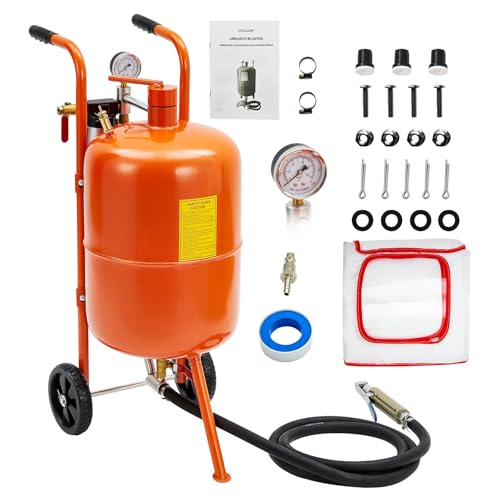
The Garvee 10-gallon is the entry point into pressure pot blasting for buyers who have a capable two-stage compressor in the 5 HP range producing 15+ CFM at 90 PSI but are not yet ready to commit to the infrastructure that the VEVOR 20-gallon demands. Half the tank capacity means more frequent refills on large projects, but the compressor requirement is proportionally lower — making this the realistic choice for most home garage two-stage compressor setups rather than the more demanding VEVOR. The pressure pot design still delivers faster material removal than any siphon-feed gun or blast cabinet, making this a genuine performance upgrade over entry-level blasting options.

The practical workflow with the Garvee 10-gallon involves filling the tank with abrasive through the top fill port, pressurizing with the compressor, and blasting until either the media runs low or a short break is needed. For automotive work on individual panels, components, or moderate-sized parts, the 10-gallon capacity is adequate for a productive work session before refilling. The ceramic nozzle handles aluminum oxide and garnet without the rapid wear that makes steel nozzles frustrating to maintain. For a first-time pressure pot buyer with appropriate compressor infrastructure, the Garvee provides the pressure pot experience at a proportionate entry price.

| Quick Specs | |
|---|---|
| Type | Pressure pot (portable) |
| Tank capacity | 10 gallons |
| CFM required at 90 PSI | 10–15 CFM minimum |
| Min. compressor | Two-stage 5 HP (15+ CFM output) |
| Media compatibility | Aluminum oxide, garnet, glass beads, walnut shell |
| Wet capable | ❌ Dry blasting only |
| ASIN | B0H3ZW24CV |
✅ Best for: First-time pressure pot buyers with a two-stage 5 HP compressor producing 15+ CFM; automotive parts prep, rust removal on individual components, moderate-scale outdoor blasting projects.
❌ Not for: Buyers with single-stage compressors under 15 CFM output — the pressure pot design still requires adequate air supply. Not for large-volume continuous work where the 20-gallon capacity is more practical.
Pros: Entry-level price for pressure pot performance · lower CFM requirement than 20-gallon — matches a two-stage 5 HP home shop compressor · pressure pot delivery is faster than any siphon or cabinet design · adequate for most individual automotive component work
Cons: 10-gallon capacity means more frequent refills on large projects · still requires a two-stage compressor — not for buyers with single-stage home compressors under 15 CFM
3. Industry Dry Wet Sandblaster Kit — Best for Wet Blasting Option
🔧 Type: Pressure portable (wet/dry) · CFM Required: 10–15 CFM · Min. Compressor: Two-stage 5 HP
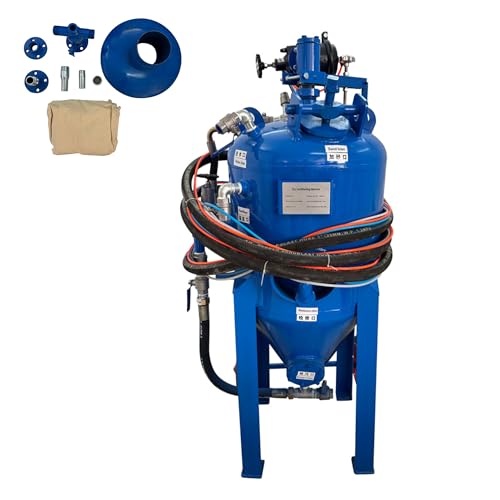
The Industry Dry Wet Kit addresses the one scenario where dry blasting is the wrong choice: when dust suppression is a priority. Wet blasting adds water to the abrasive stream, dramatically reducing airborne dust at the blast point. This matters when working near occupied spaces, when local regulations restrict dust generation, or when working on substrates where airborne contamination of the freshly blasted surface is a concern. The ability to switch between wet and dry modes in one unit also makes this the most versatile portable blaster in this roundup for buyers who encounter varied project conditions.

Wet blasting requires additional planning that dry blasting does not: water-contaminated abrasive must be managed and dried or disposed of properly, waterproof surfaces are necessary for the water component, and the freshly blasted surface must be dried and primed quickly to prevent flash rust on metal substrates. These are not reasons to avoid wet blasting — they are factors to plan for. For buyers who need occasional dust suppression capability alongside standard dry pressure blasting, the Industry kit eliminates the need for two separate tools.

| Quick Specs | |
|---|---|
| Type | Pressure portable — wet and dry capable |
| CFM required at 90 PSI | 10–15 CFM |
| Min. compressor | Two-stage 5 HP (15+ CFM output) |
| Wet capable | ✅ Yes — dual wet/dry mode |
| Media compatibility | Aluminum oxide, garnet, glass beads (wet or dry) |
| ASIN | B0FT8BDCP6 |
✅ Best for: Projects requiring dust suppression; buyers who work near occupied spaces; situations where waterborne media is preferred; buyers who want wet and dry blasting capability in one unit.
❌ Not for: Buyers who only ever need dry blasting — the extra wet capability adds cost and complexity without benefit. Metal substrates where flash rust after wet blasting is difficult to manage.
Pros: Both wet and dry modes in one unit · wet mode dramatically reduces airborne dust at the blast point · versatile for varied project types · lower CFM requirement than the VEVOR 20-gallon
Cons: Wet mode creates water-contaminated waste that requires management · metal substrates blasted wet must be dried and primed immediately to prevent flash rust · more complex setup than a straight dry pressure pot
4. Sandblasting Cabinet Sandblaster — Best Budget Blast Cabinet for Garage Shops
🔧 Type: Blast cabinet · CFM Required: 10–15 CFM · Min. Compressor: Two-stage 5 HP
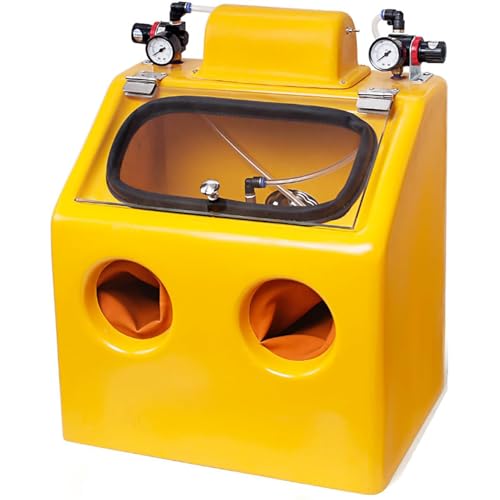
For the home garage shop that needs blast cabinet capability without the Eastwood B60 or TP Tools price point, this sandblasting cabinet provides enclosed media-containment blasting at a budget entry price. The blast cabinet format is the right choice for anyone working primarily on small to medium parts — carburetors, bolts and fasteners, small automotive trim pieces, brackets, and fittings — where setting up a pressure pot outdoors is excessive and where media containment and recovery are important. The enclosed cabinet means no outdoor setup, no media escape across the garage floor, and a controlled working environment for precision cleaning.

At the budget tier, the areas where this cabinet trails the Eastwood B60 and TP Tools units are predictable: the viewing window will fog faster from dust accumulation, the interior lighting will be dimmer, the gloves will be less durable, and the media recovery system will be less efficient at separating spent media from reusable abrasive. For a buyer doing occasional blasting on small parts at home, these trade-offs are proportionate to the price. For a buyer using the cabinet heavily or professionally, the Eastwood or TP Tools units are the better long-term investment.

| Quick Specs | |
|---|---|
| Type | Blast cabinet (siphon feed) |
| CFM required at 90 PSI | 10–15 CFM |
| Min. compressor | Two-stage 5 HP (15+ CFM output) |
| Part size capacity | Small to medium (confirm interior dimensions from listing) |
| Media compatibility | Aluminum oxide, glass beads, garnet, walnut shell |
| ASIN | B0F63141X9 |
✅ Best for: Budget-conscious home garage shops doing occasional blasting on small to medium parts; buyers who want enclosed cabinet capability at the entry price tier; first blast cabinet purchasers.
❌ Not for: Heavy or frequent use where the budget construction will fatigue quickly; buyers who need the larger interior of the 90-gallon cabinet; buyers who require the build quality and support infrastructure of the Eastwood or TP Tools units.
Pros: Enclosed media containment — no outdoor setup required · budget entry price for cabinet blasting · suitable for occasional home garage use on small parts · lower CFM requirement than premium cabinets
Cons: Budget construction — viewing window, lighting, and glove quality trail the Eastwood and TP Tools units · less efficient media recovery than premium cabinets · not suited for heavy or frequent professional use
5. Eastwood B60 Sand Blasting Cabinet — Best Automotive Restoration Cabinet ⭐
🔧 Type: Blast cabinet · Media capacity: 60 lb · CFM Required: 15–20 CFM · Min. Compressor: Two-stage 5–7 HP
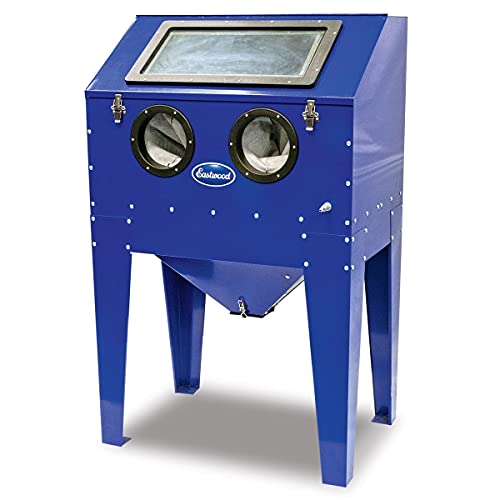
Eastwood is one of the most trusted names in automotive restoration tooling in the US home shop market, and the B60 blast cabinet is the company’s primary recommendation for serious DIY automotive restoration work. The B60’s media capacity, interior dimensions, lighting quality, and build spec are meaningfully above the budget entry-level blast cabinet — positioned specifically for the home garage restorer who is blasting automotive parts regularly rather than occasionally, and who needs a cabinet that holds up through a full restoration project without the viewing window fogging, the gloves tearing, or the nozzle wearing out mid-session.

The 60-pound media capacity reduces refill frequency for a productive blasting session — relevant when you are working through a set of carburetors, a collection of hardware, or a series of small automotive brackets across a multi-hour work session. The interior dimensions accommodate the range of small to medium parts that define most automotive restoration cabinet work: carb bodies, valve covers, intake manifolds (on the larger side of the cabinet’s capacity), door hinges, trim pieces, and the bolt-and-fastener cleanup that is an unglamorous but time-consuming reality of any frame-off restoration. The Eastwood brand support infrastructure — replacement nozzles, replacement gloves, replacement window film — is readily available, which matters for a tool that sees regular use.

| Quick Specs | |
|---|---|
| Type | Blast cabinet (siphon feed) |
| Media capacity | 60 lb |
| CFM required at 90 PSI | 15–20 CFM |
| Min. compressor | Two-stage 5–7 HP (18–22 CFM output) |
| Part size capacity | Small to medium automotive parts |
| Media compatibility | Aluminum oxide, glass beads, garnet, walnut shell |
| Brand support | Replacement nozzles, gloves, window film readily available |
| ASIN | B0922L3X3B |
✅ Best for: Serious home shop automotive restorers who blast parts regularly; buyers who need Eastwood brand support and replacement parts availability; the go-to blast cabinet recommendation for DIY automotive restoration projects requiring repeated use through a season.
❌ Not for: Buyers who need a larger interior for wheel assemblies or bigger components (see 90-gallon cabinet); buyers whose compressor output is under 15 CFM at 90 PSI; occasional users who would be better served by the budget cabinet at a lower price point.
Pros: Eastwood brand trust in the home shop automotive market · 60-lb media capacity for extended sessions · build quality meaningfully above budget entry-level cabinets · ready availability of replacement parts through Eastwood · positioned specifically for automotive restoration use
Cons: Requires a genuine two-stage compressor at 15+ CFM — a 5 HP single-stage will underpower it · interior is limited to small/medium parts — not for wheel assemblies or large components · mid-tier price point above budget cabinets
6. TP Tools USA 2858FP Abrasive Sandblasting Cabinet — Best USA-Made Professional Cabinet ⭐
🔧 Type: Blast cabinet · Build: USA-made · CFM Required: 15–25 CFM · Min. Compressor: Two-stage 5–7 HP
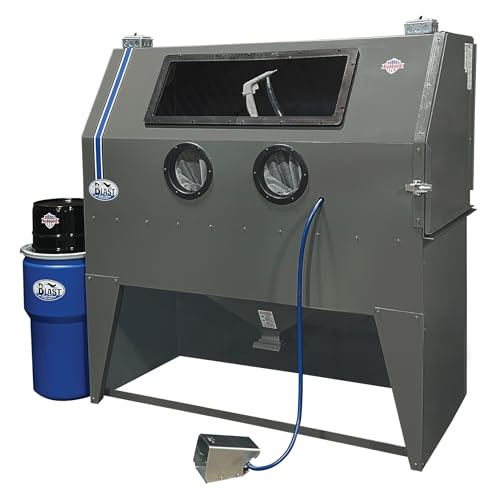
TP Tools is a US manufacturer specializing in professional blast cabinets and blasting equipment — not a brand that also makes blast cabinets alongside power tools and kitchen appliances. The 2858FP is built to a professional construction standard that buyers with serious shop use requirements will recognize immediately in the steel gauge, the weld quality, the cabinet hardware, and the components. For the buyer who has used a budget blast cabinet and found it frustrating after a season of real use, or who wants to invest once in a professional cabinet that will outlast multiple budget alternatives, the TP Tools 2858FP is the domestic premium choice.

The domestic manufacturing matters practically beyond the origin label: TP Tools provides professional after-sale support, parts availability, and technical assistance that most import blast cabinet brands cannot match. For professional shops, restoration businesses, and serious hobbyists who use the cabinet regularly and depend on it for productive shop operation, the ability to call the manufacturer directly and get a knowledgeable answer on parts, configuration, or performance problems has real operational value. The 2858FP’s CFM requirement is proportionately higher than the Eastwood B60, reflecting the professional nozzle and delivery system design — verify your compressor can sustain 15–25 CFM at 90 PSI before purchasing.

| Quick Specs | |
|---|---|
| Type | Blast cabinet (professional) |
| Origin | USA-made (TP Tools & Equipment, Perrysburg OH) |
| CFM required at 90 PSI | 15–25 CFM |
| Min. compressor | Two-stage 5–7 HP (20+ CFM output preferred) |
| Media compatibility | Aluminum oxide, garnet, glass beads, walnut shell, steel shot (confirm from listing) |
| After-sale support | Domestic manufacturer with parts and technical support |
| ASIN | B0CMVWGB8W |
✅ Best for: Professional shops and restoration businesses that use a blast cabinet daily or near-daily; buyers who want domestic manufacturing, direct manufacturer support, and professional build quality; the premium alternative for buyers who have found budget cabinets frustrating through sustained use.
❌ Not for: Budget-conscious occasional users for whom the Eastwood B60 or budget cabinet provides adequate capability at lower cost; buyers without two-stage compressor infrastructure capable of 15–25 CFM.
Pros: USA-made professional construction quality · direct manufacturer support and domestic parts availability · built for sustained professional use frequency · professional steel gauge and component quality throughout
Cons: Premium price point — not justified for occasional home use · requires sustained 15–25 CFM at 90 PSI — demands genuine two-stage compressor infrastructure
7. 90-Gallon Sandblasting Cabinet — Best Large Cabinet for Big Parts
🔧 Type: Large blast cabinet · Capacity: 90 gallon · CFM Required: 25–40 CFM · Min. Compressor: Two-stage 10 HP+
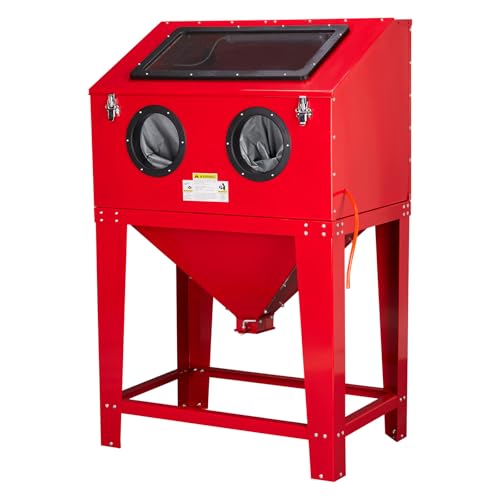
The 90-gallon blast cabinet fills the gap between standard hobby blast cabinets and full outdoor pressure blasting — it is the right choice when parts are too large for a standard cabinet but the buyer still wants the enclosed, media-contained workflow that cabinet blasting provides. Wheel assemblies, large intake manifolds, transmission housings, engine blocks on the smaller end, and larger automotive frame sections all benefit from the enclosed cabinet environment — no outdoor setup, no media scatter, controlled conditions — but simply will not physically fit through the door of a standard hobby cabinet. The 90-gallon interior accommodates these larger components.

The CFM requirement escalates significantly with the larger nozzle bore this cabinet uses. While a standard hobby blast cabinet with a #2 nozzle runs adequately on a two-stage 5 HP compressor producing 15 CFM, the 90-gallon cabinet’s larger nozzle demands 25–40 CFM at 90 PSI — which requires a serious two-stage 10 HP or larger compressor, or a rotary screw air system, to sustain. This is the cabinet for the professional restoration shop, the well-equipped semi-professional garage with genuine compressor infrastructure, or the buyer who processes a high volume of large parts. Attempting to run it on an undersized air supply will be immediately apparent and chronically frustrating.

| Quick Specs | |
|---|---|
| Type | Large blast cabinet |
| Cabinet capacity | 90 gallon (large interior) |
| CFM required at 90 PSI | 25–40 CFM |
| Min. compressor | Two-stage 10 HP+ or rotary screw |
| Part size capacity | Wheel assemblies, large manifolds, transmission cases, engine blocks (smaller) |
| Media compatibility | Aluminum oxide, garnet, glass beads, steel shot |
| ASIN | B0D97V4MPC |
✅ Best for: Professional shops processing large automotive components — wheels, manifolds, transmission cases, differential housings — that exceed standard cabinet capacity; buyers who want enclosed media containment for large parts without switching to outdoor pressure blasting.
❌ Not for: Buyers without a 10 HP+ two-stage or rotary screw compressor capable of 25–40 CFM sustained output — this cabinet will be chronically under-powered on lesser air supplies. Not appropriate for occasional home use where the compressor investment cannot be justified.
Pros: Accommodates large automotive components that won’t fit in standard cabinets · enclosed media containment for a cleaner shop environment than outdoor pressure blasting · handles wheel assemblies and large manifolds in a controlled environment
Cons: Requires 25–40 CFM sustained — demands a 10 HP+ two-stage or rotary screw compressor · large footprint — requires significant floor space · significant investment in both cabinet and air supply infrastructure
8. EustomA Twin Double Pen Fine Sandblaster — Best (and Only) Precision Micro Sandblaster for Etching and Lab Work ⭐
🔬 Type: Precision micro sandblaster (completely different category) · CFM Required: Under 5 CFM · Compressor: Small portable
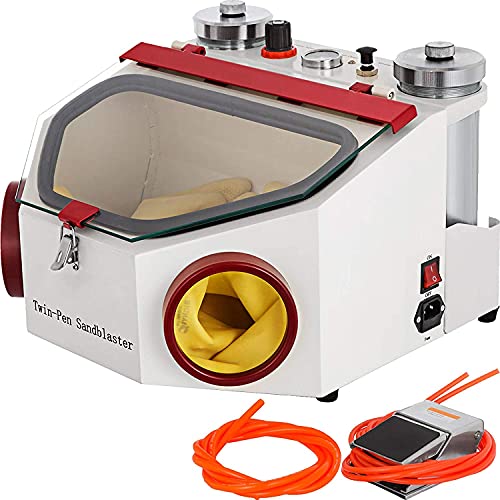
The EustomA Twin Pen is the one product in this roundup that is not competing with any other product in this roundup. It is a completely different tool in a completely different category serving a completely different buyer — and including it here is important specifically because buyers searching “best sandblasters” would otherwise never know this category exists. The Twin Pen is a precision dental and laboratory micro sandblaster: a 50W unit with dual pen-style nozzle handpieces and an integrated LED lamp, designed for fine-detail abrasive work at very low pressure (10–50 PSI) using very fine abrasive media (aluminum oxide powder at 220+ grit or finer). It is the tool that glass etchers, engravers, circuit board technicians, dental lab technicians, model makers, and artists use. It does not remove rust. It does not strip automotive paint. Do not purchase it for those applications.

What the EustomA does exceptionally: controlled frosted etching on glass surfaces, precision surface preparation on circuit boards and electronic components, dental lab work on prosthetics and lab models, fine detail cleaning on museum artifacts and collector items, surface texturing for artwork, and engraving detail work where any other abrasive method would be far too aggressive. The dual pen configuration means two different nozzle profiles are available — fine work and broader fine work — without switching handpieces. The integrated LED lamp provides direct illumination on the tiny work area that this precision level of work requires. The air supply requirement is minimal: any small pancake or hotdog portable compressor with a pressure regulator capable of precise low-pressure output is adequate.

| Quick Specs | |
|---|---|
| Type | Precision micro sandblaster (lab/dental/engraving) |
| Power | 50W unit |
| Operating PSI | 10–50 PSI (very low — precision control) |
| CFM required | Under 5 CFM — any small portable compressor |
| Nozzle type | Twin pen handpieces (dual nozzle configuration) |
| Illumination | Integrated LED lamp |
| Media compatibility | Very fine aluminum oxide powder (220+ grit), fine glass bead |
| Applications | Glass etching, engraving, circuit boards, dental lab, model making, artwork |
| NOT for | Rust removal, automotive work, any large-surface application |
| ASIN | B09BC7QY9B |
✅ Best for: Glass etching and engraving; circuit board surface preparation; dental laboratory work; museum conservation and artifact cleaning; model making detail work; artistic surface texturing — any precision fine-detail abrasive work where control at the sub-millimeter level matters.
❌ Not for: Rust removal. Automotive paint stripping. Any large-surface application. Any project requiring aggressive material removal. If your goal involves a car, a steel frame, or a rust problem — buy a pressure pot or blast cabinet instead.
Pros: The only precision micro sandblaster in this roundup — serves a genuinely different and underserved use case · dual pen handpieces for two nozzle profiles · integrated LED lamp for direct precision work illumination · works with any small portable compressor — no two-stage air supply required · precise low-pressure control for delicate surface work
Cons: Not for automotive or industrial sandblasting applications — category mismatch is the most common purchase error · requires very fine abrasive media (220+ grit) — standard aluminum oxide blast media is too coarse
Safety Guide — PPE and Ventilation Requirements for Sandblasting
Sandblasting generates high-velocity abrasive particles and fine dust simultaneously. Standard safety glasses and N95 dust masks are inadequate for sandblasting exposure, regardless of the sandblaster type or abrasive used.
Required PPE for Outdoor / Portable Pressure Blasting
- Blast hood with forced-air supply (supplied-air respirator): A standard N95 does not protect against the concentration of fine dust generated by outdoor pressure blasting. NIOSH-certified supplied-air blasting hoods provide positive-pressure airflow that prevents any contaminated air from reaching the user.
- Heavy leather or thick rubber gloves: Abrasive particles at pressure will penetrate standard work gloves. Use dedicated blast gloves rated for the pressure and abrasive being used.
- Full protective coveralls: Fine abrasive dust penetrates standard work clothing. Cover all exposed skin.
- Hearing protection: Sustained pneumatic tool and abrasive-impact noise exceeds safe exposure limits for extended sessions.
Required PPE for Blast Cabinet Work
- Half-face respirator with P100 filters: The cabinet contains most media, but fine dust escapes around the glove ports and through any cabinet sealing gaps. P100 filters provide NIOSH-rated protection against fine particulate at the concentrations produced by cabinet blasting.
- Safety glasses inside the cabinet area: Dust escapes from cabinet seals — eye protection beyond the cabinet window is appropriate.
Required Safety Practices
- Install a moisture separator: Wet air from the compressor causes immediate media clogging and poor blast performance. Install an inline moisture separator between the compressor outlet and the sandblaster inlet. This is not optional — it is the most common cause of frustrating blast performance in otherwise correctly set up systems.
- Monitor and stay within rated PSI: Overpressurizing equipment can damage hose connections and cause dangerous pressure release. Operate within the recommended PSI range for your specific blaster and nozzle combination.
- Inspect hoses and connections before each use: Check blast hose, compressed air hose, and all fittings for cracks, cuts, and loose connections before pressurizing. A pressurized hose failure at 90 PSI is a serious safety event.
- Release all pressure before disconnecting or servicing: Never disconnect hoses, remove nozzles, or service any blaster component while the system is pressurized.
- Ensure adequate ventilation: Even with proper media containment, fine dust requires a ventilated workspace. Work outdoors for pressure blasting; provide positive ventilation when working in an enclosed space.
Essential Accessories — What to Buy Alongside Any Sandblaster
Inline moisture separator / air filter (required for every setup): Compressor air contains moisture. That moisture causes immediate media clogging in blast nozzles, produces an inconsistent blast pattern with wet streaks, and contaminates surfaces being prepared for paint or powder coat — making adhesion worse than an unblasted surface. Install an inline moisture separator between the compressor and the sandblaster before first use. Every setup. No exceptions. Budget approximately $25–$60 for a quality inline separator.
Secondary inline pressure regulator: Allows fine-tuning of blast pressure independently from the compressor’s main regulator — essential for switching between aggressive and delicate work without returning to the compressor between tasks. Budget approximately $30–$60.
Replacement nozzles (ceramic or boron carbide): Ceramic nozzles resist wear from angular abrasives like aluminum oxide far better than steel or plastic nozzles. A worn nozzle increases CFM demand, reduces blast efficiency, and produces an inconsistent blast pattern. Keep spare nozzles on hand — they are consumables. Budget $10–$30 per nozzle depending on material and bore size.
Abrasive media: Start with aluminum oxide at 80 grit for general rust removal and steel prep. Glass beads at 100–150 grit for cosmetic finishing work. Walnut shell or corn cob for delicate or soft-metal surfaces. Never use silica sand — see the safety section above.
Blast hood / supplied-air respirator: Required for outdoor pressure blasting. Budget $100–$400 depending on whether you choose a passive filter hood or a powered supplied-air system.
Abrasive media reclaimer: For large-volume work, a media reclaimer allows recovery and reuse of unspent abrasive from outdoor blasting, significantly reducing media consumption costs on major projects.
Pre-Purchase Checklist — Complete Before Ordering
- ☐ Project type confirmed: Cabinet for enclosed small-to-medium parts work · Pressure pot for large outdoor surfaces and automotive rust removal · Wet/dry unit if dust suppression is needed · Precision micro unit ONLY for glass etching, engraving, or lab work. These are not interchangeable tools.
- ☐ Compressor CFM checked: Find the CFM at 90 PSI on the data plate of your compressor — not the HP rating, not the tank size. If the number is under 10 CFM, verify before buying any blaster other than the EustomA precision unit.
- ☐ Compressor type confirmed: A single-stage compressor typically delivers 8–12 CFM at 90 PSI regardless of tank size — inadequate for most sandblasting above the precision category. A two-stage compressor delivers 15–25+ CFM and is the minimum requirement for any blast cabinet or pressure pot in this roundup except the EustomA.
- ☐ Silica-free abrasive confirmed: Do not plan to use regular sand. Have aluminum oxide, garnet, glass beads, walnut shell, or other silica-free media selected before purchasing the blaster.
- ☐ Cabinet size matched to largest typical part: Measure your largest frequently-blasted part. If it doesn’t fit comfortably in a standard hobby cabinet interior, the 90-gallon cabinet or outdoor pressure blasting is the correct approach.
- ☐ Wet vs. dry decision made: Wet blasting dramatically suppresses dust but requires water waste management, immediate priming of metal surfaces after blasting, and waterproof surfaces. If you need wet capability, the Industry Dry Wet Kit is the specific pick.
- ☐ Moisture separator purchased or on order: Do not run your first blast session without an inline moisture separator between compressor and blaster. Buy it before or at the same time as the blaster.
- ☐ PPE confirmed: A respirator, eye protection, and gloves appropriate to the blasting type (P100 half-face for cabinet; supplied-air hood for outdoor pressure blasting) should be purchased before first use — not after.
- ☐ Replacement nozzles on hand: Order ceramic or boron carbide replacement nozzles in the correct bore size for your blaster at the same time as the blaster. They are consumables, and running out mid-session is unnecessarily disruptive.
Frequently Asked Questions
What is the best sandblaster for home use?
For rust removal and automotive work: the VEVOR 20-gallon pressure pot with a two-stage 7.5 HP compressor producing 15+ CFM at 90 PSI. For small parts cleaning in an enclosed cabinet: the Eastwood B60 or TP Tools 2858FP. For a first pressure pot matched to a two-stage 5 HP compressor: the Garvee 10-gallon. For precision etching and engraving work: the EustomA Twin Pen — a completely different category of tool not suitable for automotive work.
What size air compressor do I need for sandblasting?
CFM (cubic feet per minute) at 90 PSI is the critical specification — not tank size and not horsepower. Small blast cabinets with a #2 nozzle require 10–15 CFM. Standard cabinets and the Garvee 10-gallon pressure pot need 15–20 CFM minimum. The VEVOR 20-gallon needs 15–35 CFM, with 20+ recommended for sustained blasting. The 90-gallon large cabinet needs 25–40 CFM. A bigger tank delays the pressure drop but does not fix insufficient CFM output — only more delivered airflow does.
Can I use regular sand in a sandblaster?
No. Regular silica sand causes silicosis — an irreversible, progressive, and potentially fatal scarring of the lung tissue. OSHA, NIOSH, and the CDC have all issued strong warnings against it. Use silica-free alternatives: aluminum oxide for rust removal and steel prep, garnet for general purpose work, glass beads for cosmetic finishing, walnut shell for delicate surfaces, and sodium bicarbonate (soda) for automotive paint removal without surface profiling.
What is the difference between a pressure pot and a blast cabinet?
A pressure pot is a portable sealed tank pressurized by compressed air, feeding abrasive and air together through a blast hose for outdoor or large-surface work — the fastest material removal method available. A blast cabinet is an enclosed unit with gloves and a viewing window where you work on small-to-medium parts with media contained and recirculated inside — no outdoor setup, no media escape, controlled environment. They serve fundamentally different use cases and are not interchangeable.
What is the best abrasive media for rust removal?
Aluminum oxide at 60–80 grit is the standard choice — aggressive, fast-cutting, reusable, and completely silica-free. It works on steel, cast iron, and most metals. Garnet at 80 grit is a good alternative with slightly less aggression and excellent general-purpose performance. For very heavy industrial steel, steel grit provides maximum anchor profile. Never use regular silica sand.
What is a precision micro sandblaster used for?
Precision micro sandblasters like the EustomA Twin Pen are designed for glass etching, engraving, circuit board surface preparation, dental lab work, and model detail finishing — not for automotive rust removal or large-surface work. They operate at 10–50 PSI with very fine abrasive through a precision pen nozzle. Do not purchase a micro sandblaster expecting it to remove rust or strip paint — it is the wrong tool for those applications.
Do I need a moisture separator for sandblasting?
Yes — every setup, every time. Compressed air from any compressor contains moisture that causes immediate media clogging in blast nozzles, produces an inconsistent blast pattern, and contaminates surfaces being prepared for paint or powder coat. Install an inline moisture separator between the compressor outlet and the sandblaster before first use. This is the single most impactful accessory for consistent blast performance and is almost never included with the blaster itself.
Our Top Picks — Quick Summary by Use Case
- Best for Automotive Rust Removal and Large Surfaces: VEVOR 20-Gallon Pressure Pot — requires two-stage 7.5 HP+ compressor producing 15+ CFM
- Best Entry Pressure Pot (First-Time Buyer): Garvee 10-Gallon Pressure Pot — matches a two-stage 5 HP compressor
- Best Wet/Dry Blasting Option: Industry Dry Wet Sandblaster Kit — dual mode for dust suppression when needed
- Best Budget Blast Cabinet: Sandblasting Cabinet Sandblaster — entry price for enclosed cabinet work
- Best Automotive Restoration Cabinet: Eastwood B60 Sand Blasting Cabinet — trusted brand, 60-lb media capacity, automotive-focused
- Best USA-Made Professional Cabinet: TP Tools USA 2858FP — domestic manufacturing, professional build quality, direct support
- Best Large Cabinet for Big Parts: 90-Gallon Sandblasting Cabinet — wheel assemblies, large manifolds, transmission cases
- Best Precision Etching and Lab Sandblaster: EustomA Twin Pen Lab Sandblaster — glass etching, engraving, dental/lab, circuit boards
For lighter rust that doesn’t need a full sandblasting setup, see our guide on how to remove rust from garden tools without damaging them for gentler methods to try first.