A thickness planer takes a rough-sawn board and mills it down to a consistent thickness across its whole length. If you’ve ever bought lumber straight from a mill or reclaimed it from a barn, you already know it doesn’t come flat or uniform. A planer is what turns that stock into something you can actually build furniture with, instead of paying retail for pre-surfaced boards.
This roundup covers eight benchtop planers, from straight-knife budget models to full helical cutterhead machines. We’re comparing them on the things that actually change how a project turns out: cutterhead type, snipe control, width capacity, and what it costs you in blades or knives down the line. Not every planer here is trying to do the same job, so we’ve labeled each one by what it’s actually good for instead of stacking them all against a single “best” pick.
Quick Comparison
| Model | Cutterhead Type | Width Capacity | Motor | Best For |
|---|---|---|---|---|
| DEWALT DW735X | Straight knife, 3-blade | 13″ | 15-amp, two-speed | Best overall |
| 15″ HCX Helical Cutterhead Planer – 10055 | Helical, carbide inserts | 15″ | 15-amp | Widest stock capacity |
| WEN PL1326 | Spiral, carbide inserts | 13″ | 15-amp | Best value spiral cutterhead |
| DEWALT DW734 | Straight knife, 3-blade | 12.5″ | 15-amp | Best budget DeWalt |
| Makita 2012NB | Straight knife, disposable | 12″ | 15-amp | Fastest blade changes |
| Cutech 40700H | Spiral, carbide inserts | 12.5″ | 15-amp | Lowest long-term blade cost |
| FINDBUYTOOL 13″ Helical | Helical, carbide inserts | 13″ | 15-amp | Budget helical cutterhead |
| BUCKTOOL 13″ Benchtop | Straight knife | 13″ | 15-amp | Occasional/light use |
1. DEWALT DW735X — Best Overall
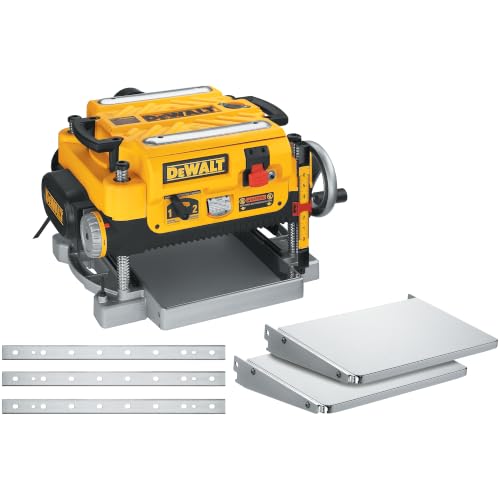
The DW735X pairs a two-speed gearbox with an automatic carriage lock, and that combination is why it shows up as the top pick across nearly every serious review of this category. The two feed rates matter more than they sound: run the slower speed for a final finishing pass on figured wood and you get noticeably fewer tearout marks than a single-speed planer produces on the same board. The carriage lock addresses snipe directly, which is the shallow gouge that shows up at the start and end of a board on cheaper planers when the cutterhead assembly flexes under load.
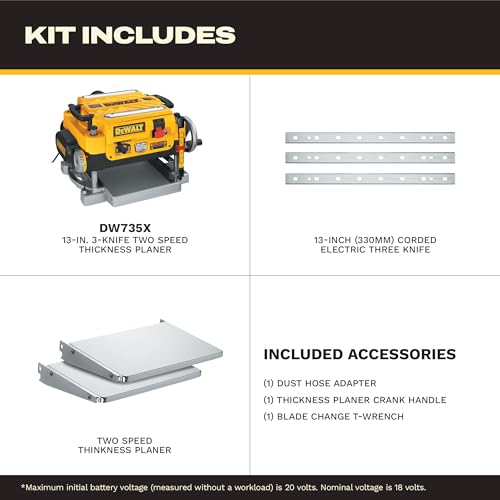
The three-knife cutterhead leaves a smoother finish than most single-speed competitors in this price range, and the fan-assisted chip ejection actually clears shavings instead of letting them pack around the outfeed, which is a real problem on lower-end machines when you’re running softwood at high volume.
Skip this if: you’re planing occasionally and don’t need the two-speed gearbox — the DW734 gets you most of the way there for less money.
Pros: Two-speed gearbox for finish control, automatic carriage lock cuts snipe significantly, strong fan-assisted dust ejection, widely available replacement knives.
Cons: Costs more than straight-knife competitors with similar width capacity. Steel knives still need periodic replacement or sharpening, unlike the carbide insert models on this list.
Buy it on Amazon today with FREE returns
2. 15″ HCX Helical Cutterhead Planer – 10055 — Widest Stock Capacity

Most benchtop planers top out at 12.5 or 13 inches, which forces a second pass or a jointer workaround any time you’re milling a wide glued-up panel or a full-width tabletop blank. The 10055’s 15-inch capacity removes that limitation, and the helical cutterhead with carbide inserts handles it with less noise than a straight-knife machine of the same size. Helical cutterheads slice at an angle instead of striking the board straight-on, which is why they run quieter and leave less tearout on figured grain.
Because the inserts are carbide and staggered around the cutterhead, a nick from a stray nail or a hard knot only takes out one insert instead of the whole edge, so you rotate that single insert instead of replacing a full blade.
Skip this if: your shop rarely sees boards wider than 12 inches — the extra capacity adds cost and footprint you won’t use.
Pros: 15-inch width handles wide panels other benchtop planers can’t, helical carbide cutterhead runs quieter than straight-knife designs, individual insert replacement instead of full blade swaps.
Cons: Larger footprint takes up more bench or cart space than the 12.5-13″ models on this list.
Buy it on Amazon today with FREE returns
3. WEN PL1326 — Best Value Spiral Cutterhead
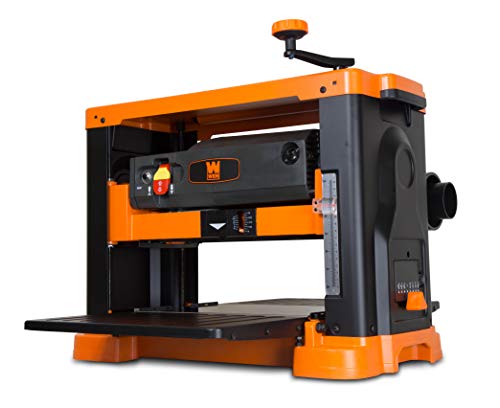
Spiral and helical cutterheads used to be a $500+ upgrade over straight-knife planers. The PL1326 brought that technology down to a price point close to what a straight-knife machine costs, which is why it’s the default budget recommendation across most comparison guides right now. You get the quieter cut and reduced tearout of a spiral cutterhead without the premium price the DEWALT and other name-brand helical models charge.
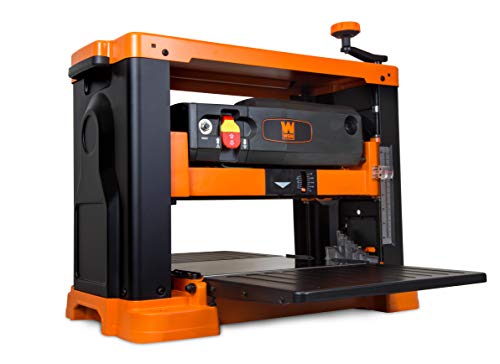
It won’t match the DW735X’s snipe control since it lacks an automatic carriage lock, so expect to manage infeed and outfeed support yourself to minimize it. The finish quality is genuinely good for the price, but the carriage adjustment feels less refined than the DeWalt models on this list.
Skip this if: snipe control is your top priority — the PL1326 requires more manual technique to avoid it than the carriage-lock models here.
Pros: Spiral cutterhead performance at a fraction of the usual price, carbide inserts reduce long-term blade cost, solid finish quality for hobbyist use.
Cons: No automatic carriage lock, so snipe control depends more on your infeed/outfeed setup. Carriage adjustment isn’t as smooth as the DeWalt units.
Buy it on Amazon today with FREE returns
4. DEWALT DW734 — Best Budget DeWalt

The DW734 is what you get if you want DeWalt’s build quality and three-knife finish without paying for the two-speed gearbox and carriage lock on the DW735X. It’s a single-speed machine, so you don’t get the finishing-pass option, but the motor and cutterhead assembly share enough DNA with the DW735X that the actual cut quality on straightforward stock is close.
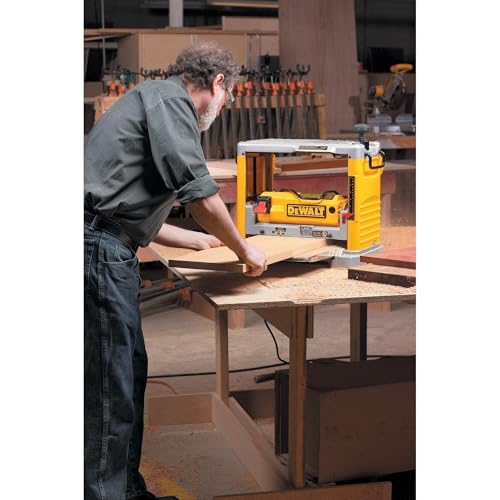
Where it falls short of its bigger sibling is snipe. Without the automatic carriage lock, you’ll see more of it on longer boards, especially if you’re not supporting the ends with roller stands.
Skip this if: you plane a lot of figured or hard-to-work wood — the lack of a slow-speed setting means more tearout on difficult grain than the DW735X produces.
Pros: DeWalt build quality at a lower price than the DW735X, three-knife cutterhead gives a clean finish on straight-grained stock, widely available parts and knives.
Cons: Single speed only, no automatic carriage lock, so snipe shows up more often on long boards without extra infeed/outfeed support.
Buy it on Amazon today with FREE returns
5. Makita 2012NB — Fastest Blade Changes

The 2012NB uses disposable double-edged blades instead of resharpenable knives. That sounds like a downside until you’ve actually swapped blades on a jammed straight-knife planer mid-project — with this one, you flip or replace the blade in a couple of minutes and get back to work. Each blade gives you two usable edges before you need a new set, and you’re not sending anything out for sharpening.
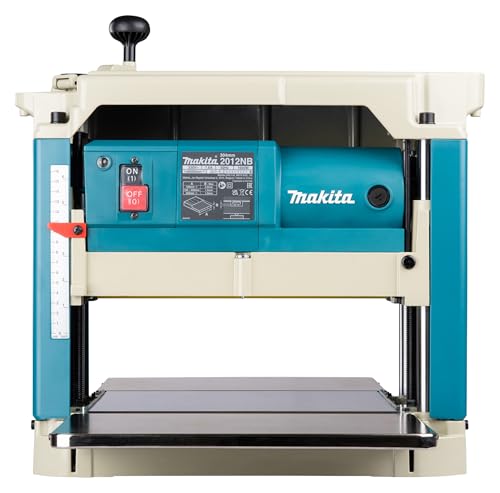
At 12 inches, it has the narrowest capacity on this list, and it’s built more for job-site portability than shop-based volume work. If you’re moving between locations or working in a smaller space, that’s an advantage. If you’re milling wide panels regularly, it’s a limitation.
Skip this if: you need to plane stock wider than 12 inches — this is the narrowest-capacity model in this roundup.
Pros: Fastest blade changes of any planer here, disposable double-edged blades mean no sharpening, compact and portable for job-site use.
Cons: 12″ width capacity is the narrowest on this list. Ongoing blade replacement cost adds up compared to carbide insert models.
Buy it on Amazon today with FREE returns
6. Cutech 40700H — Lowest Long-Term Blade Cost

The 40700H’s spiral carbide cutterhead uses individually indexable inserts, and each insert has four usable cutting edges before it needs replacing. That’s the real advantage over a straight-knife machine: instead of buying a full knife set or sending blades out for sharpening every time the edge dulls, you rotate a single insert to a fresh corner. Over a few years of regular use, that adds up to meaningfully lower blade spend than the DW734 or Makita.
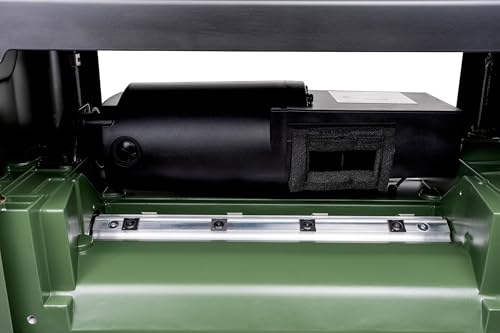
The tradeoff is width. At 12.5 inches, it’s on the narrower end of this roundup, so if wide panel work is a regular part of your shop, the 15″ HCX or the 13″ models will serve you better.
Skip this if: you regularly mill boards over 12.5 inches wide — this is one of the narrower-capacity planers on this list.
Pros: Indexable carbide inserts with four edges each, quieter operation than straight-knife designs, lower cost per year of ownership on blades.
Cons: 12.5″ capacity limits it on wide stock. Fewer accessories included than the DeWalt models.
Buy it on Amazon today with FREE returns
7. FINDBUYTOOL 13″ Helical — Budget Helical Cutterhead
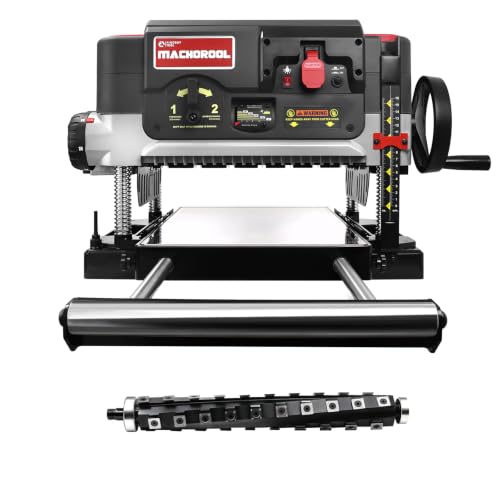
Helical cutterheads with carbide inserts typically cost more than this. The FINDBUYTOOL 13″ gets you that quieter, lower-tearout cut at a price closer to a straight-knife machine, which makes it a reasonable pick if you want the technology without paying DeWalt or Cutech pricing. The 13-inch capacity also puts it ahead of the Cutech and Makita on width.

Fit and finish on the carriage adjustment isn’t as tight as the name-brand options on this list, and support/parts availability is more limited if something needs replacing down the line.
Skip this if: long-term parts availability and support matter more to you than upfront price — the established brands on this list have a longer track record here.
Pros: Helical carbide cutterhead at a budget price, 13″ capacity, quieter than straight-knife planers in the same price range.
Cons: Carriage adjustment feels less refined than the DeWalt or WEN units. Less established parts and support network.
Buy it on Amazon today with FREE returns
8. BUCKTOOL 13″ Benchtop — Best for Occasional/Light Use
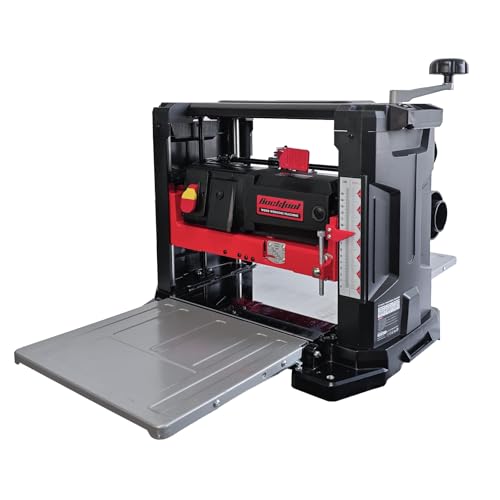
The BUCKTOOL is a straight-knife 13″ planer aimed at buyers who need to mill stock occasionally rather than run high volume through the machine regularly. It handles basic dimensioning tasks competently, and the 13-inch width covers most furniture-scale project needs without stepping up to the cost of a helical or spiral cutterhead machine.
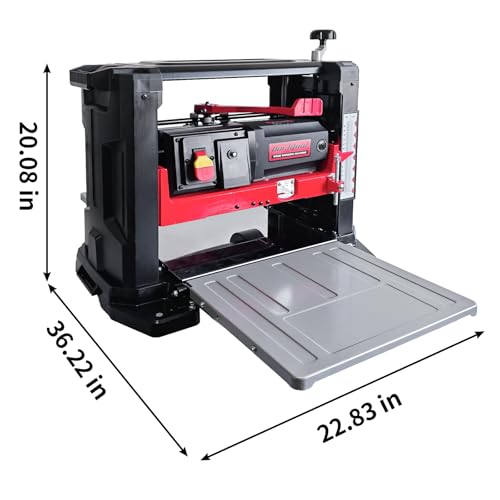
If you’re planing hardwood in volume or doing this daily, the straight-knife cutterhead will dull faster than the carbide options here, and you won’t get the snipe control of the DW735X’s carriage lock.
Skip this if: you’re planing daily or working primarily in hardwood — the carbide insert models on this list will hold an edge longer under that kind of use.
Pros: Affordable 13″ capacity, straightforward operation for occasional use, adequate finish quality on softer woods.
Cons: Straight-knife cutterhead dulls faster under heavy or hardwood use. No automatic carriage lock for snipe control.
Buy it on Amazon today with FREE returns
Cutterhead Types Explained

Straight knife: The traditional design — full-width blades run the length of the cutterhead and strike the board head-on. It’s the least expensive to manufacture and the knives are cheap to replace, but this design is the loudest of the three and leaves more tearout on figured or interlocked grain. The DW735X, DW734, Makita 2012NB, and BUCKTOOL use this style.
Spiral cutterhead: Small carbide inserts are arranged in a spiral pattern around the cutterhead, so the cut happens progressively across the width instead of all at once. This reduces noise and tearout compared to straight knife. The WEN PL1326 and Cutech 40700H use this design.
Helical cutterhead: Similar concept to spiral, but the inserts are arranged in a helix with a shearing angle to the cut. This typically produces the smoothest finish of the three and the quietest operation, with the tradeoff of a higher price point. The 15″ HCX 10055 and the FINDBUYTOOL 13″ use helical cutterheads.
For blade cost over time: straight-knife models need periodic resharpening or full knife-set replacement. Spiral and helical carbide insert models let you rotate a single insert to a fresh edge, and each insert typically offers three to four usable edges before it needs replacing, which is meaningfully cheaper per year if you’re planing often.
Buying Guide
Width Capacity
12″ to 12.5″ covers most furniture components and trim work. 13″ is the most common capacity in this category and handles the majority of glued-up panels. 15″, like the HCX 10055, matters if you regularly mill wide tabletop blanks or panels without wanting to break them into narrower glue-ups first.
Snipe Control
Snipe is the shallow dip cut into the first and last few inches of a board, caused by the cutterhead assembly flexing when only one roller is engaged with the board. An automatic carriage lock, like the one on the DW735X, addresses this mechanically. On planers without it, supporting the board with infeed and outfeed roller stands reduces snipe significantly, even if it doesn’t eliminate it entirely.
Dust Collection
Most benchtop planers in this list use a standard 2.5″ or 4″ dust port, but check the specific model before assuming compatibility with your shop vac or dust collector hose. A planer without adequate dust collection will bury your bench and floor in shavings fast, especially on softwood.
Motor and Feed Rate
15-amp motors are standard across this entire list, which is close to the maximum a standard 120V household circuit supports. The real differentiator is feed rate options: a two-speed gearbox, like the DW735X’s, lets you slow down for a finishing pass on figured wood, which reduces tearout compared to running a single fixed speed.
Can You Plane Plywood?
You can, but it’s not recommended for regular use. The glue layers between plies dull blades faster than solid wood and can cause chipping on the edges. If you need to plane plywood occasionally, a carbide insert cutterhead holds up better than steel knives, but expect reduced blade life either way.
Frequently Asked Questions
How much material can I remove in one pass?
Most benchtop planers in this list are rated for up to 1/8″ per pass on softwood, but taking that much off in a single pass on hardwood strains the motor and increases tearout and snipe. Taking lighter passes, closer to 1/16″ or less on hardwood, gives a cleaner finish and less wear on the cutterhead.
What’s the difference between a jointer and a planer?
A jointer flattens one face and squares one edge of a board relative to that face. A planer makes the opposite face parallel to the first, bringing the board to a consistent thickness. You typically need both tools to fully dimension rough lumber — a planer alone won’t flatten a warped or twisted board.
Do I need dust collection for a benchtop planer?
Yes, in practice. These machines produce a high volume of shavings quickly, and running without dust collection means constant cleanup and a bench buried in chips within minutes of milling a single board.
Can a benchtop planer handle hardwood like oak or maple?
Yes, all eight planers on this list can mill hardwood, but expect to take lighter passes than you would on pine or poplar, and expect steel knives to dull faster on hardwood than on softwood.
How long do planer blades last?
Straight steel knives typically need resharpening or replacement after milling a few hundred board feet, depending on wood species and how deep your passes are. Carbide inserts on spiral and helical cutterheads last considerably longer per edge, and offer multiple edges per insert before replacement.
Bottom Line
If you want the most well-rounded machine on this list, the DW735X is the one to buy. If your boards regularly run wider than 12.5 inches, the 15″ HCX 10055 is the only one here built for that. If price is the deciding factor and you still want a spiral cutterhead, the WEN PL1326 gets you there. For daily use with the lowest long-term blade cost, the Cutech 40700H‘s indexable carbide inserts win. And if you’re planing occasionally and don’t want to spend much, the BUCKTOOL or DW734 both get the job done.
Once your stock is planed to thickness, a table saw is the next stop for ripping it to width – see our guide to the best table saws for every type and budget.