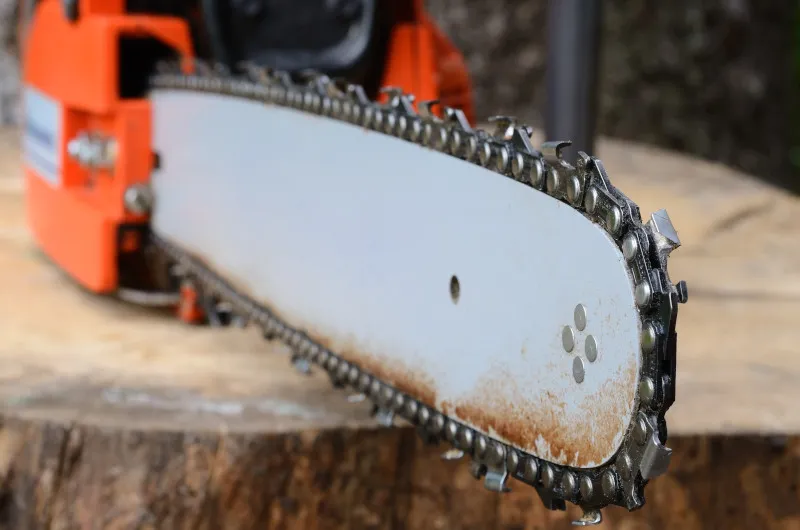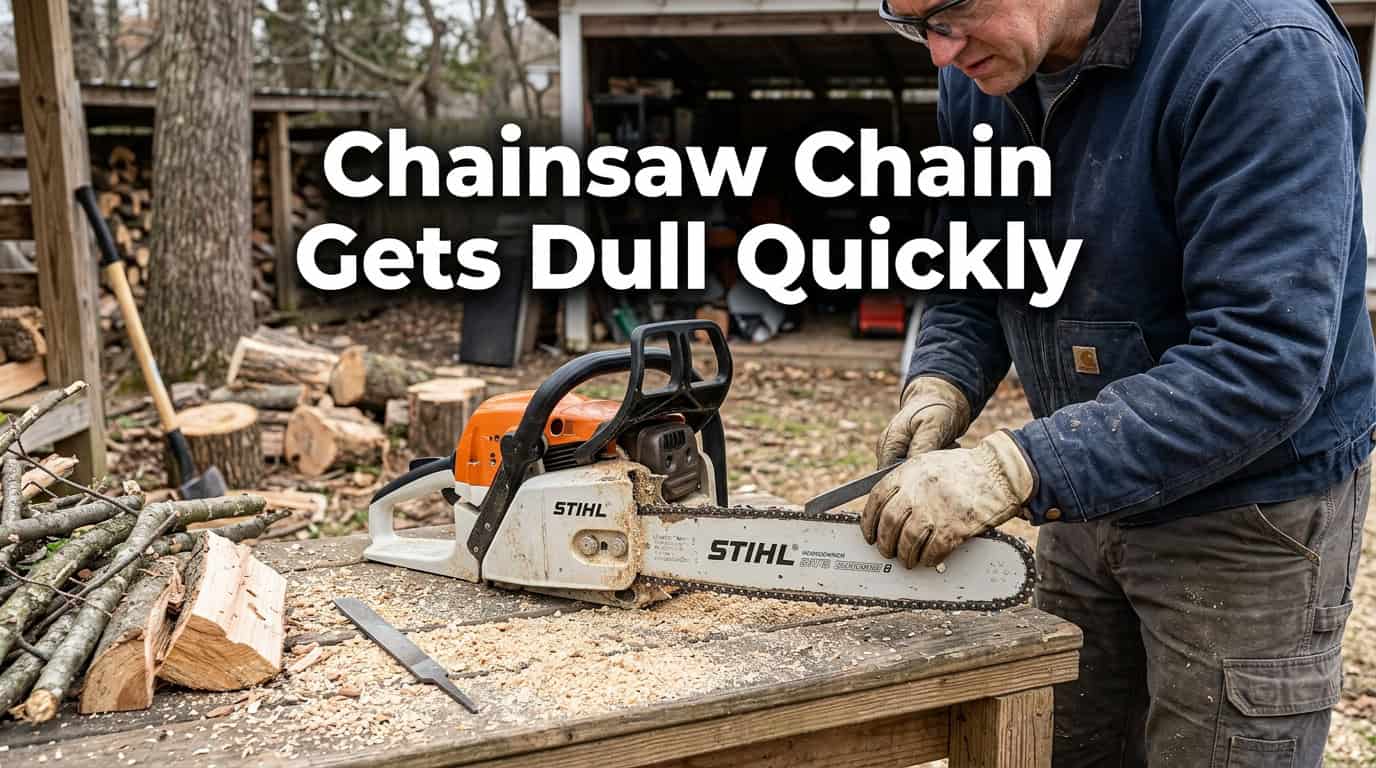
Before assuming it’s just dirty wood or bad luck, it helps to know there are two entirely different categories of cause behind a chain that dulls too fast: what you’re actually cutting, and how the chain itself is set up. Most guides only cover the first one. The second is where a chain that’s genuinely sharpened correctly on the edge still dulls fast anyway, and it’s the part almost nobody explains clearly.
Two Categories of Cause – What You’re Cutting vs. How the Chain Is Set Up
If your chain dulls fast, it’s either fighting something abrasive in the material, or it’s biting too aggressively into the wood because of how it’s set up, even on clean material. These call for different fixes, so it’s worth identifying which one you’re actually dealing with before you start troubleshooting.
Causes Related to What You’re Cutting
Ground and Dirt Contact
This is the most commonly cited cause across every source on this topic, and for good reason. The instant a chain touches soil, it’s cutting through sand and grit that act exactly like sandpaper on the cutting edges. A single accidental ground strike while felling low or bucking close to the dirt can dull an otherwise sharp chain immediately.
Contaminated Wood
Bark itself often carries windblown dirt and sand, even on wood that’s never touched the ground, so a chain can pick up abrasive contamination on the very first cut through the bark layer. Reclaimed lumber, pallet wood, and salvaged timber are worse offenders since they’ve usually been dragged around, stacked outdoors, or handled in ways that work grit into the surface.
Hidden Metal
Nails, wire, and old fence staples that trees have grown around over the years are a real and fairly common cause of sudden, severe edge damage, not just gradual dulling. If a chain goes from cutting fine to suddenly chattering or refusing to bite mid-cut, stop and inspect the edge for a nicked or chipped tooth before continuing.
Wood Hardness and Species
Worth saying plainly: hardwoods like oak, hickory, and sugar maple genuinely dull a chain faster than softwoods like pine or fir, even under otherwise identical conditions. This is expected, not a sign anything is wrong with the chain or the saw, and it just means hardwood cutting sessions call for more frequent touch-ups as routine maintenance.
Causes Related to Chain Setup – The One Most Guides Skip
Raker Clearance Set Too Low

This is the cause almost every basic troubleshooting guide leaves out entirely, and it’s a genuinely common mistake even among experienced chainsaw owners. Every cutting tooth on a chain has a raker (also called a depth gauge) sitting just in front of it, and the height difference between the raker and the tooth controls how deep that tooth bites into the wood on each pass. If the raker sits too low relative to the tooth, either from repeated sharpening wearing the tooth down without the raker being adjusted to match, or from an initial filing mistake, the tooth bites much deeper than it should on every single pass. That puts far more mechanical stress on the edge than the wood itself requires, and the edge dulls fast even though it was sharpened correctly.
The target raker clearance on most chains is 0.025 to 0.030 inches, checked with a dedicated depth gauge tool rather than eyeballed. A depth gauge and flat file kit, like the one shown above, lets you check this directly and file the rakers back down to spec when they’ve crept out of range. This is easy to overlook because all the attention during sharpening naturally goes to the cutting edge itself, and the raker gets forgotten entirely.
Wrong File Size or Incorrect Sharpening Angle
Using a file that doesn’t match your chain’s specific size, or filing at an inconsistent or incorrect angle, weakens the geometry of the edge itself before the chain even goes back to work. A chain sharpened this way starts out already compromised and dulls faster than one filed correctly, regardless of what it’s cutting afterward. Check your chain’s specification for the correct file diameter rather than assuming one size fits every chain.
Insufficient or Wrong Bar Oil
This is a genuinely different wear mechanism from abrasive dulling, worth understanding separately. Without adequate lubrication, friction between the chain and bar generates real heat, and that heat can cause the chain to stretch or warp over time, which affects cutting performance and chain life independent of the edge sharpness itself. Confirm your oiler is actually delivering oil (rev the saw near a light surface and watch for oil flinging off the bar tip) and that you’re using the bar oil your manufacturer specifies, not a substitute.
Forcing the Cut
Applying excessive pressure or forcing the saw through the wood rather than letting the chain’s own cutting action do the work increases stress on the edge with no real gain in cutting speed. Let the saw’s weight and the chain’s design do the cutting; if you find yourself leaning hard into every cut, that’s usually a sign the chain needs sharpening rather than a signal to push harder.
How to Tell Which Category You’re Dealing With
If the chain dulls unevenly, sharp on one side, noticeably duller on the other, or specifically right after a known ground strike, that points squarely at a cutting-conditions issue: dirt, contamination, or hidden debris. If the chain dulls evenly across the whole edge and does so quickly regardless of what you’re cutting, or even on clean, dry wood, raker clearance or lubrication is the more likely explanation, and it’s worth checking those before assuming your technique or the material is to blame.

Frequently Asked Questions
How often should a chainsaw chain be sharpened?
There’s no fixed interval that applies universally, it depends heavily on what you’re cutting and how often. A rough guide many users follow: touch up the edge every tank of fuel or two under normal use, and sharpen immediately after any known ground strike or contact with embedded metal, regardless of how recently it was last done.
What raker clearance should I use?
Most chains target 0.025 to 0.030 inches of raker clearance below the cutting tooth. Check your specific chain manufacturer’s spec, since this can vary slightly by chain type, and use a dedicated depth gauge tool rather than estimating by eye.
Does hardwood really dull a chain faster than softwood?
Yes, genuinely, and it’s expected rather than a sign of a problem. Denser hardwoods require more cutting force per pass, which wears the edge faster than the same chain would wear cutting softwood. Plan on more frequent touch-ups during hardwood-heavy sessions as routine maintenance, not as troubleshooting.
Can bad bar oil actually cause dulling, or just overheating?
Both, and they’re related. Inadequate lubrication causes friction and heat buildup first, and that heat can stretch or warp the chain over time, which degrades cutting performance and effectively shortens the chain’s useful life even though it’s a separate mechanism from abrasive edge dulling.
Bottom Line
Figure out which category you’re dealing with before troubleshooting further, cutting conditions or chain setup, since the fixes are completely different. Dirt, contamination, and hidden metal call for cleaner material and more careful cutting habits. A chain that dulls fast even on clean wood points toward raker clearance, sharpening technique, or lubrication, the setup-side causes most guides never mention. If your current chain is simply worn past the point of resharpening, our guide to the best chainsaw chains covers real replacement options, and if the saw itself is due for an upgrade, our battery-powered chainsaw guide covers what to look for.
If poor lubrication is the actual root cause, see our guide on why a battery chainsaw isn’t oiling properly to fix the source rather than just the symptom.