

Electric pressure washers need less winterization than gas ones, but less isn’t none. Skip it before a hard freeze and you’re risking a cracked pump housing or damaged internal seals, a repair that costs more than the twenty minutes this whole process actually takes. Most winterization guides online cover gas and electric units together, which means you’re wading through fuel stabilizer and oil-change steps that don’t apply to your machine at all. This one doesn’t.
Why This Matters – What Freezing Actually Does
Water left inside the pump, hoses, or spray gun expands when it freezes. That expansion is what cracks plastic pump housings and damages the internal seals that keep your pump sealed and pressurized. It doesn’t take a whole winter of exposure, one hard freeze with water still sitting in the system is enough to cause real damage. This is also worth connecting to something we’ve covered separately: several of the causes behind a pressure washer losing pressure mid-job, worn seals specifically, trace directly back to freeze damage from a unit that wasn’t properly winterized the season before.
Step-by-Step Winterization
1. Disconnect from water and power. Turn off the water supply, disconnect the garden hose, and unplug the unit from the outlet. Always disconnect the water source last if you’re doing this alongside a final cleaning run, never run the pump dry with no water flowing.
2. Drain all the water. Squeeze the trigger gun until pressure and water flow stop completely. Tilt the unit to help any remaining water drain out of the pump, hoses, and gun rather than sitting in a low point.
3. Apply a pump saver or pump protector. This is the step most people skip, and it’s the one that actually prevents freeze damage rather than just reducing the risk. A pump saver product typically connects to the pump’s water inlet; you run it until the fluid begins exiting through the outlet, which confirms it’s fully displaced the water inside and coated the internal seals.
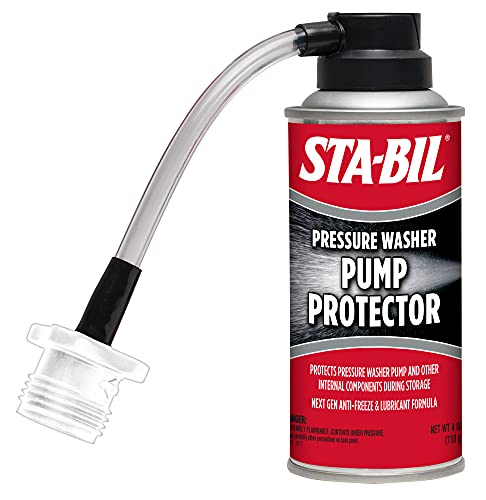
STA-BIL’s Pump Protector is built specifically for this: attach the included hose to the pump inlet, press the dispenser button, and once the protective fluid starts coming out the pump outlet, the pump is fully protected against freezing and the seals are lubricated against sticking over the off-season. It’s rated for reuse each winter and works on both electric and gas pump types.
4. Clean and inspect the inlet filter. Most units have a small filter or strainer at the water inlet. Remove it, rinse away any debris or mineral buildup, and confirm it’s not cracked before reinstalling.
5. Detach and clean the nozzle. Remove the spray nozzle and clear any buildup from the orifice. A clogged nozzle left in place over winter is one less thing working correctly when you pull the unit back out in spring.
6. Coil and store the cord and hose properly. This is a genuinely electric-specific step worth taking seriously: straighten out the power cord fully before coiling it, a cord stored in a tight, kinked coil for months is more prone to cracking at the stress points when you unwind it later. Inspect both the power cord and the high-pressure hose for any cracks, fraying, or soft spots before putting them away, that’s a cheap and easy time to catch a problem before it becomes a safety issue next season.
Where and How to Store It
Store the unit somewhere that stays above freezing if at all possible, an attached garage, a basement, or a heated shed. An unheated detached garage isn’t automatically safe during a genuinely hard freeze even with a pump saver applied, the pump saver protects the pump specifically, not every seal and fitting in the system. If you have no choice but to store it somewhere unheated, the pump saver step above becomes non-negotiable rather than optional.
One risk that’s easy to overlook: rodents. A pressure washer sitting untouched for months in a garage or shed is exactly the kind of undisturbed spot mice and other rodents look for, and chewed wiring is a real, common cause of damage discovered when people pull equipment back out in spring. Storing the unit off the ground, or checking on it periodically over winter, meaningfully reduces this risk.
What NOT to Worry About (vs. Gas Models)
If you’ve read a generic pressure washer winterization guide before landing here, you may be expecting steps that simply don’t apply to an electric unit:
- Fuel stabilizer or draining gas – no fuel system, nothing to stabilize or siphon.
- Oil changes – electric motors don’t use engine oil the way a gas engine does.
- Spark plug service – there’s no spark plug on an electric unit.
Electric units have fewer parts and a simpler configuration overall, which is exactly why this list is shorter than what a gas-engine winterization guide covers. Don’t go looking for a fuel shutoff valve that isn’t there.
Un-Winterizing in Spring
Before your first use next season, run clean water through the system briefly with the trigger squeezed to flush out the pump saver fluid before you start actually cleaning anything with it. Reconnect the water supply, check the cord and hose one more time for any damage that appeared during storage, and you’re ready to go.
Frequently Asked Questions
Do electric pressure washers actually need antifreeze?
Yes, if there’s any real chance of freezing temperatures during storage. A dedicated pump saver/pump protector product is a better choice than automotive antifreeze, since it’s formulated specifically to lubricate pump seals in addition to preventing freezing, automotive antifreeze alone doesn’t do the lubrication part.
Can I store an electric pressure washer in an unheated garage?
It’s lower-risk than leaving it fully outdoors, but not risk-free during a hard freeze unless you’ve applied a pump saver first. If winters in your area regularly drop well below freezing, treat the pump saver step as required, not optional, regardless of where you’re storing the unit.
What happens if I forget to winterize it and it freezes?
Best case, nothing happens if temperatures didn’t actually drop low enough or water had already fully drained. Worst case, a cracked pump housing or damaged internal seals, which shows up the following season as leaks, pressure loss, or a pump that won’t build pressure at all. If you suspect freeze damage happened, our guide on why pressure washers lose pressure mid-job covers how to diagnose it.
How often do I need to do this?
Once per season, before the first hard freeze in your area, is enough. There’s no benefit to repeating the process throughout winter as long as the unit stays disconnected and undisturbed in storage.
Bottom Line
Drain the water, apply a pump saver until it runs clean through the outlet, and store the unit somewhere that stays above freezing if you can manage it. That’s the entire process for an electric unit, genuinely about twenty minutes, and skipping it risks a repair that costs far more than a bottle of pump protector. If this season’s the one where you’re replacing rather than repairing, our guide to the best electric pressure washers covers what to look for.


