A roof snow rake does one job: it pulls snow off the lower edge of your roof while you stand on the ground. That matters for two reasons. Heavy snow adds real weight to a roof. And snow that melts higher up and refreezes at the cold eaves is how ice dams form, which is how water ends up in your attic and ceilings.
The best roof snow rake for you depends on how high your eaves are, what your roof is made of, and how much snow you get. This guide compares 8 roof rakes sold on Amazon, from a 21-foot budget pole to a 30-foot slide system. Every spec below was checked against the live Amazon listing.
Quick answer: For the least effort per storm, the Avalanche! 500 slide rake moves snow in big sheets instead of scoops. For most single-story homes on a budget, the Snow Joe RJ204M is light, reaches 21 feet and has thousands of owner ratings. For tall roofs, look at the 30-foot SNOWPEELER.
Safety first: Most roof rake poles are aluminum, and even fiberglass conducts electricity when wet. Look up before you extend the pole. Never rake near a service line or power line, and never use a roof rake from a ladder.
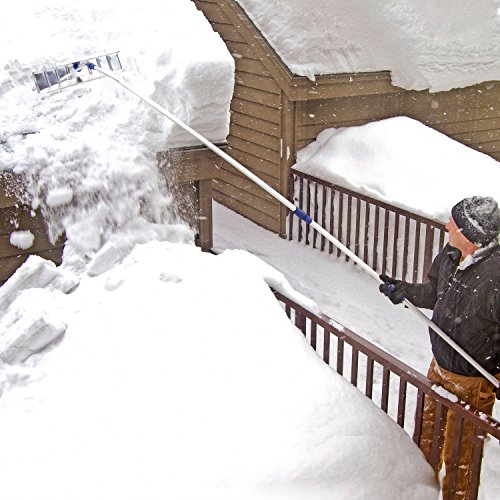
A person removing snow from a roof using a snow rake during winter.
Specs and weights come from the Amazon listings. Reach is pole length, not how far up the roof you can clear. That depends on your eave height and roof pitch.
Model
Type
Head
Pole
Shingle Protection
Listed Weight
Avalanche! 500
Slide
17″ x 12″ plastic slide
15.5 ft fiberglass
1.5″ wheels
9.15 lb
Snow Joe RJ204M
Blade
25″ x 6″ poly
To 21 ft aluminum
None listed
4.8 lb
SNOWPEELER
Slide
18″ x 9″ cutter, 10 ft slide
30 ft sectional
Slide rides on snow
About 13 lb
Suncast 21′
Blade
21″ curved graphite
7-21 ft resin-coated aluminum
None listed
7.58 lb
USA Handy Tools
Blade
24″ aluminum
20 ft aluminum
Rollers
6.2 lb
Snow Joe RJ205M
Blade
25″ x 6″ aluminum
6.2-21 ft aluminum
None listed
5.7 lb
VEVOR 21 ft
Blade
25″ ABS plastic
5-21 ft aluminum
None listed
6.75 lb
VEVOR 26″
Blade
26″ aluminum
7.5-20 ft aluminum
Wheels
6.88 lb
The 8 Best Roof Snow Rakes
1. Avalanche! 500 Roof Snow Rake – Best Overall
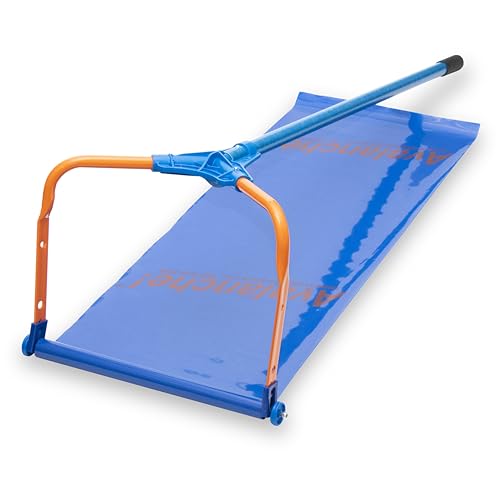
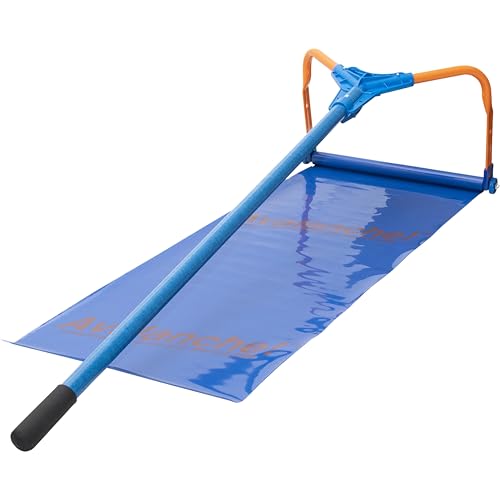
The Avalanche works differently from a normal roof rake. Instead of pulling snow toward you one scoop at a time, you push a frame up the roof. It cuts under the snow, and the snow slides down a plastic slide and off the edge in sheets. Owners on Amazon describe snow sliding off in large sections, and one says it cut a six-hour job to under an hour.
The kit comes with four fiberglass pole sections that snap together into a 15.5-foot pole. The slide is 17 inches wide and 12 inches long, and 1.5-inch wheels keep the frame off asphalt shingles. It is assembled in the USA and lists at 9.15 lb.
It holds 4.4 stars across more than 1,200 Amazon ratings. The main complaint is durability of the slide material. Some owners report it lasting many seasons. Others say it ripped after a few uses.
Skip this if: your eaves are high. A 15.5-foot pole is shorter than most blade rakes here, and a slide system needs room to push upward.
Pros: Moves the most snow per push; wheels protect shingles; fiberglass pole; made in USA; large owner review base. Cons: Shortest pole on the list; the slide material can tear; costs more than twice a basic blade rake; sold by Hearthshire, not Amazon.
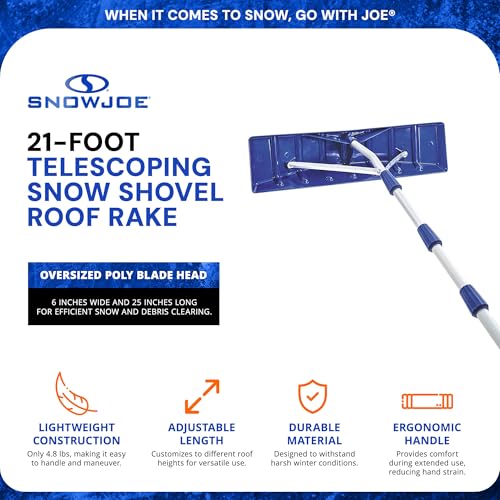
This is the most-reviewed roof rake on Amazon, with more than 2,200 ratings at 4.4 stars. It has a 25-inch wide, 6-inch tall poly blade and a Twist-n-Lock aluminum pole that extends to 21 feet. Snow Joe gives a total overhead reach of 27 feet. At 4.8 lb, it is the lightest rake here.
Owners say it is good value and light enough to use for a long session. Several use it on sheds, greenhouses and solar panels, and one mentions it is safe for solar panels. The complaints are about durability. Some owners report the blade or pole breaking early, and opinions on how well it handles heavy snow are split.
Note: this listing is sold by Spreetail, not Amazon.
Skip this if: you regularly deal with heavy, wet snow. The poly blade can flex and break under a big load.
Pros: Lightest rake here at 4.8 lb; 21-foot pole; wide 25-inch blade; huge review base; low price. Cons: Poly blade can break in heavy snow; no rollers to hold the blade off the shingles; not sold by Amazon.
When a 21-foot pole will not reach, the SNOWPEELER is the long-reach pick. It uses a 30-foot sectional handle and the same slide idea as the Avalanche. An 18-inch by 9-inch cutter slices into the snow, and a 10-foot tear-resistant slide carries it down and off the roof.
It holds 4.3 stars across more than 1,700 ratings. Owners say it works well on deep, crusty snow and on garage roofs. The weak points are some plastic parts breaking early and mixed feedback on the assembly instructions. The listing weight is about 13 lb, and 30 feet of pole takes real arm strength to control.
Skip this if: you have a single-story home. You will be paying for reach you do not need and handling a heavier tool.
Pros: Longest reach on this list; slide design moves a lot of snow; handles deep, crusty snow well. Cons: Heaviest and most expensive rake here; some plastic parts break early; assembly takes patience; sold by Premium Sport, not Amazon.
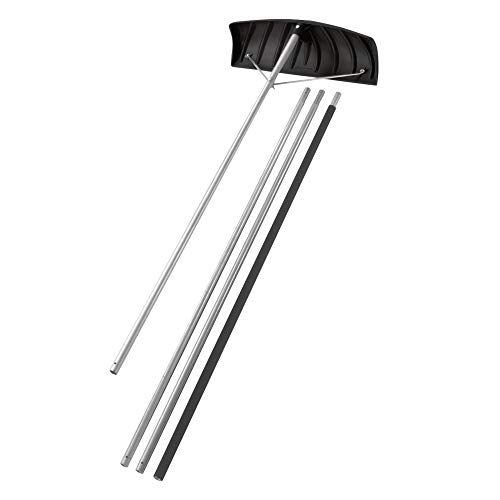
Suncast uses a 21-inch bow-shaped plastic head with a curved, non-stick graphite blade. The curve helps it grab and hold snow as you pull it down. The pole adjusts from 7 to 21 feet, with a resin-coated aluminum lower section. Suncast says it covers most 2-story homes without a ladder.
It holds 4.4 stars across 400+ ratings. Owners say it is well made and good at keeping snow away from the roof edge, which is the part that matters most for ice dams. Some find the long pole awkward to handle. At 7.58 lb, it is heavier than the Snow Joe.
Skip this if: you want the lightest tool. This one is about 60 percent heavier than the RJ204M.
Pros: Curved non-stick blade holds snow well; resin-coated handle; breaks down for storage; strong owner feedback on build. Cons: Narrower 21-inch head; heavier than most blade rakes; no rollers; sold by Hearthshire, not Amazon.
5. USA Handy Tools 20 ft with Rollers – Best for Protecting Shingles
The biggest risk with a blade rake is scraping the granules off asphalt shingles. This rake solves that with rollers that hold the aluminum shovel head just off the roof surface. The head is 2 feet wide, the pole reaches 20 feet, and it lists at 6.2 lb. The maker says it has been built in Michigan with all USA parts for more than 50 years.
It has the highest rating of the blade rakes here: 4.6 stars across nearly 250 ratings. Owners say it is well made, light and easy to steer, and one credits it with ending their ice dam problems. The trade-off: the rollers leave a thin layer of snow on the roof. That is what protects the shingles.
Skip this if: you need more than 20 feet of reach.
Pros: Rollers keep the blade off shingles; wide 24-inch aluminum head; made in USA; top-rated blade rake here. Cons: 20-foot reach is shorter than several picks; aluminum head should not be used on metal roofs; smaller review pool; sold by the maker, not Amazon.
6. Snow Joe RJ205M – Best Metal Blade for Heavy Snow
This is the aluminum-blade version of the Snow Joe roof rake. The head is the same 6 by 25 inches, and the Twist-n-Lock pole runs from 6.2 to 21 feet. The metal blade is stiffer than the poly one, so it holds up better against wet, packed snow. It weighs 5.7 lb, just under a pound more than the poly version.
It holds 4.2 stars across more than 860 ratings. It is sold by Snow Joe’s authorized seller.
Skip this if: you have a metal roof or soft asphalt shingles. A metal blade can scratch coatings and scrape granules. Use a plastic blade or a rake with rollers instead.
Pros: Stiff aluminum blade handles heavy snow; light for a metal rake; 21-foot pole; low price. Cons: No rollers; metal edge can damage roofing if you press down; slightly lower rating than the poly version.
7. VEVOR 21 ft Plastic Blade – Best Budget (Sold by Amazon)
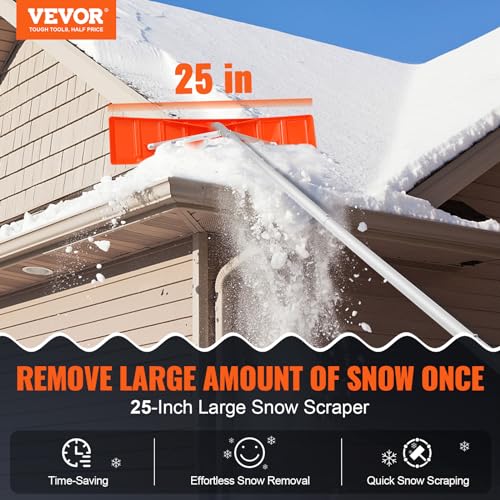
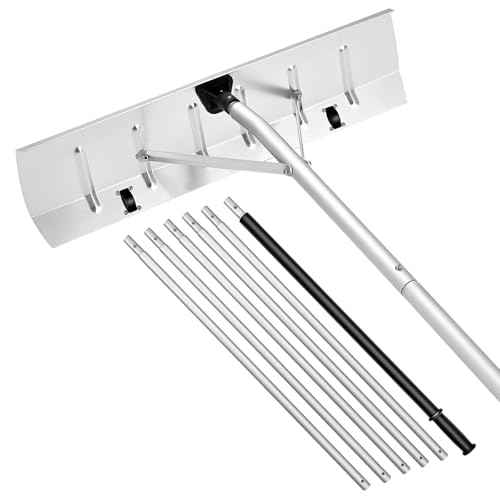
VEVOR’s rake has a 25-inch ABS plastic blade and an aluminum pole that adjusts from 5 to 21 feet. It lists at 6.75 lb. It is one of only two picks here sold and shipped by Amazon, which makes returns simple.
It holds 4.4 stars from a smaller pool of about 100 ratings. Owners say it moves snow faster than a shovel, and one uses it on solar panels. The recurring complaint is the plastic blade breaking after light use.
Skip this if: you need a rake that will take years of heavy use.
Pros: Low price; 21-foot reach; plastic blade is gentler on roofing; sold by Amazon. Cons: Several reports of the blade breaking; smaller review base; no rollers.
8. VEVOR 26″ Aluminum Blade with Wheels – Best Wide Blade with Wheels
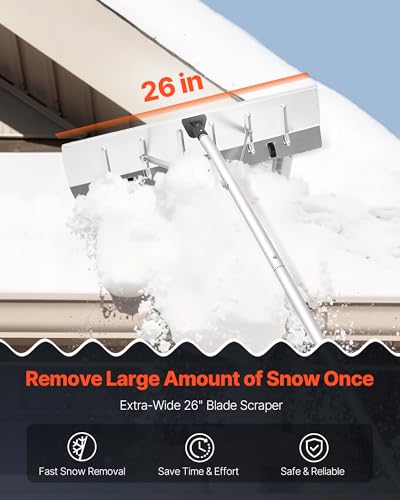
This VEVOR has the widest blade on the list at 26 inches, in aluminum alloy. Wheels hold the blade off the roof surface, similar to the rollers on the USA Handy Tools rake. The pole adjusts from 7.5 to 20 feet and assembles without tools. It lists at 6.88 lb and is sold by Amazon.
It holds 4.3 stars across about 85 ratings. Owners praise how sturdy it feels and how well it pulls light, deep snow. There are fewer reviews than the older picks, and at least one owner reports it breaking on first use.
Skip this if: you have a metal roof. Even with wheels, an aluminum blade is the wrong choice there.
Pros: Widest blade here; wheels protect shingles; tool-free assembly; sold by Amazon. Cons: Small review pool; metal blade; 20-foot maximum reach.
A blade rake is a wide scraper on a pole. You set it on the roof and pull snow toward you. It is simple, light and cheap, but you move one scoop at a time, and the snow lands where you are standing.
A slide rake, like the Avalanche and SNOWPEELER, works in the other direction. You push a frame up the roof. It cuts under the snow, and the snow rides down a slide and off the edge. It moves far more snow per push. It is also heavier, costs more, and the slide can wear or tear.
Plastic vs. Aluminum Blades
Plastic and poly blades are gentler on shingles and the right choice for metal roofs. They can crack in heavy, wet snow or deep cold. Aluminum blades are stiffer and last longer against packed snow, but they can scrape granules off shingles and scratch metal roofing. If you choose aluminum, pick a model with rollers or wheels and never press down on the roof.
How Much Reach You Really Need
You do not need to clear the whole roof. The goal is to clear the first 3 to 4 feet above the gutter, where ice dams form. For a typical single-story home, a 15- to 21-foot pole is enough. Two-story homes and steep roofs need 21 to 30 feet. Measure from where you will stand to the eave, then add a few feet to reach up the slope.
Rollers and Wheels Protect Shingles
Rollers or wheels hold the blade a little above the roof surface. That leaves a thin layer of snow behind, and that layer is what protects your shingles. A plain blade scraped down to the shingles every storm will shorten the life of an asphalt roof.
Power Lines and Pole Safety
This is the part most roof rake guides skip. Almost every pole here is aluminum, and aluminum conducts electricity. Fiberglass is safer, but a wet, snowy fiberglass pole can still conduct. Before you extend any pole, look for the service line running to your house. Never rake within reach of it, and never raise a pole near overhead power lines.
Also, stand clear of where the snow will land. A roof sheds snow in large, heavy chunks. Work from the side, not directly under the section you are pulling.
Never Rake From a Ladder
A roof rake is built to be used from the ground. Pulling a heavy load of snow while standing on an icy ladder is a fast way to fall. If you cannot reach from the ground, get a longer pole or call a pro. For general ladder safety, see our look at the Gorilla ladder.
Frequently Asked Questions
What is a roof snow rake for?
It removes snow from the lower part of a roof while you stand on the ground. That reduces the load on the roof and helps prevent ice dams at the eaves.
Do roof rakes damage shingles?
They can if you scrape down to the shingles with a hard blade. Use a plastic blade or a rake with rollers or wheels, and leave a thin layer of snow on the roof.
Do roof rakes prevent ice dams?
They help a lot. Ice dams form when snow melts higher on the roof and refreezes at the cold edge. Clearing the first few feet above the gutter removes much of the snow that feeds them. Attic insulation and ventilation matter too.
When should I rake my roof?
Rake after heavy storms, ideally before the snow gets packed or starts melting and refreezing. Many owners rake when snow on the roof reaches about 6 inches, but check with a roofer if you are unsure what your roof can handle.
Do I need a roof rake for a metal roof?
Metal roofs shed snow on their own more easily, but snow can still build up in cold, shaded areas. If you use a rake on a metal roof, use a plastic blade only.
Can I use a roof rake on a flat roof?
Yes, but reach is the limit. You can only clear as far as the pole reaches from the ground. Slide rakes do not work well on flat or very low-pitch roofs because the snow needs slope to slide.
Is fiberglass or aluminum better for a roof rake pole?
Aluminum is lighter and cheaper. Fiberglass is more resistant to conducting electricity, although not when wet. Either way, keep all poles away from power lines.