
Most people treat a fire extinguisher purchase the same way they treat buying a smoke detector: one product, one shelf somewhere in the house, done. That approach is understandable, but it creates a significant gap between what most households own and what fire safety guidance actually recommends.
NFPA 10 — the National Fire Protection Association’s standard for portable fire extinguishers — frames the question differently: what are your specific fire risks, room by room, and which extinguisher type correctly addresses each one? The answer for most homes is not one extinguisher. It’s a placement plan: typically one in the kitchen matched to cooking fire risk, one per floor near escape routes, one in the garage or workshop matched to flammable liquid risk, and one compact unit per household vehicle.
There’s a second, more urgent reason the single-product approach fails: using the wrong type of extinguisher on the wrong type of fire can make the situation dramatically worse. A water-based extinguisher on a flammable liquid fire spreads burning fuel. A standard ABC dry chemical unit used on a deep, hot grease fire can cause dangerous flare-up rather than suppression. An extinguisher that works perfectly on ordinary combustibles provides zero protection if used on live electrical equipment without the correct non-conductive rating.
This guide covers all of it: the fire class matching matrix that determines which type you actually need for each room, the UL rating system decoded in plain English, a verified review of 10 products available on Amazon, the PASS technique, the equally important “when not to fight” decision framework, and the maintenance and disposal guidance that most roundups never include. By the end, you’ll have a placement plan — not just a product choice.
Table of Contents
- Introduction — Why “Which Fire Extinguisher?” Is the Wrong First Question
- Fire Classes A, B, C, D, and K — The Matching Matrix That Decides What Works
- How Many Extinguishers Does Your Home Actually Need?
- Where to Mount Each Extinguisher — Placement and Accessibility Rules
- Understanding UL Ratings — What “3A:40B:C” Means in Plain English
- The Kitchen Decision — When to Choose Class K vs. Kitchen-Rated ABC
- Agent Types Compared — Dry Chemical, Wet Chemical, CO2, and Clean Agent
- Quick Comparison Table
- All 10 Products — In-Depth Reviews
- How to Use a Fire Extinguisher — The PASS Technique
- When NOT to Fight a Fire — The Decision That Matters More Than PASS
- Inspection and Maintenance Schedule
- How to Read the Pressure Gauge and Recognize Expiration
- Disposing of an Expired or Discharged Extinguisher
- Fire Extinguishers for Renters and Apartments
- Pre-Purchase Checklist
- FAQ
- Conclusion — The Right Extinguisher for Every Room
Fire Classes Explained The Matching Matrix That Decides Which Extinguisher Works

This is the most safety-critical section of this guide. Fire extinguisher effectiveness is not universal — each type is engineered for a specific category of fire fuel. Using an extinguisher on a fire class it isn’t rated for ranges from ineffective to actively dangerous. Understand this matrix before any product comparison becomes useful.
| Fire Class | What It Covers | Home Examples | Correct Agent | Critical Warning |
|---|---|---|---|---|
| Class A | Ordinary combustibles | Wood, paper, cloth, upholstery, most household trash | Any ABC-rated unit; water also acceptable for Class A only | No special warning — the least restrictive class for agent selection |
| Class B | Flammable liquids and gases | Gasoline, oil, paint thinner, propane, solvents | B-rated dry chemical, CO2, or clean agent | Never use water on Class B fires. Water spreads burning liquid and dramatically worsens the fire. |
| Class C | Energized electrical equipment | Electrical panels, live wiring, appliances still plugged in | Non-conductive agent only — C-rated dry chemical, CO2, or clean agent | Never use water or any conductive agent on live electrical equipment. Electrocution risk. |
| Class K | Cooking oils and grease — deep fryer, high-volume | Deep fryers, turkey fryers, high-volume stovetop oil frying | Wet chemical agent (saponification) | Standard ABC dry chemical on a deep, hot grease fire can cause dangerous splatter and flare-up. Not a safe substitute for genuine Class K risk. |
| Class D | Combustible metals | Rare in homes — some metalworking workshops (magnesium, titanium shavings) | Specialty dry powder — almost no standard home extinguisher is rated for Class D | Specialty purchase required if genuinely relevant to your workshop activity. Not covered by any product in this roundup. |
How Many Fire Extinguishers Does Your Home Actually Need?

Most competing articles frame the buying decision as picking one product. NFPA 10 and most fire marshal guidance frames it as a placement plan. For most households, that means two to four extinguishers positioned by risk zone — not one unit stored in the kitchen hoping it covers everything.
| Location | Recommended Class / Rating | Placement Rule | Priority |
|---|---|---|---|
| Kitchen | Class K (deep frying) or kitchen-rated ABC (general use) — see Class K section below | Near the kitchen exit, not directly beside the stove — never require reaching past an active fire to retrieve it | Highest |
| Each floor (multi-story home) | General-purpose ABC, 1A:10B:C minimum — 2A:10B:C+ preferred | Near a primary escape route or stairwell on each level — no floor should be left without coverage | High |
| Garage / workshop | Higher-capacity ABC with 40B+ rating minimum | Near the exit door — away from stored flammables, within fast reach | High |
| Bedroom (optional) | Small compact ABC | Within reach from the sleeping area without leaving the room — particularly for elevated-risk households | Optional |
| Vehicle / RV | Compact mountable ABC or BC — vibration-rated bracket required | Securely mounted, not loose in trunk — accessible from the cabin | Recommended |
| Boat / marine | USCG-approved marine-rated unit — must be verified explicitly in the listing | Accessible from the helm — USCG placement requirements vary by vessel class. Often legally required — verify before purchase. | Required by law for many vessels |
Where to Mount Each Extinguisher — Placement and Accessibility Rules
An extinguisher stored in a closet, under a sink, or inside a cabinet is functionally useless in an actual emergency. The stress of a real fire situation reduces reaction time and fine motor control significantly — retrieval must be instant and instinctive, not a search operation.
- Mount on a wall bracket in a visible, unobstructed location — the unit should be immediately visible and within arm’s reach from the normal standing position in that area of the room
- Mount height: Per NFPA guidance, the top of the extinguisher should be no higher than approximately 5 feet from the floor for units under 40 lbs — accessible to most adult household members without stretching
- Mount near exits, not beside the highest-risk point — position so you retrieve the extinguisher while moving toward an exit, never so you must reach across an active fire or smoke to get it
- Never store in a drawer, cabinet, or closet — any barrier between you and the extinguisher in an emergency is one too many
- Children in the household: consider a slightly higher mounting position combined with ensuring all adults and older children know the location and the PASS technique
- All household members should know the location of every extinguisher in the home — this is as important as the purchase itself
Understanding UL Ratings — What “3A:40B:C” Actually Means
Every fire extinguisher listing displays a UL rating. Almost no one explains what the numbers mean in terms buyers can actually use for sizing decisions. Here’s the decoder:
| Rating Component | What It Measures | Plain-English Translation |
|---|---|---|
| Number before “A” (e.g., the 1 in 1A) | Relative Class A firefighting capacity on ordinary combustibles. Each unit ≈ 1.25 gallons of water-equivalent extinguishing capacity. | Higher = larger ordinary combustible fire addressable. 1A suits a single small room; 4A suits a garage, workshop, or whole-floor placement. |
| Number before “B” (e.g., the 10 in 10B) | Approximate square footage of flammable liquid pool fire the unit can extinguish. | Higher = larger flammable liquid fire coverage. 10B suits light Class B risk; 80B suits garages and workshops with meaningful flammable liquid storage. |
| “C” — no number | Confirms the agent is non-conductive and safe for use on energized electrical equipment. Not a capacity rating. | A safety qualifier, not a performance multiplier. It confirms the agent won’t conduct electricity back to the user. It does not add firefighting capacity. |
| 1A:10B:C | Entry-level home rating | Appropriate for a single small room, compact kitchen, or secondary/backup unit. The minimum practical home rating. |
| 4A:80B:C | High-capacity workshop/garage rating | Appropriate for garage, workshop, or any space with elevated flammable liquid risk and larger square footage. The Amerex 10-lb unit in this roundup carries this rating. |
The Kitchen Decision — When to Choose Class K vs. Kitchen-Rated ABC
This is the question most kitchen fire roundups answer incorrectly. The correct answer depends on how you actually cook.
For a typical home kitchen with stovetop cooking, occasional pan frying, and general kitchen fire risk: a residential kitchen-rated ABC extinguisher is generally adequate. This is what most fire marshals recommend for standard residential kitchen use, and it’s the right choice for the majority of home buyers.
For households that deep-fry regularly, use a turkey fryer, or cook with large volumes of oil at high temperatures: a true Class K wet chemical extinguisher is the safer choice. The wet chemical agent saponifies burning cooking oil — it converts the hot oil into a soap-like foam, cooling and smothering it in a way that dry chemical agents do not replicate as effectively on deep, hot, high-volume grease fires. Using standard ABC dry chemical on a deep-fat fryer fire can scatter the hot oil and produce a dangerous flare-up.
Agent Types Compared — Dry Chemical, Wet Chemical, CO2, and Clean Agent
| Agent Type | Classes Covered | Residue? | Best Use Case | Key Limitation |
|---|---|---|---|---|
| Dry Chemical (monoammonium phosphate) | A, B, C | Yes — corrosive powder | General whole-home, garage, vehicle — the most common and versatile home option | Residue damages electronics; not optimal for deep-fryer Class K fires; reduces visibility on discharge |
| Wet Chemical | K (and often A) | Yes — soapy residue | Deep fryer and high-volume cooking oil fires via saponification | Specialty Class K use — not a general-purpose ABC substitute. Not represented in this roundup. |
| CO2 (Carbon Dioxide) | B, C | None | Electrical equipment, enclosed spaces, situations where no residue is critical | Limited Class A coverage; less effective outdoors; heavier cylinder for equivalent capacity |
| Clean Agent (Halotron I, HalGuard) | B, C (some limited A) | None — evaporates cleanly | Server rooms, home offices, vehicles where no residue damage to electronics is critical | Higher price per unit; lower Class A efficiency than dry chemical |

Quick Comparison Table — All 10 Products
| # | Product | UL Rating | Agent | Weight | Rechargeable? | Best For | Link |
|---|---|---|---|---|---|---|---|
| 1 | MaxOut ABC (Vehicle/Marine/Home) | 1A:10B:C | Dry Chemical | 2.5 lb | No | Vehicle / marine / compact home backup | Amazon |
| 2 | H3R HalGuard PRO Clean Agent | 1B:C | Halotron (clean agent) | 1.25 lb | No | Vehicle — no residue, electronics-safe | Amazon |
| 3 | Amerex 10 lb ABC 4A:80B:C | 4A:80B:C | Dry Chemical | 10 lb | Yes | Garage / workshop — highest capacity in roundup | Amazon |
| 4 | Amerex B456 10 lb ABC Set of 4 | 4A:80B:C | Dry Chemical | 10 lb each | Yes | Whole-property coverage — best value multi-unit | Amazon |
| 5 | Kidde FA110G Home 6-Pack | 1A:10B:C | Dry Chemical | 2.5 lb each | No | Whole-home multi-room placement — best budget pack | Amazon |
| 6 | Kidde Home ABC (Single Unit) | 1A:10B:C | Dry Chemical | 2.5 lb | No | Single room / kitchen / bedroom backup | Amazon |
| 7 | Kidde FA110G Home 2-Pack | 1A:10B:C | Dry Chemical | 2.5 lb each | No | Kitchen + one floor / two-room starter pack | Amazon |
| 8 | Amerex A384T Halotron I Clean Agent | 1B:C | Halotron I | 1.4 lb | No | Electronics / home office — no residue damage | Amazon |
| 9 | Stainless Steel Water Pressurized (Class A only) | 2A (Class A only) | Water | ~6 lb | Yes | Class A ordinary combustibles ONLY — office, living areas with no liquid/electrical risk nearby | Amazon |
| 10 | ABC Fire Extinguisher + Wall Bracket | 1A:10B:C | Dry Chemical | 2.5 lb | No | Single room — bracket included ready to mount | Amazon |
All 10 Products — In-Depth Reviews
1. MaxOut ABC Fire Extinguisher — Best Compact for Vehicle, Marine & Home Backup

UL Rating: 1A:10B:C | Agent: ABC Dry Chemical | Weight: 2.5 lb | Rechargeable: No (disposable) | Bracket Included: Yes | Coverage: Vehicle, marine, home backup
The MaxOut ABC is the purpose-designed compact extinguisher for vehicle trunks, boat storage compartments, RV galleys, and small-space home backup applications where a full-size unit isn’t practical. At 2.5 lbs and 1A:10B:C UL-rated, it carries the minimum practical ABC rating for general home use and covers the Class A, B, and C fires most likely to occur in a vehicle or small space — ordinary combustibles, flammable liquid (fuel, oil), and electrical fires. The included mounting bracket allows secure installation in a vehicle or on a wall rather than rattling loose in a trunk.

For vehicle and marine applications, size and mountability matter more than high capacity — this unit delivers on both. The 1A:10B:C rating is appropriate for early-stage vehicle fires which are typically small and confined when caught in the first seconds. Important to note: this is a disposable non-rechargeable unit — once discharged, even partially, it must be replaced. The manufacturer typically rates service life at approximately 6–12 years from manufacture; check the date stamp at purchase and note a replacement date.

✓ Best For: Every household vehicle as a first line of response to early-stage vehicle fires; boat storage (verify USCG marine-approval status on current listing before relying on this for regulated marine requirements); small-space home backup; RV and camper installations
⚠ Not Ideal For: Primary whole-home coverage (1A:10B:C is the minimum adequate rating — pair with larger units for the kitchen, garage, and multi-floor homes). Not rated for Class K deep-fryer fires.
Pros:
- Compact and lightweight — practical for vehicle trunk or under-seat mounting
- Mounting bracket included — ready for immediate installation
- ABC rating covers the most common fire types in vehicle and small-space applications
- Simple pull-pin and squeeze mechanism with clear operating instructions
Cons:
- Non-rechargeable — must be fully replaced after any discharge or at end of service life
- 1A:10B:C capacity is minimum adequate — not appropriate as the sole extinguisher in a large home
2. H3R HalGuard PRO Clean Agent — Best for Vehicles Where Electronics Protection Matters
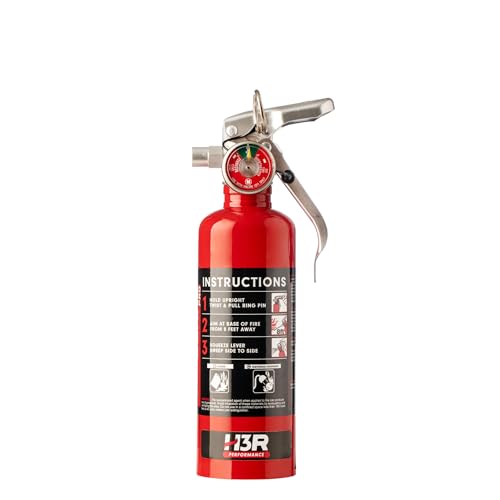
UL Rating: 1B:C | Agent: HalGuard (Halotron-type clean agent) | Weight: 1.25 lb | Rechargeable: No | Residue: None — evaporates cleanly | Best Use: Vehicle / electronics-sensitive environments
The H3R HalGuard PRO is the clean agent choice for vehicle owners who prioritize protecting electrical systems and onboard electronics without the corrosive dry chemical powder residue that can cause lasting damage to wiring, sensors, and control modules in modern vehicles. Halotron-type agents evaporate cleanly with no residue — the suppression works by interrupting the combustion chain reaction rather than coating the fire source in powder. For early-stage engine compartment electrical fires or flammable liquid ignition in a vehicle, this agent stops the fire without secondary damage to the electronics around it.

At 1.25 lbs, this is the lightest and most compact unit in the roundup. The trade-off is limited agent volume — this is strictly a first-response tool for very early-stage, small fires in a vehicle environment. Its B:C-only rating means it provides no protection against ordinary combustible fires (paper, fabric in the vehicle interior). Buyers who want a single vehicle extinguisher covering all classes should choose the MaxOut ABC instead; buyers who want the cleanest possible agent for electronics-sensitive vehicle applications and can pair it with a general-purpose unit should consider this as a specialist addition.

✓ Best For: Classic cars and enthusiast vehicles where electronics protection matters; home offices and server room supplemental coverage; any situation where zero-residue Class B/C protection is the priority
⚠ Not For: General home use — no Class A rating. Not a substitute for an ABC-rated extinguisher. Not for deep-fryer or cooking oil fires (no Class K). Must not be the sole extinguisher in any home.
Pros:
- Zero-residue clean agent — no corrosive powder damage to electronics or wiring
- Ultra-compact at 1.25 lbs — fits in glove compartment or door pocket
- Halotron-type agent is safer for occupants than older Halon agents
- Effective on B and C fires at the earliest stage of development
Cons:
- No Class A rating — does not cover ordinary combustibles; limited use case
- 1.25 lb agent volume is minimal — early-stage small fires only
- Non-rechargeable — replace after any discharge or at end of service life
3. Amerex 10 lb ABC Dry Chemical 4A:80B:C — Best for Garage and Workshop

UL Rating: 4A:80B:C (highest in roundup) | Agent: ABC Dry Chemical (stored pressure) | Weight: 10 lb | Rechargeable: Yes | Construction: Steel cylinder | Bracket: Included | Price Range: $$$
The Amerex 10-lb ABC is the highest-capacity unit in this roundup and the correct choice for garages, workshops, and any space with meaningful flammable liquid storage or power tool use. The 4A:80B:C rating is significantly more capable than the 1A:10B:C of the compact home units — the 4A class A rating provides 4 times the ordinary combustible fire fighting capacity, and the 80B class B rating covers approximately 80 square feet of flammable liquid pool fire. For a garage storing gasoline cans, paint thinners, propane cylinders, or workshop chemicals, this is the minimum appropriate capacity, not an over-purchase.
Amerex is one of the most consistently recommended brands among fire equipment professionals, and the build quality on this unit reflects that reputation: steel cylinder, commercial-grade valve assembly, and a rechargeable design that means this unit can be professionally refilled rather than disposed of after each use or expiration cycle. Rechargeability is particularly valuable at the 10-lb class — the cost of a professional recharge (typically $20–$50) is significantly less than replacing the unit. This is the extinguisher to buy once and maintain, not the one to buy cheaply and discard.
✓ Best For: Garage or workshop as the primary extinguisher — any space with gasoline, solvents, paint, propane, or elevated Class B risk; commercial-adjacent home workshops; anywhere the 1A:10B:C capacity of compact units is genuinely insufficient for the fire risk present
⚠ Not For: Not Class K rated — do not use as the sole kitchen protection if regular deep frying occurs. Not the compact lightweight choice for vehicles or small spaces. Dry chemical residue will damage sensitive electronics.
Pros:
- 4A:80B:C — the highest UL rating in this roundup; genuinely suited to elevated-risk environments
- Rechargeable steel construction — serviceable, not disposable; long-term cost advantage
- Amerex professional-grade build quality — consistently recommended by fire equipment service professionals
- 10 lb agent volume provides meaningful firefighting capacity beyond compact units
- Mounting bracket included
Cons:
- Heavy at 10 lbs — not a portable carry-anywhere option; garage/workshop wall-mount use
- Dry chemical residue can damage electronics if discharged in enclosed electronics environments
- Higher purchase price — justified by rechargeable design and capacity, but a real budget consideration
4. Amerex B456 10 lb ABC Set of 4 — Best for Whole-Property Coverage

UL Rating: 4A:80B:C per unit | Agent: ABC Dry Chemical | Weight: 10 lb each (4 units) | Rechargeable: Yes | Construction: Steel cylinders, wall-mount brackets | Price Range: $$$$ (4-unit set)
The Amerex B456 set of four represents the most comprehensive home coverage solution in this roundup: four rechargeable 4A:80B:C units with brackets, sufficient to provide high-capacity coverage in a garage, kitchen area, each floor of a two-story home, and one additional location (workshop, primary bedroom, or vehicle storage bay). For homeowners committed to building a proper room-by-room fire extinguisher plan in a single purchase, this set covers the framework at the highest capacity rating available in the consumer market.

The per-unit economics of buying the set versus individual units is favorable, and each unit carries identical specifications to the single-unit B07PY8WKRK reviewed above — same 4A:80B:C rating, same steel construction, same rechargeable design. Four professionally rechargeable Amerex units positioned strategically around a home provide a meaningfully higher level of preparedness than a single compact unit somewhere near the kitchen. This is the right purchase for large homes, properties with outbuildings or workshops, and any household where the placement-plan approach is being taken seriously.
✓ Best For: Large homes with multiple floors and a garage or workshop; homeowners building a complete room-by-room placement plan in a single purchase; rental property owners ensuring coverage across multiple units (note: verify local fire code requirements for rental property compliance separately)
⚠ Not For: Apartments and small spaces where 4 × 10 lb units exceed practical placement needs. Not Class K rated — deep frying households should add a Class K unit to this set for the kitchen position.
Pros:
- 4 × 4A:80B:C rechargeable units — comprehensive whole-property high-capacity coverage
- Best per-unit cost among the Amerex rechargeable options in this roundup
- Wall-mount brackets included for all four units
- Amerex professional-grade build quality across all four cylinders
- Rechargeable design — serviceability across all four units reduces long-term ownership cost
Cons:
- Highest upfront cost in the roundup — significant investment; justified by coverage and rechargeability
- 10 lb per unit is heavy for all placement zones — lighter units may be more practical for kitchen and bedroom positions in some households
5. Kidde FA110G Home Fire Extinguisher 6-Pack — Best Budget Multi-Room Pack

UL Rating: 1A:10B:C per unit | Agent: ABC Dry Chemical | Weight: 2.5 lb each | Rechargeable: No (disposable) | Pack: 6 units | Price Range: $$
The Kidde FA110G 6-pack is the most practical budget solution for homeowners who want to implement a whole-home placement plan without Amerex’s professional-grade investment. Six 1A:10B:C units provide enough coverage for kitchen, each floor of a three-story home, garage, bedroom, and vehicle — or the kitchen, two floors, two vehicles, and a spare. At 2.5 lbs each, they’re genuinely portable and manageable for any household member. The 1A:10B:C rating is adequate for most residential fire scenarios in the spaces covered — early-stage ordinary combustible fires, small flammable liquid fires, and electrical fires.

These are disposable, non-rechargeable units — a critical distinction to understand before purchase. Once a unit is discharged, even partially, it must be replaced entirely. At the end of the manufacturer’s stated service life (check the manufacture date stamp and manufacturer guidance), the unit must be replaced, not recharged. For the garage and workshop positions, consider pairing this pack with the Amerex 10-lb unit reviewed above — the 1A:10B:C capacity is adequate for a small kitchen or hallway placement but is notably lower than the 4A:80B:C recommended minimum for elevated-risk garage environments with flammable liquid storage.

✓ Best For: Budget-conscious whole-home placement plan; apartments and small homes where a 6-unit pack covers all positions with extras; households implementing the placement-plan approach for the first time without a large upfront investment
⚠ Not For: Garage and workshop primary protection if meaningful flammable liquid storage is present — upgrade to a 4A:80B:C unit for those positions. Not rechargeable — budget for replacement at end of service life. Not rated for Class K.
Pros:
- Best per-unit price for ABC coverage in this roundup
- 6 units enables complete home placement plan in a single purchase
- 2.5 lbs — lightweight and accessible to all household members
- Kidde brand with established consumer support
Cons:
- Non-rechargeable — full replacement required at expiration or after discharge
- 1A:10B:C is minimum adequate rating — not appropriate as the sole protection in a garage with significant flammable liquid risk
6. Kidde Home Fire Extinguisher (Single Unit) — Best Entry Single-Room Pick

UL Rating: 1A:10B:C | Agent: ABC Dry Chemical | Weight: 2.5 lb | Rechargeable: No (disposable) | Bracket: Check current listing for inclusion | Price Range: $
The Kidde single-unit ABC at 1A:10B:C is the entry point for individual-room coverage — the right choice for a single apartment or household that is buying its first extinguisher and wants to start with kitchen or living room coverage before building out the full placement plan. At the lowest price point of the ABC-rated units in this roundup, it makes the “at least one extinguisher” step accessible to any household regardless of budget.
The 1A:10B:C rating covers the most common early-stage home fire scenarios — ordinary combustible fires from paper or fabric, small flammable liquid fires, and electrical fires. At 2.5 lbs, it’s operable by virtually any adult household member. The primary limitation is the capacity — it’s sized for a single small room and an early-stage fire, not for a large fire in a garage or multi-room coverage. This is a starting point, not a comprehensive solution.
✓ Best For: Apartments, single-room coverage, a first extinguisher as the starting point of a larger placement plan, or as a secondary backup unit in a bedroom
⚠ Not For: Sole home protection in multi-room homes. Not adequate as primary garage coverage. Not Class K rated.
Pros:
- Lowest price point for ABC coverage — no budget barrier to a first extinguisher
- Lightweight and accessible to all household members
- Covers the three most common fire classes in residential environments
Cons:
- Non-rechargeable — must be replaced after any discharge or at end of service life
- 1A:10B:C capacity is minimum for a small single room — not sufficient as the sole extinguisher in a larger home
7. Kidde FA110G 2-Pack — Best Starter Two-Room Coverage

UL Rating: 1A:10B:C per unit | Agent: ABC Dry Chemical | Weight: 2.5 lb each | Rechargeable: No (disposable) | Pack: 2 units | Price Range: $
The Kidde FA110G 2-pack is the practical entry point for households implementing the placement-plan approach at a budget price — two units allow kitchen plus one additional floor position, or kitchen plus primary bedroom, in the most common starter configuration. Matching the specifications of the 6-pack reviewed above (same 1A:10B:C rating, same 2.5 lb disposable design, same Kidde FA110G model), the 2-pack is the right size for apartments, small homes, and buyers who want to start with two positions and add to the plan over time.
The same caveats apply as the 6-pack: disposable and non-rechargeable, 1A:10B:C is adequate for small individual room positions but not appropriate as primary garage protection where flammable liquids are stored. For the kitchen and a single bedroom or hallway floor position, the 2-pack fulfills the most common minimum placement plan requirement. Buyers who need garage coverage should add a higher-capacity unit to this starter purchase.
✓ Best For: Apartments with one kitchen and one bedroom/living area; starter placement plan for small homes; any household taking the first step from zero extinguishers to two correctly-placed units
⚠ Not For: Multi-story homes that need floor-by-floor coverage. Not garage or workshop primary coverage.
Pros:
- Two units enable basic placement plan without the full 6-pack investment
- Budget entry point — lowest cost per unit among multi-packs
- Lightweight, accessible, and simple to operate
Cons:
- Non-rechargeable — full replacement required
- Two units cover minimum placement for a small home only; scale up for larger properties
8. Amerex A384T Halotron I — Best Clean Agent for Electronics and Home Office
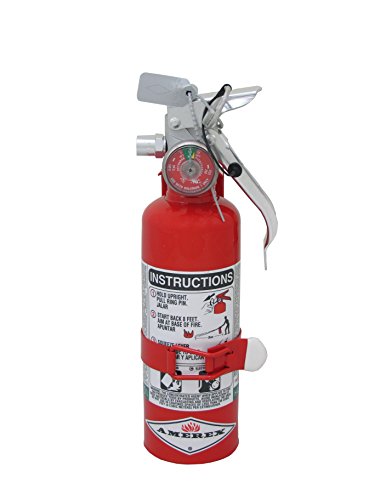
UL Rating: 1B:C (Class B and C only — no Class A rating) | Agent: Halotron I (clean agent) | Weight: 1.4 lb | Rechargeable: No | Residue: None | Price Range: $$
The Amerex A384T is the clean agent specialist in this roundup — specifically designed for home offices, server racks, workstations, and any electronics-dense environment where using a dry chemical extinguisher would cause irreversible damage to equipment alongside the fire damage. Halotron I evaporates cleanly without leaving any residue — the agent works by disrupting the combustion chain at a chemical level rather than coating the fire source. After discharge, the cleanup is minimal, and electronics in the discharge path are not coated in corrosive monoammonium phosphate the way they would be after a standard dry chemical discharge.
For home offices containing irreplaceable data on servers, high-value photography or video workstations, recording studios, or any space where the secondary equipment damage from dry chemical is itself a catastrophic outcome, this unit addresses that specific concern. At 1.4 lbs and 1B:C rated, it is strictly a specialist early-response tool — not a general-purpose home extinguisher, not a replacement for an ABC-rated unit elsewhere in the home. It must be paired with at least one ABC-rated unit in the same household to provide Class A coverage.
✓ Best For: Home offices, recording studios, server rooms, photography and video workstations — any space where dry chemical residue damage to electronics is itself a catastrophic outcome alongside the fire itself
⚠ Not For: General home use — no Class A coverage. Not a standalone solution. Must be paired with an ABC-rated unit for complete coverage. Not rated for Class K.
Pros:
- Zero residue — no secondary equipment damage from discharge
- Halotron I clean agent is safer for occupants than older Halon agents
- Amerex build quality — professional-grade valve and cylinder construction
- Specific solution for a real problem no ABC dry chemical unit addresses
Cons:
- No Class A rating — must not be the sole extinguisher in any space
- Non-rechargeable — replace after any discharge
- Small agent volume at 1.4 lbs — early-stage small fires only
9. Stainless Steel Water Pressurized Fire Extinguisher — Class A Only — For Living Spaces Without Liquid or Electrical Risk

UL Rating: 2A (Class A only — water-based) | Agent: Water (pressurized) | Construction: Stainless steel cylinder | Rechargeable: Yes (water refillable) | Bracket: Wall hook included | Price Range: $$
⚠ CRITICAL SAFETY WARNING — READ BEFORE PURCHASE:
This is a water-based extinguisher rated for Class A (ordinary combustibles) fires ONLY. It carries no Class B rating and no Class C rating.
Never use a water extinguisher on Class B (flammable liquid) fires — water spreads burning fuel and dramatically worsens the fire.
Never use a water extinguisher on Class C (energized electrical equipment) fires — water conducts electricity and creates serious electrocution risk.
This unit is only appropriate for spaces that contain no flammable liquids and no energized electrical equipment that could be involved in a fire. In most real home environments — which contain electrical appliances, wiring, and often some flammable materials — an ABC-rated dry chemical unit is the safer and more practical choice for the vast majority of households. This product is reviewed here for completeness and for the specific use case described below.
The stainless steel water extinguisher serves a specific use case: environments where the fire risk is purely from ordinary combustibles (Class A) and there is genuine confidence that no flammable liquids or energized electrical equipment will be involved. A conference room with paper and fabric materials and no electronics, a residential library or storage room, or a historical/heritage building where appearance and no chemical agent residue are priorities are examples where this type may be appropriate.

The stainless steel construction is durable and visually distinctive — it does not look like a standard red fire extinguisher and may be chosen in environments where visual integration matters. The rechargeable design allows refill with water, making it economical to maintain. However, for the vast majority of residential and home buyers, an ABC-rated dry chemical unit provides broader and safer coverage across the fire classes actually likely to occur in any occupied space with appliances and wiring. The water extinguisher is not the recommended default choice for any kitchen, garage, bedroom, or hallway position.
✓ Best For: Pure Class A-only environments with confirmed absence of flammable liquids and energized electrical equipment; historical or heritage spaces where chemical agent residue is unacceptable; specialty applications where appearance matters and the fire risk is solely ordinary combustibles
⚠ Not For: Any kitchen (electrical appliances and oil present). Any garage (flammable liquids present). Any bedroom or living space with standard electrical equipment. Not appropriate as a general home fire extinguisher.
Pros:
- Rechargeable with water — simple, low-cost maintenance
- Stainless steel construction — durable and distinctive appearance
- No chemical residue from discharge — useful in specific heritage or specialty environments
- 2A capacity is adequate for small ordinary combustible fires in the appropriate environment
Cons:
- No Class B or C rating — genuinely dangerous if used on flammable liquid or electrical fires
- Not appropriate for most home environments where ABC coverage is needed
- Requires careful placement discipline to ensure it is never grabbed for a wrong-class fire
10. ABC Fire Extinguisher with Home Wall Mount Bracket — Best Ready-to-Mount Single-Room Pick
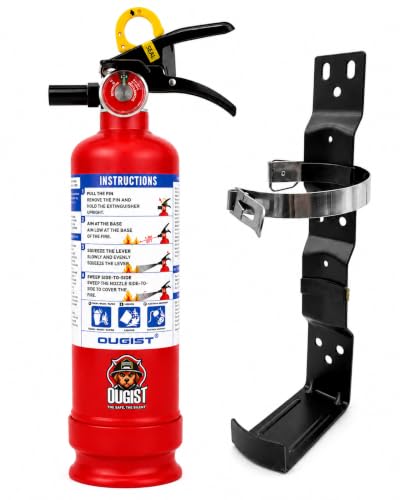
UL Rating: 1A:10B:C | Agent: ABC Dry Chemical | Weight: 2.5 lb | Rechargeable: No (disposable) | Bracket: Included (wall mount) | Price Range: $
The ABC Fire Extinguisher with included wall mount bracket is the ready-to-install solution for buyers who want a single-room extinguisher that arrives complete with everything needed to mount it correctly on day one. At 1A:10B:C with dry chemical agent, it covers the same fire classes as the Kidde single unit at a comparable rating — ordinary combustibles, flammable liquids, and electrical fires. The wall mount bracket is the differentiator from a bare-unit purchase: buyers who choose this product are explicitly choosing correct wall-mounted placement over counter storage or closet storage.

This is the practical first-extinguisher option for a single room, apartment kitchen, or any location where the buying motivation includes “I want to do this properly with a wall mount” without separate accessory research. The included bracket is designed for standard residential drywall installation. At 2.5 lbs, the unit is lightweight and operable by all household members. Confirm on the current listing whether the bracket requires separate hardware for installation and what wall type compatibility is specified. This is a disposable non-rechargeable unit — replace at end of service life or after any discharge.

✓ Best For: Single-room coverage for apartments, kitchens, or hallways; buyers who want the complete mount-ready setup without separate accessory research; first extinguisher purchase with proper placement commitment
⚠ Not For: Multi-room whole-home coverage — this covers one position. Not garage primary coverage (1A:10B:C adequate only for light-risk spaces). Not Class K rated.
Pros:
- Bracket included — complete mount-ready solution out of the box
- Encourages correct wall-mounted placement from day one
- ABC rating covers the three most common residential fire classes
- Lightweight and simple to operate
Cons:
- Non-rechargeable — must replace after any discharge or at end of service life
- 1A:10B:C minimum rating — appropriate for single room; not adequate as the sole home extinguisher in larger properties
How to Use a Fire Extinguisher — The PASS Technique
When you need to use a fire extinguisher, you’ll be in a high-stress situation with limited time. These four steps need to be automatic. Learn them now, before you ever need them.
| Step | Action | Critical Detail |
|---|---|---|
| P — Pull | Pull the safety pin from the handle | This breaks the tamper seal and unlocks the handle so the extinguisher can discharge. Without pulling the pin, the handle cannot be squeezed — the extinguisher will not work. |
| A — Aim | Aim the nozzle LOW — at the BASE of the fire | Not at the flames. Not at the smoke. Aim at the fuel source at ground level — the base of the fire. Aiming at visible flames wastes agent without suppressing the source. |
| S — Squeeze | Squeeze the handle slowly and evenly to release the agent | Controlled, steady pressure releases the agent most effectively. Keep the nozzle aimed low at the base throughout. |
| S — Sweep | Sweep the nozzle side to side across the base of the fire | Continue sweeping until the fire is fully extinguished. Watch for reflash — if the fire reignites, repeat. Keep your escape route clear and behind you throughout. |
When NOT to Fight a Fire — This Section Matters More Than the PASS Technique
A portable fire extinguisher is only appropriate for a small, contained, early-stage fire. Knowing when to put down the extinguisher and evacuate instead is the single most important fire safety decision you can make — and it is the one most fire safety articles cover inadequately.
⚠ Evacuate immediately — do not attempt to fight the fire — if any of the following are true:
- The fire is larger than a small, contained, early-stage fire (roughly larger than a small trash can) — a portable extinguisher cannot handle it
- The fire is spreading rapidly — it can outpace your suppression and cut off your escape route faster than you expect
- The room is filling with smoke — smoke inhalation is a leading cause of fire fatalities; heavy smoke means get out now regardless of visible flame size
- You do not have a clear escape route behind you — never fight a fire that is between you and your exit
- You feel any doubt at all about your ability to control it — if you hesitate, the correct answer is always evacuation
In any of these conditions: evacuate immediately. Close doors behind you as you leave if safely possible — this slows fire spread. Call emergency services from outside the building. Wait for trained responders. No possession, no furniture, no appliance is worth a life.
Always position yourself so that you can turn and leave instantly. Never let the fire get between you and the exit. The fire extinguisher is a tool for early-stage, clearly manageable fires. It is not a tool for attempting to save property when the situation has progressed beyond that point — and attempting to fight a fire that has grown beyond control is one of the most common causes of preventable fire injuries.
Inspection and Maintenance Schedule
| Frequency | What to Check | Action If Issue Found |
|---|---|---|
| Monthly (2 minutes, self-check) |
Gauge needle in the green zone · safety pin and tamper seal intact · unit unobstructed and clearly visible · no visible damage, dents, or corrosion on cylinder, hose, or nozzle | Gauge in red zone, broken pin, broken seal, or any visible damage: do not rely on this unit. Recharge (rechargeable units) or replace (disposable units) before considering it functional protection. |
| Annual | Professional certified inspection by a licensed fire equipment service company | Follow professional service recommendation: recharge, internal inspection, or replacement as advised. Legally required for commercial properties; strongly recommended for residential. |
| Per manufacturer service life (typically 5–12 years) |
Compare manufacture date stamp on the cylinder against manufacturer’s stated service life | Rechargeable units: professional recharge and internal inspection, or retire and replace per service guidance. Disposable non-rechargeable units: full replacement required — these cannot be refilled or professionally serviced, only replaced. |
How to Read the Pressure Gauge and Recognize Expiration
| Gauge Zone / Indicator | What It Means | What to Do |
|---|---|---|
| Green zone (needle centered) | Properly pressurized and operationally ready | No action needed — continue monthly visual checks |
| Red zone, left (undercharged) | Unit has lost pressure — may not function reliably or at all | Recharge (rechargeable) or replace (disposable) immediately — do not rely on this unit |
| Red zone, right (overcharged, on some designs) | Over-pressurized — also requires professional service | Professional service needed — an overcharged unit is not “extra safe” and requires pressure correction |
| Manufacture date stamp on cylinder body | Indicates actual age of the unit, independent of current gauge reading | A green gauge does not override a passed service life. Dry chemical agent can cake and degrade over time, reducing effectiveness regardless of cylinder pressure. Replace or recharge per manufacturer service life regardless of what the gauge reads. |
Disposing of an Expired or Discharged Extinguisher — What Cannot Go in the Trash
Never place a fire extinguisher, even an expired or fully discharged one, in household trash or curbside recycling. Pressurized cylinders pose an explosion risk in waste handling and recycling equipment. The chemical agents inside require proper handling at disposal.
Four practical disposal options:
- Many fire departments accept expired units for proper disposal — call your local non-emergency fire department line to confirm and ask about drop-off procedures
- Household hazardous waste (HHW) collection events and facilities typically accept fire extinguishers — check your local municipal waste authority website for events and drop-off locations
- Some retailers offer take-back or trade-in programs at the time of a replacement purchase — ask at point of sale
- Licensed fire equipment service companies can properly empty, de-pressurize, and recycle a cylinder as part of a retirement or recharge service call — the correct option for rechargeable units at end of service life
Fire Extinguishers for Renters and Apartments
Most competing roundups assume a single-family home with a garage. A significant portion of buyers live in apartments, condos, and rental units where the situation is different.
Before buying: check whether your building or unit already has a code-compliant extinguisher provided by the landlord or property management. Many buildings in code-compliant jurisdictions provide extinguishers in common areas and sometimes individual units. A duplicate unit isn’t harmful, but knowing the starting point is useful.
For a studio or one-bedroom apartment: a single kitchen-rated ABC unit positioned near the kitchen exit, paired with a second small unit for the bedroom or living area, covers most reasonable fire risk scenarios. The Kidde 2-pack or a single unit from this roundup is typically the right scope.
Mounting in rentals: check your lease terms on permanent wall mounting — some buildings restrict drilling. Where wall mounting isn’t possible, a securely-placed (not loose) counter-accessible position near the kitchen door is the practical alternative. Never store in a cabinet or closet even if mounting is restricted — accessible beats mounted-inside-a-cabinet in every scenario.
For larger apartments or condos with multiple rooms and a balcony: apply the same placement-plan logic — at minimum, kitchen position plus one per additional floor, with particular attention to the kitchen exit position as the highest-priority placement.
Pre-Purchase Checklist — Complete Before Buying
- ☐ Risk zones identified: kitchen · each floor · garage or workshop · bedroom (optional) · vehicle · home office or electronics room
- ☐ Correct fire class matched per room: kitchen habits assessed for Class K vs. ABC · garage confirmed for higher B-rating unit · electronics room noted for clean agent
- ☐ UL rating appropriate to room size confirmed: 1A:10B:C for small single rooms · 4A:80B:C for garage/workshop/whole-floor coverage
- ☐ Rechargeable vs. disposable decision made — fully understanding that disposable units must be replaced (not refilled) after any discharge or at end of service life
- ☐ Mounting location identified and bracket confirmed: near exit, unobstructed, visible, accessible height — not inside a drawer, closet, or cabinet
- ☐ All adult household members know the location of every extinguisher and understand the PASS technique and when-to-evacuate criteria
- ☐ Manufacture date and service life noted at purchase — write the replace-by date on a household maintenance calendar immediately
- ☐ Renters: building-provided unit checked · lease wall-mounting terms reviewed · unit sizing matched to apartment footprint
- ☐ Boat buyers: USCG approval status verified directly in the product listing — not assumed from “marine” in the product name
Frequently Asked Questions
Conclusion — The Right Extinguisher for Every Room
The most important shift in this guide is from asking “which fire extinguisher should I buy” to “which fire extinguisher belongs in each position in my home.” They’re different questions, and the second one leads to genuinely better fire preparedness than any single product choice.
Here’s the quick summary by position:
| Position | Top Pick | Link |
|---|---|---|
| Garage / workshop (primary) | Amerex 10 lb 4A:80B:C (single unit) | Amazon |
| Whole-home placement plan (high capacity) | Amerex B456 10 lb 4-Pack | Amazon |
| Whole-home placement plan (budget) | Kidde FA110G 6-Pack (1A:10B:C × 6) | Amazon |
| Kitchen + one floor starter | Kidde FA110G 2-Pack | Amazon |
| Single room / apartment / ready-to-mount | ABC + Wall Bracket (with bracket included) | Amazon |
| Vehicle / compact portable | MaxOut ABC 1A:10B:C compact | Amazon |
| Vehicle — no residue, electronics-safe | H3R HalGuard PRO clean agent (B:C only) | Amazon |
| Electronics / home office — no residue | Amerex A384T Halotron I (B:C only — pair with ABC) | Amazon |
Two final reminders that matter more than any product choice: mount every extinguisher on a wall bracket near an exit where it’s immediately visible and accessible — never inside a cabinet or closet. And make sure every adult in your household knows where every extinguisher is, how to use it, and when to put it down and evacuate instead.
The extinguisher you own, properly placed and known to everyone in the household, is infinitely more valuable than the better extinguisher still in an Amazon cart.


