Most portable generator shopping starts and ends with peak watts, the biggest number on the box. That number matters less than two others: running watts (what the generator actually sustains once your fridge, well pump, or A/C settles into steady operation) and fuel type (gasoline-only vs. dual-fuel vs. true tri-fuel, which determines what you can run on when gas stations are empty during an extended outage).
This guide covers 13 generators across three tiers, compact camping units under 3,000 running watts, mid-size home backup units in the 3,000-6,000 watt range, and large whole-home backup units above 7,000 watts, so you can match the tier to your actual need instead of just chasing the highest number.
Quick Comparison
| Generator | Tier | Running / Peak Watts | Fuel Type | Best For |
|---|---|---|---|---|
| Aceup Energy 1500W | Compact | 1,200 / 1,500 | Gas | Best Ultra-Compact |
| Honda EU2200i | Compact | 1,800 / 2,200 | Gas | Best Premium/Most Trusted |
| maXpeedingrods 2500W | Compact | 1,850 / 2,500 | Dual Fuel | Best Small Dual-Fuel |
| BILT HARD 2500W | Compact | 2,000 / 2,500 | Gas | Best Value Compact |
| Oxseryn 2800W | Compact | 2,000 / 2,800 | Gas | Best Quiet Compact |
| EFURDEN 4300W | Mid-Size | 3,300 / 4,300 | Gas | Best Quiet Mid-Size |
| Efurden 4400W | Mid-Size | 3,400 / 4,400 | Gas | Best Open-Frame Value |
| Jackery HomePower 3600 Plus | Mid-Size | 3,600W / 3,584Wh | Battery | Best Silent Indoor-Safe |
| GENMAX 6000W | Mid-Size | 5,250 / 6,000 | Dual Fuel | Best Mid-Size Dual-Fuel |
| Yamaha EF7200D | Large | 6,000 / 7,200 | Gas | Best Contractor Workhorse |
| maXpeedingrods 10500W | Large | 8,500 / 10,500 (gas) | Dual Fuel | Best High-Output Dual-Fuel |
| DuroMax XP11000iH | Large | 9,000 / 11,000 | Dual Fuel | Best Parallel-Capable |
| 11000W Tri-Fuel (Gidrox) | Large | 9,000 / 11,000 | Tri-Fuel | Best ATS-Ready Whole-Home |
Running Watts vs. Peak Watts, and Why Fuel Type Matters More Than You’d Think
Peak (or starting/surge) watts is a brief spike a generator can handle for a few seconds, the moment a compressor or motor first kicks on. Running watts is what it sustains continuously, and that’s the number that actually determines whether your fridge, well pump, and a few lights can all run together. A generator with a huge peak-watt number but a much lower running-watt number will handle a big momentary surge but bog down the second you ask it to sustain that load.
Fuel type is the second decision that matters more during an actual extended outage than most buyers plan for. Gasoline-only generators are simple and cheap, but gas stations lose power too during major outages, and stored gas degrades within months without a stabilizer. Dual-fuel units add propane, which stores indefinitely and is often available when gas isn’t. True tri-fuel units add a third option: natural gas, which means unlimited runtime for as long as your home’s gas line has pressure, genuinely the only fuel source that doesn’t run out during a multi-day outage if you’re connected to a municipal gas line.
Compact Tier: Under 3,000 Running Watts
This tier covers camping, tailgating, RV boondocking, and light emergency backup for phones, lights, and a small fridge. None of these are built to run a house through a multi-day outage.
1. Aceup Energy 1500W – Best Ultra-Compact
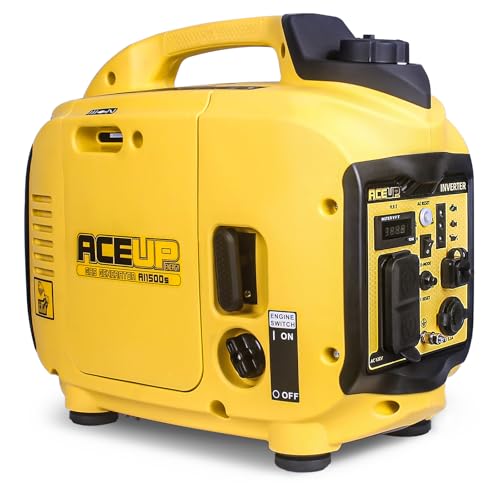
At just 1,200 running watts and 1,500 peak, this is the smallest generator on this list, and the numbers that matter most here are noise and clean power rather than raw output. It runs a genuinely quiet 55 dB at 23 feet with a fully-enclosed design, and its inverter technology holds Total Harmonic Distortion under 1.5%, low enough to safely charge phones and run small electronics without the voltage spikes a conventional generator can produce.

The 53.2cc engine sips fuel from a 0.6-gallon tank for up to 6 hours at half load, which is enough for an evening of camping power or keeping a phone and a couple of lights running during a short outage, but not much beyond that.

Pros
- Genuinely quiet at 55 dB, among the quietest on this list
- Low THD (under 1.5%) safe for sensitive electronics
- Fully-enclosed design for a compact footprint
- Simple recoil start, minimal weight
Cons
- 1,200 running watts limits use to phones, lights, and small electronics
- Small 0.6-gallon tank means frequent refueling for extended use
Specs
- Running / Peak Watts: 1,200 / 1,500
- Noise: 55 dB at 23 ft
- Runtime: Up to 6 hrs at half load (0.6 gal tank)
Best for: Solo campers and tailgaters who need quiet, minimal power for phones and small electronics, not a household backup solution.
2. Honda EU2200i – Best Premium/Most Trusted
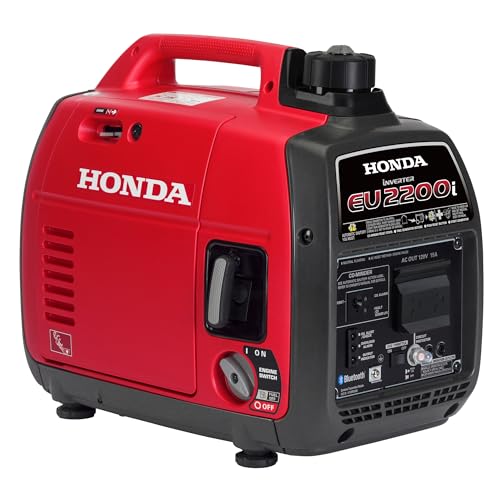
Honda’s EU2200i has built its reputation over more than a decade as one of the most trusted names in portable generators, and the spec sheet backs it up: 1,800 running watts and 2,200 peak from a 121cc Honda GXR120 engine, at a genuinely quiet 48-57 dB(A), quieter than a normal conversation. Honda’s My Generator smartphone app adds Bluetooth remote monitoring and wireless stop, a feature most competitors in this tier don’t offer.

At 47.4 lbs with an Eco Throttle System that adjusts engine speed to load, it runs 3.2 to 8.1 hours on a 0.95-gallon tank depending on demand, and it’s parallel-capable if you need to double output for a bigger job. The 3-year residential warranty reflects genuine confidence in long-term reliability that budget competitors in this tier can’t match.

Pros
- Industry-leading reputation for reliability and resale value
- Genuinely quiet at 48-57 dB(A)
- Bluetooth app for remote monitoring and control
- Strong 3-year residential warranty
Cons
- Premium price relative to similarly-specced competitors
- Not available in California in this configuration
Specs
- Running / Peak Watts: 1,800 / 2,200
- Noise: 48-57 dB(A)
- Weight: 47.4 lbs
Best for: Buyers who want the most trusted name in the category and are willing to pay for it, especially for RV and camping use where reliability away from home matters most.
3. maXpeedingrods 2500W Dual Fuel – Best Small Dual-Fuel

This is the only dual-fuel option in the compact tier, delivering 1,850 running watts and 2,500 peak on gasoline, or 1,650 running and 2,300 peak on propane. The 79.7cc OHV engine pairs with an integrated CO sensor that automatically shuts the unit down if dangerous carbon monoxide levels build up, a genuine safety feature at this price point.

Fuel flexibility at this size matters more than it might seem: if you’re using this for both weekend camping and occasional home backup, propane’s indefinite shelf life means you’re not stuck with degraded gasoline sitting in the tank between uses.

Pros
- Only dual-fuel option in the compact tier
- Integrated CO sensor with automatic shutdown
- ECO mode for extended fuel efficiency
- Parallel capable for doubling output
Cons
- Lower running watts than similarly-priced gas-only competitors
- Propane mode delivers noticeably less output than gasoline
Specs
- Running / Peak Watts: 1,850 / 2,500 (gas), 1,650 / 2,300 (LPG)
- Engine: 79.7cc OHV
- Safety: Integrated CO sensor
Best for: Buyers who want fuel flexibility in a compact size, without stepping up to the cost and bulk of a mid-size dual-fuel unit.
4. BILT HARD 2500W – Best Value Compact
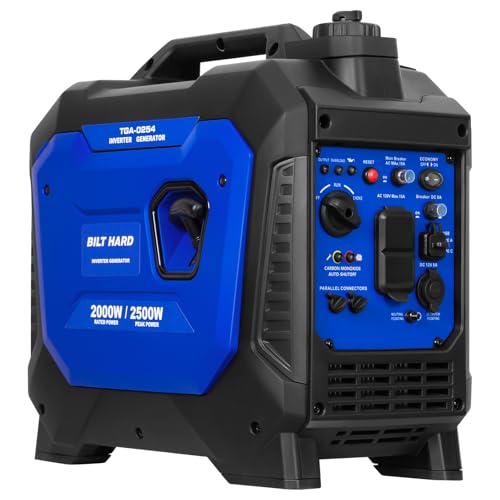
BILT HARD’s 2500W delivers a straightforward 2,000 running watts and 2,500 peak from an 80cc 4-stroke engine, with the same CO sensor safety feature found on pricier competitors, at a genuinely lower price point. The 1.11-gallon tank runs 5.5 hours at 50% load, and Total Harmonic Distortion under 3% keeps output clean enough for sensitive electronics like laptops and TVs.

It’s parallel-ready for buyers who want to add a second unit later rather than paying for a bigger single generator now, a genuinely flexible way to scale up power over time without replacing what you already own.

Pros
- Strong value for the included safety and clean-power features
- CO sensor with automatic shutdown
- Parallel-ready for future expansion
- Clean power (under 3% THD) safe for electronics
Cons
- Smaller brand with less established long-term track record than Honda
- 1.11-gallon tank means frequent refueling under sustained use
Specs
- Running / Peak Watts: 2,000 / 2,500
- Engine: 80cc 4-stroke
- Runtime: 5.5 hrs at 50% load
Best for: Budget-conscious buyers who want CO sensor safety and clean power without paying premium brand pricing.
5. Oxseryn 2800W – Best Quiet Compact
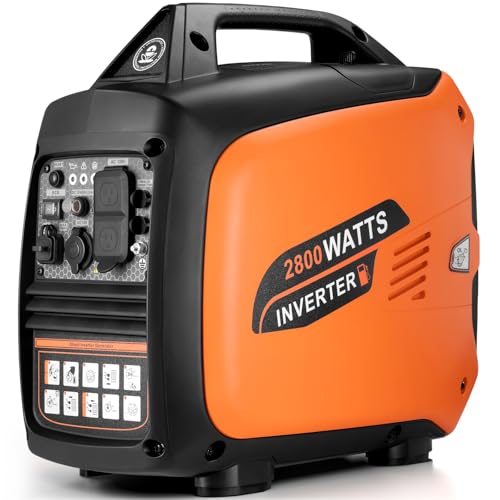
The Oxseryn 2800W tops the compact tier’s running watts at 2,000, with 2,800 peak, while staying genuinely quiet at 58 dB from 23 feet. The 79.8cc engine feeds from a 1.1-gallon tank for up to 9 hours at 25% load, and the modern port selection, USB and USB-C alongside the standard AC outlets, reflects a design built around actually charging today’s devices.

At 39 lbs, it’s genuinely easy to carry one-handed between the truck and the campsite, and Total Harmonic Distortion under 3% keeps it safe for laptops, cameras, and drones.

Pros
- Highest running watts in the compact tier at 2,000
- Genuinely quiet at 58 dB
- Modern port selection including USB-C fast charging
- Lightweight at 39 lbs
Cons
- Gasoline only, no fuel flexibility
- Smaller brand without a long-established reputation
Specs
- Running / Peak Watts: 2,000 / 2,800
- Weight: 39 lbs
- Noise: 58 dB at 23 ft
Best for: Campers and tailgaters who want the most running watts in the compact tier without sacrificing quiet operation.
Mid-Size Tier: 3,000-6,000 Running Watts
This tier covers real home backup for a refrigerator, some lighting circuits, and a few essential appliances, or serious RV use with air conditioning.
6. EFURDEN 4300W – Best Quiet Mid-Size
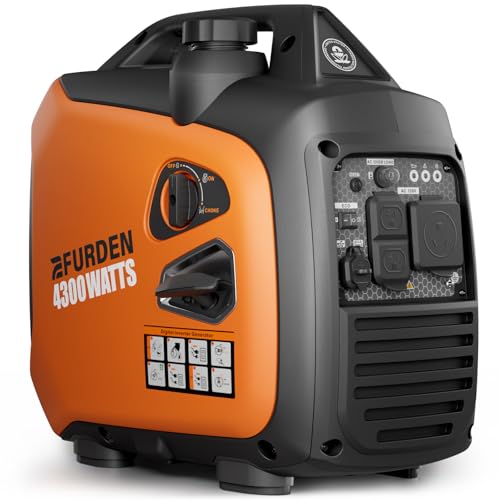
This is the quieter of the two Efurden models on this list, running as low as 60 dB at 23 feet, meaningfully quieter than the sibling 4400W open-frame model. It delivers 3,300 running watts and 4,300 peak from a 142.6cc engine, weighing just 45 lbs, and its 30A RV-ready outlet plus USB and USB-C ports cover both home backup and camping use.

Total Harmonic Distortion under 2% is a genuinely strong figure for clean power at this price point, worth knowing if you’re planning to run medical devices or precision electronics off it during an outage.

Pros
- Meaningfully quieter than most mid-size competitors at 60 dB
- Lighter than the sibling 4400W model at 45 lbs
- THD under 2%, strong clean-power figure
- 30A RV-ready outlet plus modern USB-C port
Cons
- Lower running watts than the open-frame 4400W sibling
- Newer brand without a long track record
Specs
- Running / Peak Watts: 3,300 / 4,300
- Weight: 45 lbs
- Noise: As low as 60 dB at 23 ft
Best for: Buyers who prioritize quiet operation and portability over maximum running watts in the mid-size tier.
7. Efurden 4400W – Best Open-Frame Value
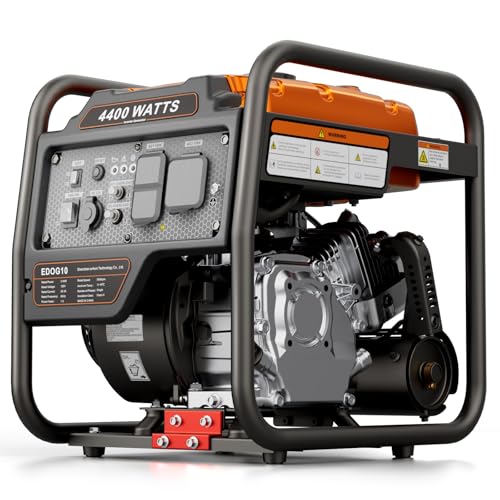
The open-frame 4400W trades some of its sibling’s quiet operation (72-78 dB depending on load) for higher running watts at 3,400, from a 208cc 4-stroke OHV engine. The rugged open-frame design is genuinely built to handle tough environments, and the 2-gallon tank delivers up to 14 hours of runtime at 25% load with ECO mode engaged.

Worth a note before buying: buyer reviews on this model are mixed, some reporting strong reliability and value, others reporting quality control issues on individual units. Standard for budget open-frame generators in this price range, but worth knowing going in.

Pros
- Highest running watts of the two Efurden models at 3,400
- Long 14-hour runtime at 25% load
- Rugged open-frame build for tough environments
- 30A RV-ready outlet
Cons
- Noticeably louder than the 4300W sibling at 72-78 dB
- Mixed reliability reports in buyer reviews
Specs
- Running / Peak Watts: 3,400 / 4,400
- Weight: 56 lbs
- Runtime: Up to 14 hrs at 25% load
Best for: Buyers who want the most running watts available from Efurden’s lineup and don’t mind trading some quiet operation for it.
8. Jackery HomePower 3600 Plus – Best Silent Indoor-Safe
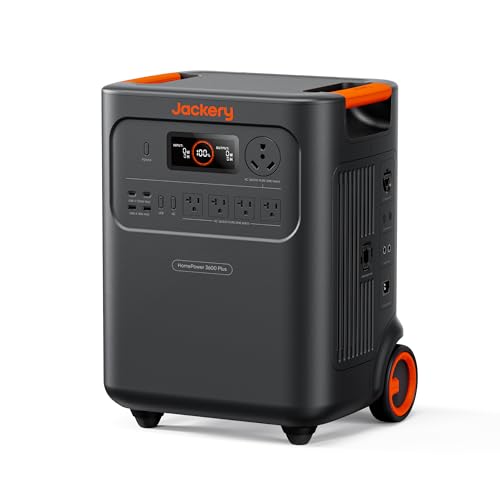
Every other generator on this list burns fuel and produces exhaust, meaning it must run outdoors. The Jackery HomePower 3600 Plus is genuinely different: a 3,584Wh LiFePO4 battery station delivering 3,600W continuous output (7,200W in parallel with a second unit), with zero emissions, zero noise, and safe indoor operation. Its high-temperature-resistant ceramic membrane battery cells are rated to over 6,000 charge cycles and a 10-year lifespan.

The tradeoff for silence and indoor safety is runtime: this runs on stored battery charge rather than a fuel tank, so total capacity (expandable up to 21kWh per unit, or significantly more with multiple units) determines how long it lasts, not gallons of gas in reserve. Plug-and-play design with an optional manual transfer switch means no complex installation, and it recharges via wall outlet, solar panels, or a car.

Pros
- Completely silent and safe for indoor use, unlike every combustion generator on this list
- Zero emissions, no fuel to store or stabilize
- Expandable capacity up to 21kWh per unit
- Multiple charging options including solar
Cons
- Higher upfront cost than a comparably-rated gas generator
- Runtime is capped by stored battery charge, not refillable on the fly like a fuel tank
Specs
- Output / Capacity: 3,600W / 3,584Wh
- Battery: LiFePO4, 6,000+ cycles
- Charging: AC, solar, car
Best for: Buyers who want silent, indoor-safe backup power and are willing to pay more upfront to avoid fuel storage and generator exhaust entirely.
9. GENMAX 6000W – Best Mid-Size Dual-Fuel
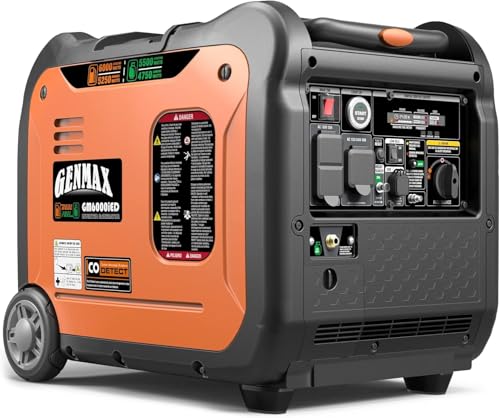
The GENMAX 6000W tops the mid-size tier with 5,250 running watts and 6,000 peak from a 312cc 4-stroke OHV engine, running on either gasoline or propane. Remote and electric start via a key fob push-button system means no pull-cord struggle during a storm, and a 5-in-1 digital display tracks hours, voltage, load, fuel, and frequency at a glance.

At 117.9 lbs, it’s genuinely the heaviest unit in the mid-size tier, but a telescopic handle and two wheels make it manageable for one person to move, and CO Detect technology automatically shuts the unit down if dangerous levels build up.

Pros
- Highest running watts in the mid-size tier at 5,250
- Dual-fuel flexibility between gasoline and propane
- Remote and electric start with key fob
- CO Detect automatic shutdown
Cons
- Heaviest unit in this tier at 117.9 lbs
- Larger footprint than the compact Efurden and EFURDEN models
Specs
- Running / Peak Watts: 5,250 / 6,000
- Weight: 117.9 lbs
- Noise: 62 dBA at 25% load
Best for: Households that want the highest mid-size output with genuine fuel flexibility and don’t mind the added weight.
Large Tier: 7,000+ Running Watts (Whole-Home Backup)
This tier is built for powering central air, well pumps, and multiple circuits simultaneously, the kind of load a family needs to ride out a multi-day outage comfortably.
10. Yamaha EF7200D – Best Contractor Workhorse

Yamaha’s EF7200D is a conventional (not inverter) open-frame generator built on a 358cc Yamaha MZ360 OHV engine, delivering 6,000 running watts and 7,200 peak. One honest disclosure worth knowing upfront: at under 7% Total Harmonic Distortion, this is not rated clean enough for sensitive electronics the way the inverter models on this list are, so it’s better suited to job-site tools and heavy appliances than laptops and medical equipment.
At 245.7 lbs, this is genuinely a contractor-grade workhorse rather than something one person casually moves around, but the roll cage, cast iron cylinder lining, and Yamaha’s established reliability reputation reflect a machine built for years of demanding daily use rather than occasional emergency backup.

Pros
- Established Yamaha reliability reputation for demanding daily use
- Roll cage and cast iron cylinder lining for job-site durability
- Strong 8-hour runtime at full load
- 3-year residential and industrial warranty
Cons
- Not inverter-grade; under 7% THD means it’s not recommended for sensitive electronics
- Heaviest unit on this list at 245.7 lbs, manual start only
Specs
- Running / Peak Watts: 6,000 / 7,200
- Weight: 245.7 lbs
- THD: Under 7% (not recommended for sensitive electronics)
Best for: Contractors and job sites needing durable, heavy-duty power for tools and equipment rather than sensitive electronics.
11. maXpeedingrods 10500W – Best High-Output Dual-Fuel
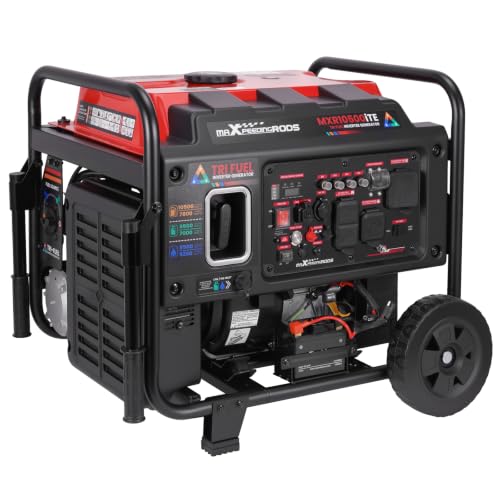
This delivers 10,500 peak watts on gasoline (9,500 on propane), with genuine running-watt capacity to match household central air and multiple major appliances. Multiple start options, electric, remote, and recoil, mean you’re never stuck if a battery dies, and pure sine wave inverter technology keeps output clean for sensitive electronics despite the large output.

One clarification worth making plainly: while some retailer listings for this model use “tri-fuel” language, the confirmed fuel specification is dual-fuel, gasoline and LPG (propane), not natural gas. If tri-fuel natural gas capability is a requirement for you specifically, the Gidrox 11000W below is the confirmed tri-fuel option on this list.

Pros
- High output with clean pure sine wave inverter technology
- Three start options: electric, remote, and recoil
- ECO mode for extended fuel efficiency
- Wheels and telescopic handle for easier transport
Cons
- Dual-fuel (gas/propane), not tri-fuel despite some listing language
- Large and heavy, not a one-person casual-carry unit
Specs
- Running / Peak Watts: ~8,500 / 10,500 (gas)
- Fuel: Gasoline, LPG (dual-fuel)
- Start: Electric, remote, recoil
Best for: Households wanting high output and multiple start options without needing natural gas compatibility specifically.
12. DuroMax XP11000iH – Best Parallel-Capable

DuroMax’s XP11000iH delivers 9,000 running watts and 11,000 peak on gasoline (8,550/10,450 on propane) from a 459cc engine, with genuine dual-fuel switching you can do while the generator is running, DuroMax calls it Switch On Demand. It’s parallel capable, connecting two units together for up to 18,000 running watts combined, a real path to scaling power without buying a single larger unit.

A 7.1-gallon tank delivers up to 18 hours of runtime on gasoline or 8 hours on a 20-lb propane tank, and remote start with a key fob adds convenience alongside the standard electric push-button and recoil backup. DuroMax has a well-established reputation in the large-portable-generator category specifically.

Pros
- Switch fuel types while the generator is running
- Parallel capable up to 18,000 combined running watts
- Established DuroMax reputation in large portable generators
- Long 18-hour gasoline runtime
Cons
- Dual-fuel only, no natural gas option
- Large, heavy unit not intended for casual portability
Specs
- Running / Peak Watts: 9,000 / 11,000 (gas)
- Engine: 459cc
- Runtime: Up to 18 hrs (gas, 7.1 gal tank)
Best for: Buyers who want a clear path to scaling power later via parallel capability, from an established large-generator brand.
13. 11000W Tri-Fuel (Gidrox) – Best ATS-Ready Whole-Home
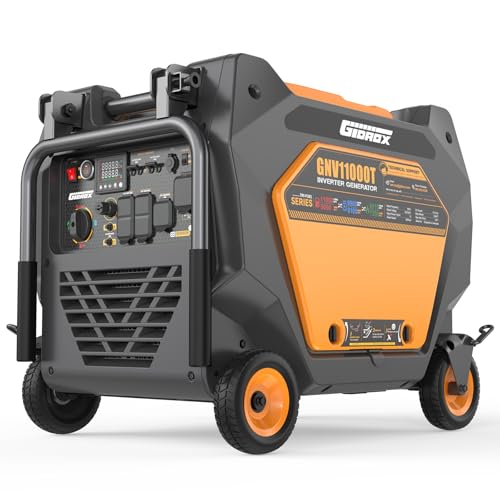
This is the genuine tri-fuel option on this list, gasoline, propane, and natural gas, with a dedicated ATS (automatic transfer switch) port built specifically for seamless whole-home integration during an outage. It delivers 9,000 running watts and 11,000 peak, with heavy-duty 50A and 30A 240V outlets plus two GFCI-protected 120V outlets, all under waterproof rubber covers.

Natural gas capability is the real differentiator here: connected to a home gas line, this generator can run indefinitely during an extended outage without any fuel restocking at all, the closest a portable unit gets to permanent standby-generator behavior. Push-button electric start with remote and manual backup, plus a 3-year warranty, round out a unit clearly built for serious whole-home backup.

Pros
- Genuine tri-fuel: gasoline, propane, and natural gas
- Dedicated ATS port for seamless whole-home switchover
- Natural gas connection enables indefinite runtime during extended outages
- Heavy-duty 50A/30A outlets with GFCI protection
Cons
- Natural gas benefit only applies if you have a home gas line to connect to
- ATS switch itself sold separately and requires proper installation
Specs
- Running / Peak Watts: 9,000 / 11,000
- Fuel: Gasoline, propane, natural gas (true tri-fuel)
- Outlets: 50A (14-50R), 30A (L14-30R), 2x 20A GFCI
Best for: Households planning genuine whole-home backup with ATS integration who want natural gas as an unlimited-runtime option.
What Can Each Tier Actually Run?
| Appliance | Typical Running Watts | Tier Needed |
|---|---|---|
| Phone/laptop charging, LED lights | 50-150W | Compact |
| Refrigerator | 600-800W | Compact/Mid-Size |
| Window AC unit | 1,000-1,500W | Mid-Size |
| Well pump | 1,000-2,000W | Mid-Size/Large |
| Central AC (small home) | 3,000-5,000W | Large |
| Electric water heater | 3,000-4,500W | Large |
How to Choose the Right Tier
Add Up Your Actual Running Watts First
List every appliance you need to run simultaneously and add their running watts, then add roughly 20% headroom for the highest single starting-watt spike among them (usually a compressor-driven appliance like a fridge or AC unit). That total, not the generator’s peak-watt rating, is the number to shop against.
Match Fuel Type to Your Actual Outage Risk
If you live somewhere with short, occasional outages, gasoline-only is fine. If you’re planning for multi-day outages during severe weather, dual-fuel with propane storage or true tri-fuel with a natural gas hookup meaningfully changes your resilience, since you’re not dependent on gas station availability during the exact event that knocked out power in the first place.
Consider Battery Power for Indoor and Noise-Sensitive Situations
Every combustion generator on this list must run outdoors, both for carbon monoxide safety and noise. A battery power station like the Jackery HomePower 3600 Plus is the only option here safe to run indoors, and it’s worth serious consideration if noise ordinances, apartment living, or indoor safety are real constraints for you.
Common Mistakes to Avoid
- Running a generator indoors or in an attached garage: carbon monoxide from combustion generators can be fatal within minutes even with doors open; always run outdoors, well away from windows and doors.
- Undersizing for starting watts: a generator that handles your fridge’s running watts fine can still stall when the compressor’s starting surge hits if peak capacity is too close to the limit.
- Connecting to household wiring without a transfer switch: backfeeding a generator into your home’s panel without a proper transfer switch or interlock is a serious electrocution risk to utility workers and violates code in most areas.
- Storing gasoline without a stabilizer: untreated gasoline degrades within a few months, which can clog a carburetor and leave a generator unusable exactly when you need it during an emergency.
Frequently Asked Questions
What size generator do I need to run my whole house?
For most homes, 7,000-10,000 running watts covers central air, a refrigerator, well pump, and several circuits simultaneously. Add up your specific appliances’ running watts plus 20% headroom for starting surges to confirm the exact number for your home.
What’s the difference between dual-fuel and tri-fuel generators?
Dual-fuel generators run on gasoline and propane. Tri-fuel generators add natural gas as a third option, which allows indefinite runtime when connected to a home’s natural gas line, since that fuel source doesn’t run out the way a gas tank or propane tank does during an extended outage.
Can I run a generator in my garage during a storm?
No. Even with the garage door open, carbon monoxide from a combustion generator can build up to lethal levels. Generators must run outdoors, at least 20 feet from windows, doors, and vents, regardless of weather.
Do I need a transfer switch to use a generator for home backup?
Yes, if you want to power your home’s wiring and appliances directly. A transfer switch or interlock safely isolates your home’s circuits from the utility grid, preventing dangerous backfeed. Running extension cords to individual appliances doesn’t require one, but limits what you can power at once.
Bottom Line
- Best for camping and light backup: Honda EU2200i — the most trusted name in the compact tier, worth the premium for reliability.
- Best budget compact: BILT HARD 2500W — CO sensor safety and clean power without premium pricing.
- Best mid-size home backup: GENMAX 6000W — the highest mid-size output with genuine dual-fuel flexibility.
- Best for indoor-safe silent backup: Jackery HomePower 3600 Plus — the only option on this list safe to run indoors.
- Best for whole-home backup: 11000W Tri-Fuel (Gidrox) — true tri-fuel with ATS readiness for the most resilient setup during extended outages.
Whichever tier fits your needs, confirm your actual running-watt requirement before comparing price, and treat fuel type as a resilience decision, not just a convenience one.