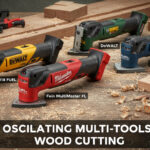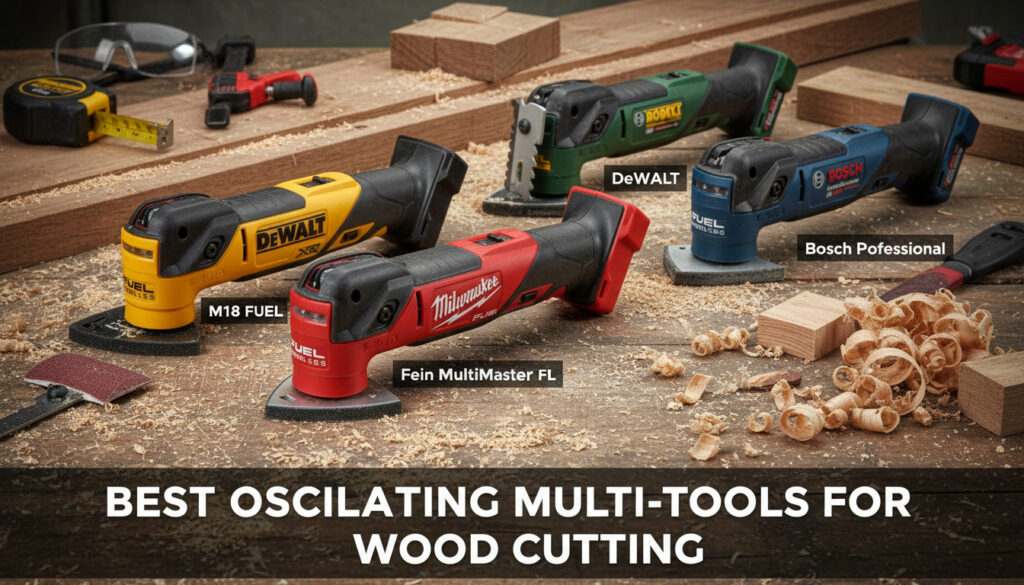
If you’ve ever tried to make a flush cut in a tight corner or notch a door casing for new flooring, you already know that no regular saw can do it cleanly. That’s exactly where an oscillating multi-tool shines — its rapid side-to-side blade motion lets you cut with precision in spots where no other power tool will fit.
But not every oscillating tool is built the same. For wood cutting specifically, you need the right combination of OPM (oscillations per minute), blade angle, motor power, and vibration control. The wrong tool will tear, bind, or wear out your blades in minutes on hardwood.
I tested and researched the top models available on Amazon right now — covering pro-grade cordless tools, reliable corded workhorses, and budget-friendly options — to bring you this definitive guide. Whether you’re a contractor cutting nail-embedded lumber every day or a weekend DIYer notching baseboards, there’s a perfect pick on this list.
Quick Comparison: Best Oscillating Multi-Tools for Wood Cutting
| Product | Type | Max OPM | Angle | Best For |
|---|---|---|---|---|
| Milwaukee M18 FUEL 2836-20 | Cordless | 20,000 | 4.2° | Best Overall |
| DeWalt DCS356B 20V MAX XR | Cordless | 20,000 | 3.0° | Best Cordless Value |
| Bosch GOP40-30C StarlockPlus | Corded | 20,000 | 3.0° | Best Corded |
| Makita XMT04ZB 18V LXT | Cordless | 20,000 | 3.6° | Best for Pros |
| DeWalt DWE315K | Corded | 22,000 | 3.2° | Best Mid-Range Corded |
| Milwaukee M12 2426-20 | Cordless | 20,000 | 3.0° | Best Compact |
| Dremel Multi-Max MM50-02 | Corded | 21,000 | 3.0° | Best Budget |
What to Look for in an Oscillating Multi-Tool for Wood Cutting

Before diving into the reviews, here’s what actually matters when you’re buying specifically for wood cutting work.
OPM (Oscillations Per Minute)
OPM is the speed of the blade’s back-and-forth motion. For wood cutting, you generally want a tool that reaches at least 18,000–20,000 OPM. Higher OPM means faster cuts through softwood and pine. For hardwoods like oak, the ability to control speed at the lower end (around 10,000 OPM) is just as important — too fast on hard grain can cause burning and rough edges.
Oscillation Angle
The oscillation angle determines how wide the blade swings with each stroke. A wider angle — like 4° to 5° — removes more material per stroke and cuts faster through thick lumber. A narrower angle — around 3° — gives you better control for fine trim work and clean cuts in finished wood. The best tools offer variable speed to compensate, but the angle is fixed at manufacture.
Corded vs. Cordless
Cordless tools give you freedom of movement and are ideal on active job sites where outlets are scarce. Corded models deliver consistent power without worrying about battery life — a real advantage for long workshop sessions cutting multiple boards. If you already own an 18V or 20V battery platform from Milwaukee, DeWalt, or Makita, matching that platform saves money and hassle.
Blade Change System
Tool-free blade changes via a lever or clamp are far more practical on the job than screw-type systems that require removing a bolt each time. Look for tools with Starlock or Starlock MAX compatibility — the three-dimensional interface grips blades more securely and transfers more torque to the blade, which translates directly into faster, cleaner wood cuts.
Vibration Control
Oscillating tools vibrate by nature — that’s how they work. But poorly dampened vibration transfers to your hands, causing fatigue and imprecise cuts during longer sessions. Premium tools use isolated head designs or internal dampening systems to keep vibration levels low. This matters a lot when you’re cutting wood trim for an hour straight.
Wood Cutting Blades
The included blades matter. Bi-metal blades handle softwood, pine, and general trim work well. For hardwood, engineered wood, and nail-embedded lumber, carbide-tipped blades stay sharp far longer and cut cleaner. A good kit will include at least one dedicated wood cutting blade — and we’ll note what each tool includes.
The 7 Best Oscillating Multi-Tools for Wood Cutting (2026)
1. Milwaukee M18 FUEL 2836-20 — Best Overall

The Milwaukee M18 FUEL (model 2836-20) is the gold standard for wood cutting performance among cordless oscillating tools. Its POWERSTATE Brushless Motor delivers 10,000 to 20,000 OPM combined with an aggressive 4.2-degree oscillation angle — one of the widest available — which translates to genuinely faster cuts through pine, oak, and even nail-embedded construction lumber compared to most competitors.

What sets this tool apart for wood work is the Auto-Load feature on its 10-setting variable speed dial. The tool starts slowly for precise entry cuts, then automatically ramps up speed once it’s under load — an invaluable feature when you’re making plunge cuts into hardwood where a sudden grab can splinter your workpiece. The REDLINK PLUS Intelligence system also prevents the motor from bogging down when you push into a knot or a dense grain section, which is a common frustration with lower-end tools.
Vibration dampening is among the best in its class. Milwaukee’s isolated head design keeps full-tool vibration noticeably lower than tools like the DeWalt DCS356B or Makita XMT04ZB, so your hands stay comfortable during extended trim or flooring sessions. The 180-degree LED light ring illuminates dark cabinet interiors and undercut situations where you’re flush-cutting baseboards blind.
The one genuine criticism is the blade change mechanism. Unlike a simple lever system, the M18 FUEL uses a threaded bolt that requires unscrewing before blade removal. It’s more secure, but changing blades mid-job takes longer. If you’re using blades without the rear cut-out, you’ll need to fully remove the bolt every swap.
Pros
- Fastest wood-cutting performance among cordless models
- 4.2° oscillation angle removes material quickly in hardwood
- Auto-Load prevents splintering on plunge cuts
- Outstanding vibration dampening for long sessions
- 180° LED light is genuinely useful
- Part of Milwaukee’s M18 ecosystem (250+ compatible tools)
Cons
- Blade change is slower than lever-based systems
- Higher price point — battery sold separately
Specs
- Type: Cordless (M18)
- OPM: 10,000–20,000
- Oscillation Angle: 4.2°
- Motor: POWERSTATE Brushless
- Blade System: OIS Universal + OPEN-LOK
- Weight: 2.0 lbs (bare)
Best for: Professional contractors, remodelers, and serious DIYers who need the fastest and most powerful cordless wood-cutting performance available — especially those already on the M18 platform.
2. DeWalt DCS356B 20V MAX XR — Best Cordless Value

The DeWalt DCS356B is the go-to choice for anyone already invested in the DeWalt 20V MAX battery platform — and even if you’re not, it represents one of the best value propositions in cordless oscillating tools for wood cutting. Its brushless motor delivers variable speed from 8,000 to 20,000 OPM with three distinct speed settings (Low, Medium, High) rather than a continuous dial, giving you pre-defined cutting modes for softwood, hardwood, and precision trim work.
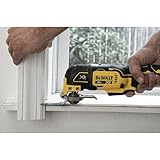
In real-world wood cutting, the DCS356B handles pine, SPF framing lumber, and standard 1×4 boards with ease. It includes two dedicated wood cutting blades out of the box — a bi-metal plunge cut blade and a wood/metal combination blade — so you can start cutting without an extra accessory purchase. The slim, contoured handle DeWalt has refined over several generations makes this one of the most comfortable tools to hold for extended periods of overhead or vertical cutting.
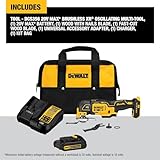
The DeWalt quick-change accessory system uses a rear cut-out design — blades change without tools, but you need blades specifically designed for this interface or the included universal adapter. The LED work light is bright and positioned well for flush-cut work in dim corners. At its price point, the DCS356B competes directly with tools that cost significantly more.
Pros
- Excellent value, especially for existing DeWalt 20V users
- Slim, ergonomic handle designed for comfort
- Includes two wood-specific blades
- Quick-change accessory system with no tools required
- Bright LED positioned for flush-cut visibility
Cons
- Three-speed switch instead of a continuous variable dial
- Metal cutting performance weaker than wood cutting
- Requires DeWalt-compatible or adapter-fitted blades
Specs
- Type: Cordless (20V MAX)
- OPM: 8,000–20,000
- Oscillation Angle: 3.0°
- Motor: Brushless
- Blade System: Quick-Change (rear cut-out)
- Weight: 2.2 lbs (bare)
Best for: DeWalt 20V MAX battery platform users, DIYers cutting softwood and trim who want a reliable brushless tool without paying premium Milwaukee prices.
3. Bosch GOP40-30C StarlockPlus — Best Corded
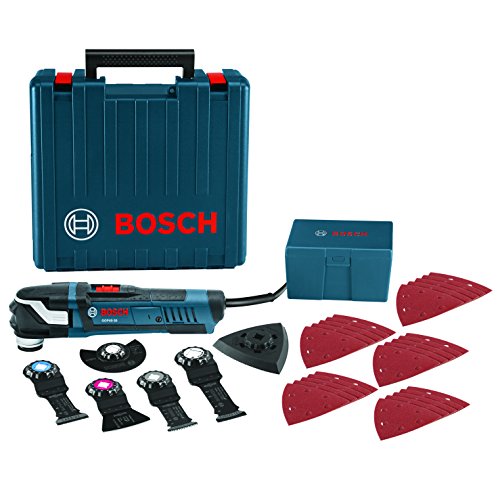
Bosch invented the oscillating multi-tool category, and the GOP40-30C represents the pinnacle of their corded lineup. The StarlockPlus three-dimensional interface is the standout feature here — unlike flat blade interfaces that can flex and slip, Starlock blades lock into the head in three dimensions, providing maximum torque transfer directly to the cutting edge. In practical terms, this means your wood cutting blades work harder and stay sharper longer.

The 4.0-amp motor maintains consistent cutting speed under load thanks to Bosch’s Constant Response circuitry. When you push into a hardwood knot or a thick section of oak, the motor compensates to hold your selected OPM rather than bogging down — a critical advantage for clean, consistent cuts in demanding wood applications. Speed adjusts from 8,000 to 20,000 OPM via a smooth dial, and the 3.0° oscillation angle balances fast material removal with excellent cutting control.
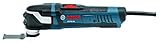
The included 32-accessory kit is comprehensive and genuinely useful — multiple wood cutting blades, a sanding pad, sandpapers in various grits, and a scraper. The tool-free lever blade change is fast and satisfying, with no adapters needed for Starlock-compatible accessories. The corded design means zero battery concerns during long workshop sessions cutting flooring, cabinetry parts, or dimensional lumber.
Pros
- StarlockPlus interface provides best-in-class blade grip and torque transfer
- Constant Response maintains OPM through hardwood knots
- Fast, tool-free lever blade change
- Comprehensive 32-piece accessory kit included
- Unlimited runtime — corded reliability
Cons
- Corded limits mobility on active job sites
- Premium price for a corded tool
- StarlockPlus accessories cost more than universal blades
Specs
- Type: Corded
- Amps: 4.0A
- OPM: 8,000–20,000
- Oscillation Angle: 3.0°
- Blade System: StarlockPlus (tool-free lever)
- Accessories Included: 32 pieces
Best for: Workshop woodworkers, cabinetmakers, and flooring installers who want the best corded oscillating tool for hardwood and need unlimited runtime.
4. Makita XMT04ZB 18V LXT — Best for Pros

The Makita XMT04ZB stands out in the professional cordless category thanks to its Anti-Vibration Technology (AVT) — a counterbalance mechanism built into the tool body that actively reduces vibration during operation. For professional woodworkers and trim carpenters spending hours making flush cuts and finish cuts each day, this technology makes a measurable difference in hand fatigue and cut accuracy over a full workday.

The 3.6° oscillation angle sits between the wider Milwaukee angle and narrower Bosch — fast enough for efficient material removal in softwood and hardwood, but controlled enough for precision finish cuts. Variable speed via a dial covers 6,000 to 20,000 OPM, and the tool accepts StarlockMax accessories — the highest-tier Starlock interface — which is compatible with the broadest range of professional blade accessories. The brushless motor extends both runtime per charge and overall tool lifespan compared to brushed motors.

The XMT04ZB is sold as a bare tool — no battery or charger included — which makes it an excellent deal if you already own Makita 18V LXT batteries. Makita’s 4.0Ah or 5.0Ah batteries are recommended for extended cutting sessions. The tool-free blade change works smoothly, and the overall build quality — typical of Makita’s professional line — feels exceptionally solid and durable.
Pros
- AVT system genuinely reduces hand vibration during long sessions
- StarlockMax compatibility for widest accessory selection
- 3.6° angle balances speed and control for finish wood work
- Brushless motor for longer runtime and tool life
- Excellent build quality and durability
Cons
- Bare tool only — battery and charger not included
- Makita 18V batteries required (not compatible with other platforms)
Specs
- Type: Cordless (18V LXT)
- OPM: 6,000–20,000
- Oscillation Angle: 3.6°
- Motor: Brushless with AVT
- Blade System: StarlockMax (tool-free)
- Weight: 2.6 lbs (bare)
Best for: Professional trim carpenters, finish woodworkers, and Makita 18V LXT platform users who need all-day comfort with precision cutting capability.
5. DeWalt DWE315K — Best Mid-Range Corded
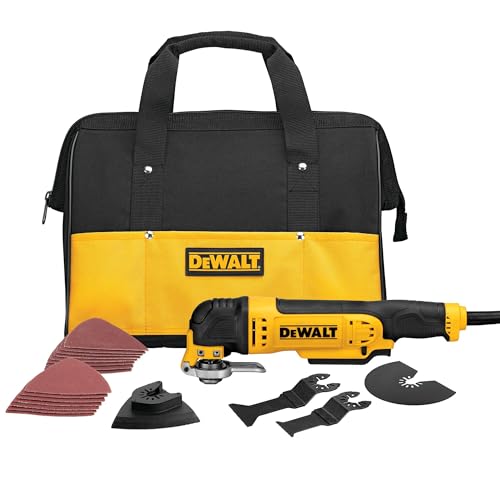
The DeWalt DWE315K delivers the best value among corded oscillating multi-tools for woodworkers who want professional-level performance without the premium price of the Bosch GOP40-30C. Its 3.0-amp motor reaches 22,000 OPM — actually higher than most competitors — which translates to rapid material removal when cutting through pine boards, plywood, and standard dimensional lumber. The variable speed dial covers 10,000 to 22,000 OPM smoothly.

The Quick-Change accessory system is the same design used across DeWalt’s oscillating lineup — no tools needed to swap blades, just engage the lever and slide the accessory in. The DWE315K comes as a kit with a 29-piece accessory set including multiple wood cutting blades (bi-metal plunge and segment blades), sanding pads, sandpapers, and a scraper — a genuinely comprehensive set for the price. The storage case keeps everything organized and protected.

A notable feature for consistent wood cutting work is the optional Guide System attachment — a simple depth guide that helps you maintain uniform cut depth across multiple passes, which is extremely useful when undercutting multiple door jambs to the same height for flooring installation. The corded design delivers all-day runtime with no battery management needed.
Pros
- Highest OPM in this guide at 22,000 — fast softwood cutting
- Comprehensive 29-piece kit with wood-specific blades
- Guide System accessory for consistent cut depth
- Tool-free blade change
- Strong value for a corded kit
Cons
- Corded — cord management on busy job sites
- No Constant Response circuitry (can slow under heavy load)
Specs
- Type: Corded
- Amps: 3.0A
- OPM: 10,000–22,000
- Oscillation Angle: 3.2°
- Blade System: Quick-Change (tool-free)
- Accessories Included: 29 pieces
Best for: DIYers and semi-pro woodworkers who want a complete corded kit with excellent wood-cutting speed at a mid-range price.
6. Milwaukee M12 2426-20 — Best Compact
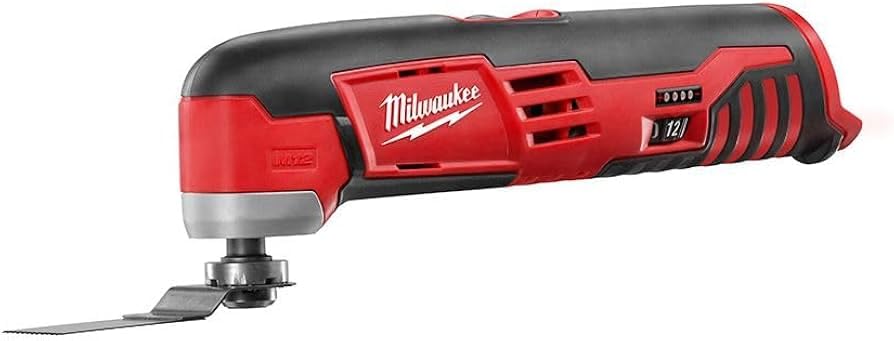
When your wood cutting work involves tight, awkward spaces — inside cabinets, between wall studs, or in cramped bathroom renovations — the Milwaukee M12 2426-20 offers a distinct advantage. Its compact M12 platform produces a tool that’s noticeably lighter and shorter than full-size 18V or 20V models, letting you maneuver the cutting head into positions that larger tools simply can’t reach. Despite its small size, it delivers a full 20,000 OPM and is genuinely capable of cutting pine, trim wood, and light hardwood.

The M12 is an ideal secondary tool for finish carpenters who carry an M18 tool for heavy cutting but want something lighter for the detailed work — undercutting thin door casings, trimming small pieces of wood molding, or making precise notches in plywood panels. Milwaukee includes a wood cutting blade and sanding accessories in the kit. The variable speed allows careful control when cutting finished wood where tearout must be avoided.
The M12 system means smaller, lighter batteries — the trade-off is reduced runtime per charge compared to M18 models. For occasional or shorter wood cutting tasks, this is never a problem. For extended sessions, you’ll want a couple of charged batteries on rotation. The tool uses Milwaukee’s OIS blade interface, compatible with the full range of Milwaukee wood cutting and demolition accessories.
Pros
- Most compact and lightweight option in this guide
- Full 20,000 OPM despite small size
- Perfect for tight spaces and overhead work
- Part of Milwaukee M12 ecosystem
- Lower price than M18 models
Cons
- Shorter battery runtime than 18V/20V tools
- Not ideal for heavy-duty or continuous hardwood cutting
Specs
- Type: Cordless (M12 12V)
- OPM: 10,000–20,000
- Oscillation Angle: 3.0°
- Motor: Brushed
- Blade System: OIS Universal
- Weight: 1.5 lbs (bare)
Best for: Finish carpenters, electricians, and plumbers who need a compact oscillating tool for wood cutting in tight access areas.
7. Dremel Multi-Max MM50-02 — Best Budget

The Dremel Multi-Max MM50-02 is the best oscillating tool for budget-conscious DIYers who need reliable wood cutting performance without spending over $100. Its 5.0-amp motor is actually more powerful than several pricier corded competitors, and with a speed range of 5,000 to 35,000 RPM (equivalent OPM up to ~21,000), it cuts through softwood, trim, and plywood with surprising efficiency. The variable speed dial gives you full control for careful finish cuts in pine and oak.

The MM50-02 comes as a complete kit with 16 accessories including wood cutting blades, sanding pads, and a storage bag. The EZ Twist nose cap allows tool-free blade changes — loosen the cap, swap the blade, tighten the cap — which is quick enough in practice for occasional DIY use. Dremel’s universal accessory system means you can find compatible blades from many brands, keeping ongoing accessory costs low. The oscillation angle sits at a standard 3.0°, which is appropriate for the light to medium wood cutting tasks this tool is designed for.

Vibration control is noticeably less refined than premium tools — not a problem for occasional use, but you’ll feel it during extended sessions. The build quality is solid for the price, and Dremel’s brand reliability means it will hold up for years of weekend project use. For homeowners who need to cut out a door casing once a year, trim a window sill, or make a plunge cut in a cabinet back panel, the MM50-02 is all you need.
Pros
- Most affordable option on this list
- Strong 5.0-amp motor for the price
- 16-piece accessory kit included
- Universal accessory compatibility keeps blade costs low
- Simple, reliable design from a trusted brand
Cons
- More vibration than premium tools during extended use
- EZ Twist cap is slower than lever-based changes
- Not suitable for heavy-duty or daily professional wood cutting
Specs
- Type: Corded
- Amps: 5.0A
- OPM: Up to ~21,000
- Oscillation Angle: 3.0°
- Blade System: EZ Twist (tool-free cap)
- Accessories Included: 16 pieces
Best for: Homeowners and occasional DIYers who need a capable, affordable oscillating tool for light to medium wood cutting tasks around the house.
Wood Cutting Techniques for Oscillating Multi-Tools
Owning a great tool is only half the equation. Here’s how to get the cleanest wood cuts possible.
Making a Clean Plunge Cut in Hardwood
Set your speed to medium (around 12,000–15,000 OPM) and place the blade flat against the wood surface. Start the tool before contact, let it reach speed, then gently lower the blade into the surface using light downward pressure. Never force the blade — let it cut at its own pace. For oak or maple, make multiple shallow passes rather than one deep cut to prevent blade binding and burning.
Flush Cutting Door Casings for Flooring
Place a scrap piece of your new flooring material flat on the existing floor next to the door casing. Rest your flush-cut blade flat on top of the flooring scrap — this automatically sets the correct undercut depth. Start the tool on low speed, score the casing with light passes, then gradually increase speed until you cut through. This technique produces perfect, consistent undercuts that flooring slides under cleanly every time.
Notching Wood in Tight Spaces
For notching behind pipes, around electrical boxes, or inside cabinet frames, the oscillating tool has no competition. Mark your cut line clearly, use a plunge-cut blade, and make your cuts at medium speed. For through-cuts, score both faces of the notch first, then make the connecting cut. Always keep the blade perpendicular to the wood surface to avoid angled cuts.
Pro Tips for Better Wood Cuts
- Always use sharp, wood-specific blades — a dull blade produces heat, burning, and rough edges
- Let the blade do the work — excessive pressure slows cutting and shortens blade life
- Use lower speeds on finished wood to prevent tearout on the surface
- For cross-grain cuts, score the cut line first with a utility knife to prevent splintering
- Keep the tool moving in a slight rocking motion to prevent blade heat buildup
Best Oscillating Blades for Wood Cutting
Even the best oscillating tool is only as good as the blade you put on it. Here are the blade types you need for wood cutting specifically — all available on Amazon.
Bi-Metal Plunge Cut Blades
The workhorse blade for most wood cutting tasks. Handles softwood, pine, SPF lumber, trim, and plywood. Great for flush cuts and plunge cuts in standard construction wood.
→ Browse Bi-Metal Wood Blades on Amazon
Carbide-Tipped Wood Blades
Essential for hardwood (oak, maple, hickory), engineered wood products, and nail-embedded lumber. Carbide stays sharp far longer than bi-metal in hard applications and produces cleaner cuts in dense grain. Costs more upfront but lasts much longer.
→ Browse Carbide Wood Blades on Amazon
Flush-Cut / Undercut Blades
Designed specifically for door jamb undercutting, baseboard trimming, and any cut where the blade must be flat against a surface. The offset design lets the cutting teeth reach all the way to the tool’s mounting point.
→ Browse Flush-Cut Blades on Amazon
Frequently Asked Questions
Can an oscillating multi-tool replace a circular saw for wood cutting?
No — and it’s not designed to. A circular saw is the right tool for ripping long boards or making long straight cross-cuts through dimensional lumber quickly. An oscillating tool excels at short, precise cuts in tight or awkward spaces where a circular saw cannot physically fit or operate safely. Think of them as complementary tools, not alternatives.
What’s the best oscillating tool for cutting hardwood floors?
For undercutting door casings and jambs when installing hardwood flooring, the Milwaukee M18 FUEL 2836-20 with a carbide flush-cut blade is the top choice. Its power handles dense hardwood cleanly, and the compact head fits precisely in the narrow gap between the door casing and the subfloor. The Bosch GOP40-30C is the best corded alternative for the same task.
How thick of wood can an oscillating tool cut?
Most oscillating tools can cut through wood up to approximately 2 inches thick with the right blade. Thicker cuts are possible but slow and generate significant heat. For wood thicker than 2 inches, you’re better served by a reciprocating saw or jigsaw. The oscillating tool’s strength is in precision and access, not in cutting thick lumber quickly.
Corded vs. cordless — which is better for wood cutting?
It depends on where you work. For workshop or stationary wood cutting where an outlet is always nearby, corded tools deliver unlimited runtime and consistent power — the Bosch GOP40-30C and DeWalt DWE315K are ideal. For job sites, renovations, and work in rooms without convenient outlets, cordless tools like the Milwaukee M18 FUEL or DeWalt DCS356B are far more practical. If you own an 18V or 20V battery platform, the power difference between corded and quality cordless is minimal for most wood cutting tasks.
Are universal blades as good as brand-specific ones?
For basic softwood cutting, universal bi-metal blades work fine and cost significantly less. For hardwood, nail-embedded wood, or professional-level use, brand-specific or premium carbide blades from Milwaukee, Bosch, or Diablo outperform budget universals noticeably. The blade is where performance is actually made — don’t skimp if you’re cutting hardwood regularly.
Final Verdict
For most users who need a reliable oscillating multi-tool primarily for wood cutting, here are the clear winners:
- Best Overall: Milwaukee M18 FUEL 2836-20 — the fastest cuts, best vibration control, and most powerful wood-cutting performance in a cordless package.
- Best Value Cordless: DeWalt DCS356B — outstanding wood-cutting capability for DeWalt platform users at a very competitive price.
- Best Budget: Dremel MM50-02 — everything a homeowner needs for occasional wood cutting at a fraction of the price of the premium models.
Whichever tool you choose, pair it with a quality carbide-tipped wood blade for hardwood and a fresh bi-metal blade for softwood and trim — the right blade makes more difference than most people expect.