If you install flooring for a living — or you’re halfway through a DIY renovation and your knees are screaming — you already know the problem. Hours spent crouching, kneeling, and shuffling across hardwood, tile, vinyl plank, and concrete take a serious toll on your joints. Standard cheap knee pads either slide around constantly, crush flat after an hour, or worse — scratch the very floor you’ve been working so hard to lay.
The right knee pads for flooring work do two jobs at once: they protect your knees and protect the floor beneath you. That means a flat, non-marring front face that won’t scuff luxury vinyl or hardwood, a cushioning system that holds up for a full workday, and a strap setup that stays put without cutting off circulation behind your knee.
We’ve reviewed the best knee pads for flooring installers, tile setters, carpet layers, and serious DIYers — covering everything from lightweight foam pads for delicate surfaces to heavy-duty triple-layer gel pads for demanding job sites. Here’s what we found.
📋 In a hurry? Jump straight to the comparison table or scroll down to the product that fits your job type. All prices checked via Amazon.
Quick Picks: Best Knee Pads for Flooring Work at a Glance
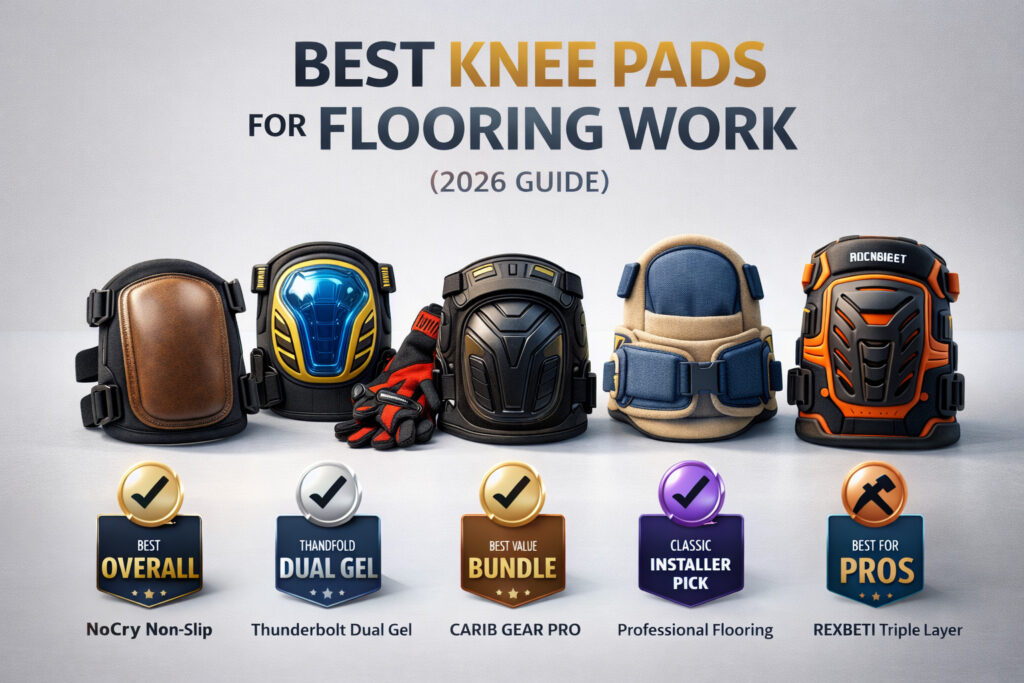
The best knee pads for flooring work in 2026 are flat-profile, non-marring models with gel or EVA foam cushioning. Hardwood and LVP installers should prioritize leather-faced pads, while tile setters benefit from gel-core construction. Below are the top-performing options tested for durability, comfort, and surface safety.
| Award | Product | Best For | Padding |
|---|---|---|---|
| 🥇 Best Overall | NoCry Non-Slip Flooring Knee Pads | All-day flooring, vinyl, hardwood | Soft EVA Foam |
| 🥈 Best Dual Gel | Thunderbolt Construction Knee Pads | Heavy construction + flooring | Double Gel + Foam |
| 🥉 Best Value Bundle | CARIB GEAR PRO Knee Pads | Budget PPE kit, tile work | Dual Gel + Foam |
| 🔨 Best for Pros | REXBETI Construction Gel Knee Pads | Heavy-duty trades + flooring | Triple-layer Gel + Foam |
| 🏆 Classic Installer Pick | Professional Flooring Knee Pad | Carpet, traditional flooring | Soft Foam |
What to Look for in Knee Pads for Flooring Work
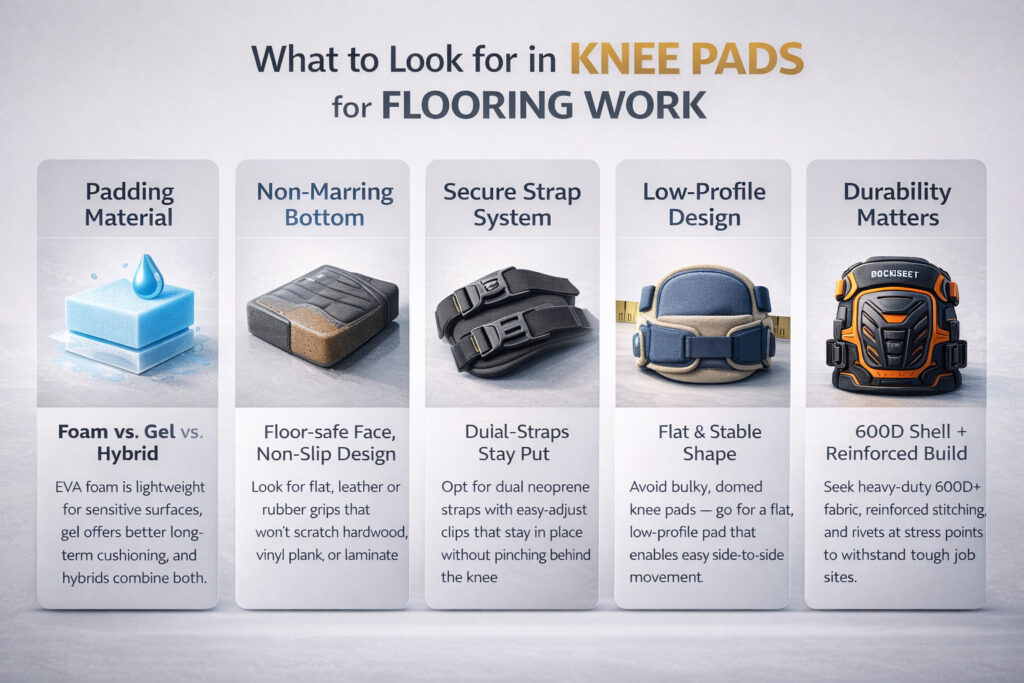
Not all knee pads are built for flooring. Job site pads designed for rough concrete, gravel, or framing work often have hard plastic shells that will gouge hardwood and scratch vinyl plank on contact. If you’re a flooring professional or doing finish work, you need a pad that was designed with your specific work environment in mind. Here are the key features to evaluate.
Padding Material: Foam vs. Gel vs. Hybrid
EVA foam is lightweight and great for sensitive surfaces but compresses over time. Gel holds its shape longer and absorbs impact more effectively during extended sessions. Hybrid gel+foam pads offer the best combination for all-day flooring work — the foam provides structure while the gel absorbs sustained pressure.
Non-Marring / Non-Slip Bottom
This is the most critical feature for flooring work. A hard plastic shell will scratch hardwood, vinyl plank, and laminate. Look for pads with a leather or soft rubber face that grips the floor without abrasion. The bottom should be flat — not curved — to distribute your weight evenly without rocking.
Strap System & Fit
Double straps (above and below the knee) stay in place better than single-strap designs when you’re constantly shifting position. Look for neoprene or padded straps that don’t bite into the back of the knee. Hook-and-loop or buckle clips both work well — the key is quick adjustment without stopping work.
Flat, Low-Profile Design
Flooring work requires constant lateral movement — shuffling left and right across a room. A thick, domed knee pad rocks when you shift your weight and becomes a tripping hazard. A flat, low-profile pad stays stable whether you’re pushing a knee kicker, spreading adhesive, or nailing hardwood planks.
Durability & Material Build
Daily professional use is harsh. Look for a 600D or 900D polyester outer shell, military-grade rivets at stress points, and reinforced stitching at the seams. The difference between a $15 pad and a $35 pad often comes down to how many months it survives on a real job site before falling apart.
Who This Guide Is For
This review covers professional flooring installers (hardwood, LVP, laminate, carpet, tile), DIY renovators tackling whole-room installs, and tradespeople — plumbers, HVAC techs, tilers — who frequently work on finished floor surfaces and need protection that won’t cause collateral damage.
The 5 Best Knee Pads for Flooring Work — Reviewed

If you could only buy one pair of knee pads for flooring work, these would be the ones. The NoCry Non-Slip Knee Pads are purpose-built for the exact demands of flooring installation: a flat, soft EVA foam front with a genuine leather face that will not scratch, scuff, or mark hardwood, luxury vinyl plank, or laminate — no matter how much you shuffle around on it.
The 600D polyester outer shell is reinforced with military-grade rivets at the stress points that typically fail first on cheaper pads. The dual neoprene straps use easy-clip buckle closures that adjust in seconds and fit knee circumferences up to 22 inches — meaning most adults including larger-framed workers will get a secure, comfortable fit. Unlike rubberized or elastic straps that dig in over time, the neoprene here stays comfortable even after three or four hours of continuous kneeling.
What sets this pad apart from generic construction knee pads is that flat-front geometry. It doesn’t rock when you shift your weight to reach the next plank, and it doesn’t accumulate grit between sessions that could scratch a finished floor. The lightweight build also means you won’t fatigue your legs just from wearing them — a real factor after a full eight-hour install. With over 4,600 Amazon reviews backing them up, these are among the most battle-tested flooring knee pads on the market right now.
✅ Pros
- Genuine non-marring leather face — safe for all finished floors
- Flat profile stays stable when shifting weight laterally
- Neoprene straps don’t cut off circulation or dig behind the knee
- Lightweight — reduces leg fatigue during long installs
- Military-grade rivets and 600D shell for durability
- 4,600+ Amazon reviews — proven by real installers
❌ Cons
- Foam-only cushioning — less shock absorption on bare concrete
- Some long-term users report buckle durability after very heavy use
- Not ideal as a standalone pad for extremely rough job sites

If your work crosses between flooring installation and heavier construction — think tile setting, subfloor repair, bathroom renovations, HVAC — the Thunderbolt knee pads deliver a level of cushioning that foam-only pads simply can’t match. The double gel core sits on top of a thick foam base, creating a system that absorbs sustained pressure without compressing flat halfway through your shift.
Made in California by an independent American business, these pads reflect the kind of considered design you’d expect from a brand that actually listens to tradesperson feedback. The adjustable fasteners are strong and stay locked even during active movement — no more re-tightening every 20 minutes. The standout feature for larger-framed workers is the included set of free 7-inch extension straps, making these one of the most accommodating knee pads on the market for users who struggle to find a secure fit with standard sizing.
The dual-gel system makes these particularly effective for extended tile-setting sessions where you’re kneeling on hard backer board or cement substrate. They’re bulkier than foam-only options, but for anyone doing combination trades work — where you go from flooring to rough construction and back — that extra cushion is well worth the added profile. These are a top pick for professional tilers and flooring contractors who aren’t working exclusively on delicate finished surfaces.
✅ Pros
- Dual gel layers provide superior cushion for extended kneeling
- Free 7-inch extension straps — fits virtually any leg size
- Strong fasteners that stay locked throughout the workday
- Great for multi-trade work — flooring, tile, roofing, HVAC
- Made by a small American business with strong quality control
❌ Cons
- Bulkier than foam-only pads due to dual gel layer
- Not specifically optimized for non-marring on ultra-delicate surfaces
- Heavier than basic foam pads — noticeable on long, active jobs
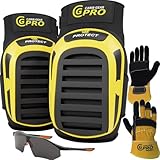
When it comes to value, the CARIB GEAR PRO bundle is tough to beat. You get a solid pair of heavy-duty knee pads packaged with a pair of padded-palm leather work gloves and fog-free UV safety glasses — a practical three-piece kit for flooring workers who need to outfit themselves quickly without buying each item separately at full price.
The knee pads themselves feature a dual-gel core over thick foam, enclosed in a hard thermoplastic outer shell with a rubber midsection for flexibility. The anti-slip, stretchable thigh straps are one of the better strap designs in this price range — they actively resist downward creep during dynamic movements like laying plank or maneuvering a knee kicker, which cheaper pads with basic elastic bands simply can’t match.
There’s a trade-off with the hard thermoplastic shell: while it provides excellent protection on rough substrates and subfloors, it’s not a non-marring surface in the same class as the NoCry leather face. If you’re working exclusively on finished hardwood or brand-new LVP, consider using a surface cloth or pad cover. But for installers working across the full project lifecycle — rough subfloor prep, adhesive laying, and final surface install — the CARIB GEAR PRO is a versatile, well-priced choice that covers your full kit at once.
✅ Pros
- Unbeatable value — includes gloves and safety glasses
- Dual gel core handles long hours on tile and concrete
- Anti-slip thigh straps resist downward creep during active work
- Hard shell protects against nails and sharp debris on subfloors
- Great starter kit for new flooring professionals
❌ Cons
- Hard thermoplastic shell not ideal for ultra-delicate finished surfaces
- Bundled accessories vary in standalone quality vs. dedicated safety gear
- Slightly heavier than foam-only alternatives
Some tools earn their reputation simply by surviving the test of time. This classic professional flooring knee pad has been a go-to for carpet layers, hardwood installers, and traditional flooring tradespeople for years — and for good reason. It’s designed from the ground up for the specific workflow of flooring installation rather than adapted from a general-purpose construction pad.
The soft, non-marring front face is built specifically to protect finished floors during installation — critical when you’re knee-kicking carpet across a freshly laid pad, or working tile grout lines without a hard shell digging into the surface. The wide, padded strap design distributes pressure across a broader area at the back of the knee, reducing the pinching and numbness that narrow elastic straps cause after extended kneeling.
It’s worth being honest about the trade-offs: this is a more traditional design, so it lacks the advanced gel-layer cushioning found in newer competitors. If you’re spending long hours on bare concrete, a modern gel hybrid will serve your knees better. But for carpet installation, traditional hardwood, and flooring tasks where the non-marring performance and simple, reliable strap system matter most, this pad delivers exactly what professional flooring installers have trusted it for over many years of daily use.
✅ Pros
- Purpose-designed for flooring workflows — not a construction pad repurposed
- Genuine non-marring face — safe for carpet, hardwood, and tile
- Wide padded straps reduce behind-the-knee pressure on long jobs
- Simple, reliable design with a long track record among professionals
- One-size-fits-most with easy buckle adjustment
❌ Cons
- Traditional foam-only design — lacks modern gel cushioning technology
- Less padding than hybrid gel+foam alternatives for concrete work
- Older design may feel dated compared to newer ergonomic options

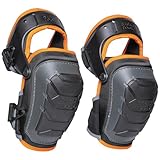
When flooring work takes you into the deep end — new construction with rough subfloors, commercial tile installs on bare concrete, demolition prep followed immediately by new floor laying — the REXBETI triple-layer knee pads step up where lighter options fall short. The three-layer architecture works from the outside in: a tough 600D polyester outer shell, followed by high-density EVA foam, and then a gel cushion core that directly supports the knee cap. Each layer has a specific job, and the system as a whole delivers meaningful protection across a full hard-use workday.
The PVC hard shell guards against nails, staples, sharp tile edges, and any other debris that’s typically scattered across active job sites. The hook-and-loop closure is supplemented by a thigh-support strap — a clever addition that keeps the pad centered on your kneecap even during quick lateral movements, instead of sliding down your shin or rotating around your leg. The four included 7-inch extension straps mean that workers with larger legs don’t need to hunt for alternative sizing.
The one concession to note: the PVC outer shell, like any hard shell, is not non-marring in the same way as a leather or soft rubber face. If your work is exclusively on new finished hardwood or freshly laid luxury vinyl, you’ll want to either pair these with a surface protector cloth or opt for the NoCry Non-Slip pads instead. But for professionals who move between rough and finished substrates across a typical install week, the REXBETI pads are among the most complete and durable options available at this price point.
✅ Pros
- Triple-layer system: 600D polyester + high-density foam + gel core
- Thigh-support strap keeps pads centered on the kneecap all day
- 4 × 7-inch extension straps accommodate virtually all body types
- Durable PVC shell handles nails, tile shards, and rough subfloors
- Reinforced stitching throughout for long-term professional use
- Suitable for flooring, roofing, plumbing, HVAC, and general construction
❌ Cons
- PVC shell is not non-marring — can scratch ultra-delicate finished floors
- Orange color may not suit all professional environments
- Heavier than foam-only models — noticeable on light, fast-moving work
Side-by-Side Comparison: Best Knee Pads for Flooring Work
Use this table to quickly find the right pad for your specific flooring environment and job type.
| Product | Padding Type | Non-Marring | Strap System | Best For |
|---|---|---|---|---|
| NoCry Non-Slip | Soft EVA Foam | ✅ Yes — leather face | Double neoprene clip | Hardwood, vinyl, laminate, carpet |
| Thunderbolt | Double Gel + Foam | ⚠️ Moderate | Adjustable + extension straps | Tile, concrete, multi-trade |
| CARIB GEAR PRO | Dual Gel + Foam | ⚠️ Hard shell | Anti-slip stretchable thigh strap | Budget kit, subfloor, tile work |
| Classic Flooring Pad | Soft Foam | ✅ Yes — soft face | Wide neoprene buckle | Carpet, traditional flooring |
| REXBETI | Gel + Dense Foam (Triple Layer) | ⚠️ PVC shell | Hook-loop + thigh support strap | Heavy-duty construction + flooring |
Frequently Asked Questions About Flooring Knee Pads
Flooring knee pads are specifically designed with flat, non-marring front faces — typically leather or soft rubber — that won’t scratch delicate surfaces like hardwood, luxury vinyl plank, or laminate. General construction pads prioritize durability over surface protection and often have hard plastic or PVC shells that can gouge finished floors on contact. If you’re doing finish flooring work, always choose a pad designed specifically for floor installation.
Yes — absolutely, if you’re working on any finished surface. Hardwood, luxury vinyl plank, laminate, and even polished tile can be permanently scratched by a hard plastic shell. A non-marring face (leather, soft rubber, or microfiber) is essential for finish flooring work. For rough subfloor prep or unfinished concrete, any durable pad will do — but the moment you’re kneeling on the finished product, you need a non-marring surface.
With daily professional use, well-made knee pads typically last 6 months to 2 years depending on the intensity of use and the surface type. Foam padding degrades faster than gel under constant compression. The strap system and outer shell usually fail before the padding does — look for reinforced stitching, military-grade rivets, and durable buckle hardware when evaluating long-term durability.
For all-day flooring work, gel or a gel+foam hybrid is the better choice. Gel maintains its cushioning properties under sustained compression and doesn’t “bottom out” the way basic foam does after extended kneeling. Pure foam is fine for shorter tasks or when you need minimal weight and profile on a sensitive surface. If you’re doing an eight-hour hardwood or tile install, invest in at least a gel-core pad.
Most flooring knee pads with neoprene straps and polyester or leather faces can be hand-washed with mild soap and warm water. Rinse thoroughly and air-dry completely before the next use. Avoid machine washing — the agitation and heat can degrade elastic in the straps, loosen adhesives that hold the padding layers together, and warp buckle hardware. For leather faces, a quick wipe-down with a damp cloth after each use extends lifespan significantly.
For carpet installation, particularly knee-kicking work, you want a flat, low-profile pad with a soft, non-slip front face that won’t shift or roll when you drive the knee kicker forward. The NoCry Non-Slip and the Classic Flooring Pad are both excellent choices for carpet work. Avoid high-dome or curved pads — they’re unstable during the push-through motion of knee kicking and can actually reduce your control over the kicker.
Final Verdict: The Best Knee Pads for Flooring Work
Protecting your knees on the job isn’t optional — knee damage is cumulative, and the cost of a quality pair of knee pads is trivial compared to the long-term cost of joint pain, physiotherapy, or time off work. The good news is that the best flooring knee pads are genuinely excellent in 2026, and there’s a clear right answer for every type of flooring work.
For most flooring professionals — hardwood, LVP, laminate, or carpet — the NoCry Non-Slip is the clear recommendation: lightweight, non-marring, durable, and backed by thousands of verified installer reviews. If you’re doing heavy-duty tile or multi-trade work, step up to the Thunderbolt or REXBETI for their superior gel cushioning. On a budget? The CARIB GEAR PRO bundle covers your knees, hands, and eyes in one purchase.
Your knees will thank you. Check current prices below and pick the pair that fits your workflow.