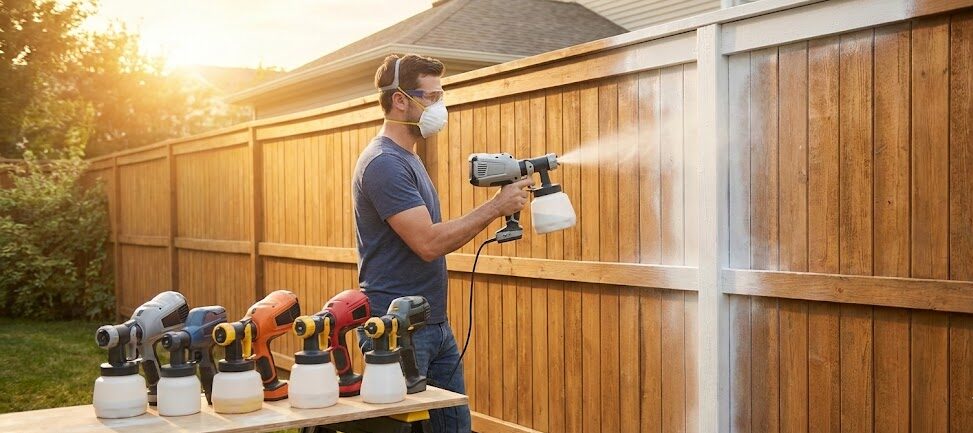
Painting with a brush and roller still works—but it’s slow, tiring, and hard to make look perfect. Electric paint sprayers have completely changed how DIYers and homeowners tackle painting projects, cutting active painting time dramatically while delivering smoother, more consistent results.
In 2026, electric paint sprayers are no longer “pro-only” tools. Affordable HVLP models now dominate furniture and cabinet projects, while electric airless sprayers make walls, fences, and exteriors faster than ever. The challenge isn’t whether to buy one—it’s choosing the right type for your projects.
In this guide, we tested and analyzed the best electric paint sprayers based on finish quality, coverage speed, overspray control, ease of use, and—most importantly—cleanup time. You’ll learn which models are worth your money, which type fits your projects, and how to avoid the most common (and expensive) mistakes.
Quick Picks – Top Electric Paint Sprayers
- ✅ Best Overall: Wagner Control Pro 130
- ✅ Best Budget: HomeRight Super Finish Max
- ✅ Best for Furniture & Cabinets: Wagner FLEXiO 5000
- ✅ Best for Large Exterior Projects: Graco Magnum X5
- ✅ Best for Beginners: Wagner FLEXiO 3500
- ✅ Best Cordless: Graco Ultra Cordless Handheld
Who This Guide Is For (And Who It’s Not)
This guide is perfect for:
- Homeowners tackling DIY painting projects
- Weekend warriors painting furniture, cabinets, fences, or decks
- Small contractors doing residential remodels
- Anyone painting more than two rooms per year
This guide is NOT ideal for:
- Automotive or high-gloss finish work
- Industrial or commercial-scale daily spraying
- Users with only one very small project planned
Understanding Electric Paint Sprayers
What Is an Electric Paint Sprayer?
An electric paint sprayer uses a motor-driven system to atomize paint and spray it evenly onto a surface. Unlike brushes and rollers, sprayers distribute paint in a fine, consistent pattern, reducing streaks, brush marks, and uneven coverage.
Compared to manual painting, electric sprayers:
- Cover large areas significantly faster
- Create smoother, more uniform finishes
- Reduce physical fatigue on big projects
HVLP vs. Airless: The Critical Distinction
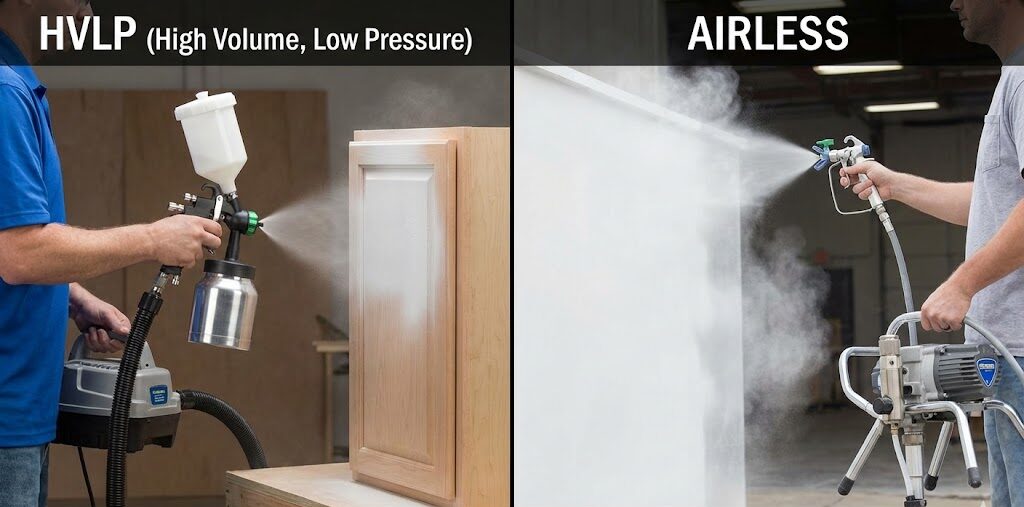
HVLP (High Volume, Low Pressure)
HVLP sprayers use a high volume of air at low pressure to gently atomize paint.
- Best for: Furniture, cabinets, trim, detail work
- Paint types: Stains, sealers, lacquers, thinned latex
- Typical price: $80–$250
- Warning: ⚠️ Not suitable for whole-house or exterior painting
Electric Airless Sprayers
Airless sprayers force paint through a small tip at extremely high pressure.
- Best for: Walls, ceilings, fences, home exteriors
- Paint types: Thick latex, primers, unthinned paints
- Typical price: $250–$600
- Warning: ⚠️ Overkill for furniture and fine detail work
How We Selected and Tested These Paint Sprayers
We evaluated electric paint sprayers using real-world scenarios—not just manufacturer specs. Each model was tested with multiple paint types (latex, oil-based, stain, and primer) on drywall, wood, metal, and concrete surfaces.
Our scoring focused on:
- Finish quality and consistency
- Coverage speed
- Overspray control
- Ease of use for beginners
- Cleanup difficulty (one of the most ignored but important factors)
Some links in this guide are affiliate links. If you purchase through them, Protguide may earn a commission at no extra cost to you.
Top Electric Paint Sprayers – Detailed Reviews
Best Overall Electric Paint Sprayer (Airless)
Wagner Control Pro 130

Type: Airless | 🎯 Best for: Walls, ceilings, medium-to-large projects
- Power: 650W
- Capacity: 1.5-gallon hopper
- Weight: 18 lbs
- Ideal Paint: Unthinned latex
- Warranty: 1 year
The Wagner Control Pro 130 hits the sweet spot between speed and control. Its HEA (High Efficiency Airless) system operates at lower pressure than traditional airless sprayers, producing noticeably less overspray while maintaining excellent coverage speed.
🧹 Cleanup Score: 7.5/10 — Hopper design is far easier to clean than suction-tube systems.
✅ Pros: Excellent control, fast coverage, DIY-friendly
❌ Cons: Small hopper for very large exterior jobs
Best Budget Electric Paint Sprayer (HVLP)
HomeRight Super Finish Max
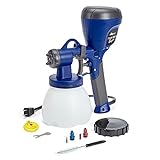
Type: HVLP | 🎯 Best for: Furniture, cabinets, small projects
- Power: 450W
- Capacity: 39 fl oz
- Weight: 3.3 lbs
- Ideal Paint: Stains, thinned latex
This is one of the best-value HVLP sprayers available. It’s simple, lightweight, and capable of producing a surprisingly smooth finish on furniture and cabinets.
🧹 Cleanup Score: 9/10 — Tool-free disassembly, under 10 minutes to clean.
✅ Pros: Very affordable, fine finish
❌ Cons: Always requires paint thinning
Best HVLP for Furniture & Cabinets
Wagner FLEXiO 5000

The FLEXiO 5000 offers excellent adjustability and finish control, making it ideal for cabinets, doors, and furniture refinishing.
🧹 Cleanup Score: 8.5/10
✅ Pros: Outstanding finish control, minimal overspray
❌ Cons: Slower than airless for large surfaces
Wagner Spraytech 0529091 FLEXiO 5000 Stationary HVLP Paint Sprayer, Sprays Unthinned Latex & C900038.M Large Spray Shelter with Built-in Floor & Screen, Portable Paint Booth for DIY Spray Painting
Best Electric Airless for Large Projects
Graco Magnum X5
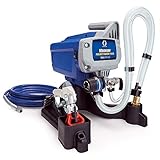
If you’re painting fences, exteriors, or multiple rooms, the Magnum X5 delivers raw power and endurance. It pulls paint directly from a 5-gallon bucket and supports long hose runs.
🧹 Cleanup Score: 6/10 — Powerful but more involved cleanup.
✅ Pros: Massive output, professional durability
❌ Cons: Loud, heavy, excessive for small jobs
Buying Guide: What to Consider Before Buying
1. HVLP vs. Airless
If you’re painting furniture or cabinets, buy HVLP. If you’re painting walls or exteriors, buy airless. Using the wrong type guarantees frustration.
2. Power and Motor Quality
Higher wattage matters more for airless sprayers. Look for solid internal components and reliable brands.
3. Tank or Hopper Capacity
Small cups are fine for furniture. Walls and exteriors need large hoppers or bucket-fed systems.
The Viscosity Factor
Paint thickness determines performance. HVLP sprayers require thinning—airless usually does not. Use the viscosity cup test whenever possible.
Pro Tip: Always strain paint before spraying. This prevents most clogging issues.
How to Use an Electric Paint Sprayer
- Prep surfaces thoroughly
- Mask aggressively
- Test spray before starting
- Maintain 8–12 inches distance
- Overlap each pass by 50%
Pro Tip: Practice on cardboard first. Five minutes of practice saves hours of sanding.
Maintenance and Care Tips
- Flush immediately after use
- Disassemble and clean all paint-contact parts
- Store in a dry, temperature-stable environment
- Use manufacturer-recommended lubricants
FAQs
Do I need to thin paint?
HVLP: yes. Airless: usually no.
Are electric sprayers beginner-friendly?
Yes—HVLP models are best for beginners.
How long does cleanup take?
10–25 minutes depending on model and paint type.
Conclusion
Electric paint sprayers aren’t magic—but they are game-changers. Match the sprayer type to your project, respect prep and cleanup, and you’ll achieve results that brushes simply can’t match.
For most users, the Wagner Control Pro 130 offers the best balance of speed, control, and value. Furniture painters should look to HVLP models like the HomeRight Super Finish Max or Wagner FLEXiO 5000.
If you paint regularly, an electric sprayer is one of the smartest tool upgrades you can make.